

Free text
Summary and key ideas
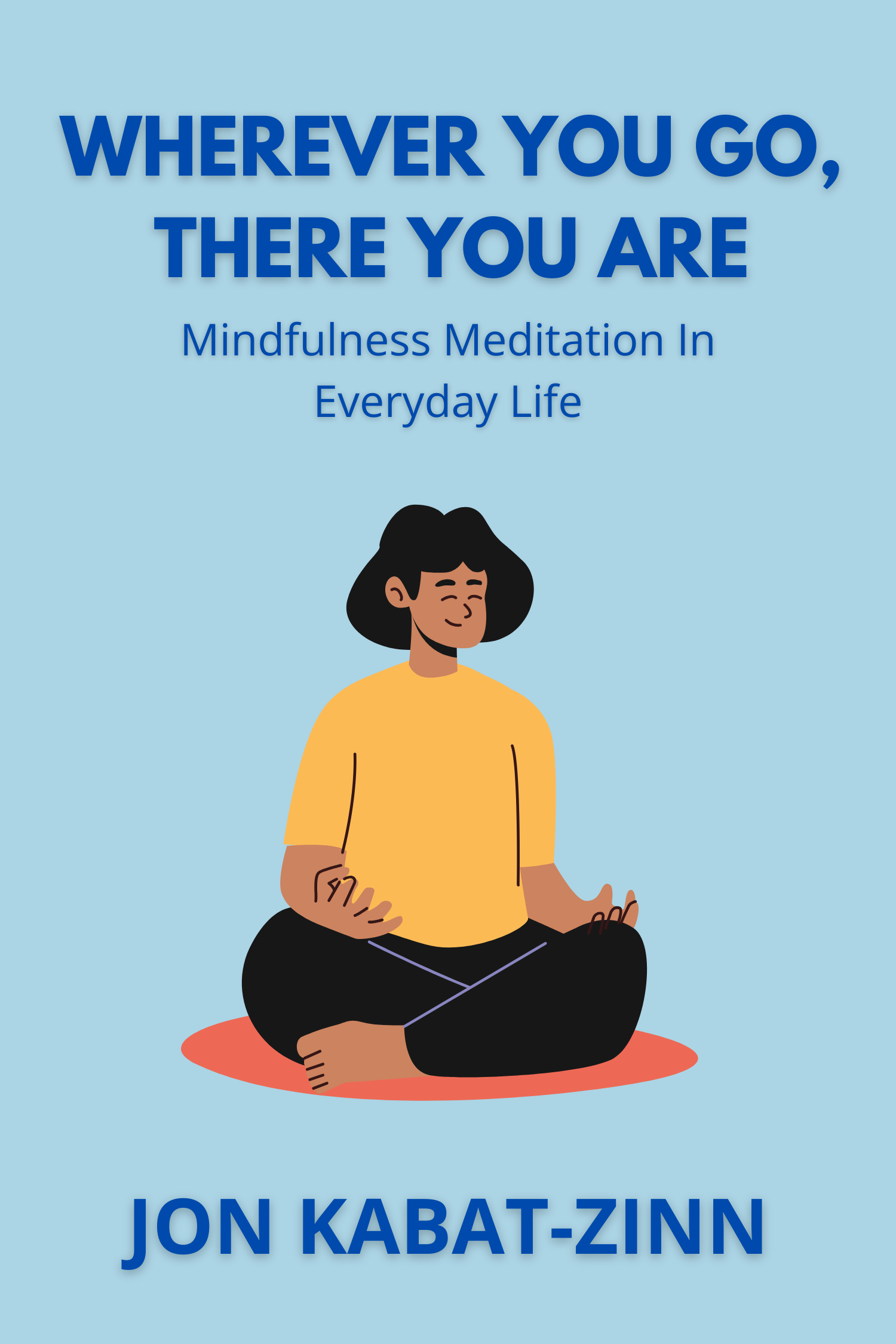
Book summary prepared by ReWio. Original book author: Jon Kabat-Zinn.
Introduction
This book will guide you on a path to a deeper understanding and awareness of the present moment. Jon Kabat-Zinn, a pioneer in the field of mindfulness and meditation, delivers practical and inspiring techniques to help you experience life to the fullest and find inner peace in a hectic world.
This book is not just about meditation, but about the art of being present in all aspects of your life. Whether you are a beginner or a seasoned practitioner, Kabat- Zinn guides you step-by-step through a variety of exercises and thought experiments to help you overcome stress, manage emotions, and experience each moment fully and consciously.
Enter a world of mindfulness where every inhale and exhale brings a new opportunity for growth and self-discovery. This book will show you how you can change your approach to life in simple but powerful ways and discover the peace and contentment that are always within reach - right here, right now.
Live the present moment
Living the present moment means being fully present and aware in every moment of your life. It's a practice that requires focus and discipline, but brings profound benefits to our mental and emotional health. Imagine your mind as the surface of the ocean where there are waves - some small, some large. Sometimes these waves get stirred up by the winds of stress and anxiety and become very choppy. Observe these waves with curiosity while taking a deep breath. Watch as the ocean surface slowly calms down again.
Many people think that the goal of mindfulness is to remove these waves in order to achieve peace and tranquility, but the truth is that obstacles in life are inevitable and we don't always have control over them. Mindfulness meditation teaches us that we don't have to be victims of circumstances, but we can learn how to respond to them. All of us encounter challenges that are beyond our control, but that doesn't mean we have to consider ourselves victims. Meditation can help us find refuge and learn to "surf" the waves of life.
Mindfulness is about transcending our automatic approach to life. We often do things unconsciously, without being fully present in the moment. Pay attention to what is happening right now, purposefully and without judgment. Cultivating mindfulness and meditation are often confused with relaxation, stress relief or self-development. In reality, it's not about achieving a certain feeling, it's about becoming aware of who and where we already are. It helps us connect with aspects of ourselves that we often overlook, and bring us to richer and deeper experiences of joy and happiness, as well as difficult emotions like anger and fear.
If you practice mindfulness, it will help you cope with difficult emotions. Observe your feelings of impatience or frustration, pay attention to where in your body you feel them most, and explore what these feelings are trying to tell you. Patience means accepting things as they are and realizing that events always unfold in their own time. Rushing things usually makes things worse.
Focusing on the present moment allows us to consciously stop and be present. Take your time to stop for a few breaths and focus on what is happening within and around you. This simple act can have profound effects on your life. Mindfulness is not about self-improvement, but about accepting life as it is and yourself as you are. Our culture is focused on doing, but it is important to move from a constant state of doing to a state of being.
Mindfulness helps us to accept reality
Mindfulness is a tool that allows us to accept things as they are without trying to change them or fight them. It is a practice aimed at transcending automatic reactions and creating space for conscious responses. When we feel stressed or threatened, our hypothalamus releases stress hormones that cause our heart to pump faster and muscles to tense. This "fight or flight" response is natural, but it can be harmful if we experience it in situations where we are not in immediate danger.
Mindfulness cannot cure the effects of stress, but it can help us cope with what simply is, and pay attention to where the stress is coming from. It helps us realize that we have no control over what happens to us, but we can choose how we
respond to it. When we practice mindfulness, we learn to be observers of our thoughts and emotions without identifying with them or judging them.
This practice is deeply connected to patience, which means accepting things as they are and understanding that events unfold in their own time. We cannot hasten the arrival of spring or the growth of grass. Patience teaches us that rushing things usually makes things worse and that accepting reality allows us to live more calmly and serenely.
In accepting reality, it is also important to develop generosity. By sharing our full attention, care and trust with those around us, we begin to discover expanded versions of ourselves. Generosity is something we should have for others and for ourselves. By paying attention to the present moment, we can begin to perceive reality without wanting to change it, thus creating space for acceptance and understanding.
Mindfulness also teaches us that our problems and difficulties will always catch up with us, no matter how much we want to escape them. Accepting reality means accepting our situation and our emotions without trying to change or escape them. This allows us to live more authentically and contentedly because we stop trying to change things that are out of our control and instead focus on how we can respond to what is.
Our culture is often focused on doing and performing, but mindfulness teaches us to shift from a mode of doing to a mode of being. In this state, we are able to accept reality as it is and be present in each moment. This allows us to experience life to the fullest, with awareness and acceptance of all that it brings.
Meditation and emotions
Meditation is a powerful tool for experiencing and processing emotions. It allows us to consciously stop and explore our feelings without immediately judging or repressing them. This process helps us to better understand and accept our emotional states, leading to deeper inner peace and equanimity.
One of the main methods is to practice mindfulness meditation, where we focus on the present moment and what is happening in our body and mind. When we sit down and focus on our breath, we can begin to become aware of the different thoughts and emotions that arise. Instead of getting carried away by these thoughts or trying to avoid them, we learn to observe them with curiosity and acceptance.
Meditation allows us to create space between the stimulus and our response. This space is key to becoming aware of what we are actually experiencing and having the ability to consciously decide how we will respond to it. For example, when we experience anger, we can become aware that the feeling exists without immediately reacting with anger. Instead, we can take a deep breath and let the emotion flow.
Mindful observation of emotions also teaches us patience and self-acceptance. When we meditate, we can notice that emotions come and go like waves on the ocean. Sometimes they are strong and intense, other times weak and calm. This experience teaches us that emotions are a natural part of our existence and do not have to define us. We learn that we can be in touch with them without becoming victims of them.
Instead of feeling overwhelmed by stress, anxiety or anger, we can explore these feelings and understand their origins. We realize that we have no control over what happens to us, but we can choose how we react to it.
Regular meditation also encourages the development of kindness and compassion towards oneself. Practices like loving-kindness meditation lead us to cultivate feelings of kindness, acceptance and compassion. We can then extend these feelings to others, creating deeper and healthier relationships.
Meditation is a path to a deeper understanding and acceptance of our emotions. It teaches us to be present in the moment, to observe our feelings without judgment, and to respond to them consciously and compassionately. This process brings us greater inner equanimity and the ability to handle life's challenges with greater calm and clarity.
Mindfulness in daily activities
Mindfulness is not just about formal meditation, but also about how we integrate mindful presence into our daily activities. This approach allows us to experience deep peace and joy in even the most ordinary moments.
We can practice mindful attention in everyday activities such as walking, eating, or cleaning. The idea is to focus fully on what we are doing and be present in each moment. For example, when we walk, we focus on each step, how our feet make contact with the ground, how our body moves, and how we breathe. This simple act can transform an ordinary activity into a profound meditative experience.
Mindful walking is a great example of how we can incorporate mindfulness into everyday life. It's not about getting somewhere fast, but about being fully present in every step. We can be aware of how our feet lift, how they move in the air, and how they touch the ground again. If we walk in nature, we can listen to the sounds of our surroundings, take in the scents and colors, and thus connect more deeply with the present moment.
In the same way, when eating, we can practice mindful attention by focusing on each bite, on the taste, smell and texture of the food. Let's slow down, take time to savor each bite, and be grateful for the food we have. This practice helps us to become more aware of our eating habits, to become more aware of our bodies, and to improve our relationship with food.
Mindful attention in daily activities also allows us to better manage stress and increase our productivity. When we are fully present and focused on what we are doing, we can notice when our mind starts to wander or when we feel overwhelmed. Awareness of these moments gives us the opportunity to consciously return to the present moment and resume our activities with greater calm and clarity.
An important aspect of mindful attention is also the ability to slow down. Our modern culture is often focused on speed and performance, which can lead us to feel like we constantly have to be doing something. Practicing mindful attention
helps us to slow down and focus on one thing at a time. By consciously choosing to do fewer things at once, we can enjoy more well-being and increase the quality of our experiences.
Everyday activities, such as washing the dishes or cleaning up, can also be opportunities to practice mindfulness. Instead of doing these activities mechanically, we can focus on what we are doing. Notice how the warm water feels on our hands, how the foam forms when we wash the dishes, or how the space changes when we clean it. By paying full attention to these simple activities, we can experience a deeper sense of peace and contentment.
Integrating mindful attention into our daily lives allows us to experience each moment fully. It helps us to slow down, focus and be present, leading to a deeper sense of contentment and inner peace. Mindful attention gives us the opportunity to transform ordinary moments into extraordinary ones and find beauty in the simplicity of everyday life.
Action and being
Modern society is often focused on constant activity and performance. We are taught that we have value when we are achieving something, working towards goals and constantly moving forward. However, this way of thinking can lead us to overlook the importance of being and the present moment itself. Action and being are two different but complementary facets of our existence, and learning to find a balance between them is key to our inner peace and contentment.
Action means doing - being active, planning, acting. Being, on the other hand, is a state in which we are fully present, accepting things as they are and finding peace in simply existing. Being does not mean inaction, but a conscious decision to be present in the moment, without trying to change or achieve anything.
Practicing being begins with becoming aware of when we are in action mode and when we are in being mode. Many people spend most of their time in action mode - running from meeting to meeting, completing tasks, solving problems. In this mode, we can easily lose touch with ourselves and the present moment.
Conversely, in the mode of being, we stop and pay attention to what is happening right now, without trying to change or accomplish anything.
One way to learn to move from action mode to being mode is through meditation and conscious stopping. When we consciously choose to stop and be present, we can become aware of our thoughts, feelings, and bodily sensations without evaluating them or trying to change them. This process helps us find peace and equanimity even in the midst of a hectic day.
For example, if you're out to dinner with a friend and get a message on your phone, making a conscious decision to ignore the phone and give full attention to the present moment is a transition from action to being. It allows you to be fully present in the conversation and enjoy your time with your friend.
Being also means accepting that we can't control everything in life. Modern culture often teaches us that we need to be in control and solve every problem that comes up. In the practice of being, we learn that sometimes the best action is to let things go and accept them as they are. This attitude allows us to find peace and equanimity even in challenging situations.
Voluntary simplicity is another key concept that helps us move from action to being. It means consciously choosing a simpler lifestyle that allows us to be present in each moment. It can mean slowing down, attending to one activity at a time, or consciously choosing to do fewer things at once. By simplifying our lives, we create space for being and experiencing the present moment.
Moving from action to being is also about a conscious decision to be kind and compassionate to ourselves. In our society, there is a lot of pressure to perform and excel, which can lead to burnout and chronic stress. Being kind to ourselves means acknowledging that we are not perfect, and that it's okay to slow down and just be. In this way, we cultivate inner peace and contentment.
Action and being are two fundamental aspects of our existence that need to be balanced. Learning to shift from action mode to being mode helps us find deeper peace and contentment in our daily lives. By practicing mindful presence and
embracing the present moment, we can discover beauty and meaning in every moment of our existence.
Loving Kindness Meditation
Loving-kindness meditation, also known as metta meditation, is a practice that helps us cultivate feelings of kindness, compassion, and acceptance towards ourselves and others. This form of meditation has deep roots in the Buddhist tradition and is a powerful tool for transforming our relationships with ourselves and others.
In loving-kindness meditation, we focus on sending positive and kind thoughts first to ourselves and then gradually to other people. This process helps us open our hearts, improve our emotional health, and create a deeper sense of connection to the world around us.
Let's begin meditation by finding a comfortable place to sit or lie. We close our eyes and take several deep breaths to relax and focus. Then imagine yourself and silently repeat these words in your mind: "May I be happy. May I be healthy. May I be safe. May I be peaceful." We repeat these affirmations several times, trying to feel kindness and compassion towards ourselves.
When we feel ready, we extend these feelings of kindness to someone close to us - it could be a friend, family member, or loved one. We introduce ourselves to that person and repeat, "May you be happy. May you be healthy. May you be safe. May you be peaceful." We try to send these feelings of kindness and compassion toward the person and imagine these feelings surrounding and filling the person.
Gradually, we can expand our practice to include other people, such as acquaintances, colleagues, and even people with whom we have difficult relationships or conflicts. This step can be particularly challenging, but it is extremely important for our emotional healing and the development of compassion. We repeat the same affirmations, "May you be happy. May you be healthy. May you be safe. May you be peaceful."
Finally, we can extend our practice to all beings in the world. We imagine how the kindness and compassion we send out envelops the entire globe and all its inhabitants. We repeat, "May all beings be happy. May all beings be healthy. May all beings be safe. May all beings be peaceful."
Loving-kindness meditation helps us develop a deep sense of connectedness and oneness with all beings. It teaches us that our heart has an unlimited capacity for love and compassion, and that we can cultivate and expand these feelings regardless of external circumstances.
The regular practice of loving-kindness meditation has many benefits for our physical and emotional health. It reduces stress, anxiety and depression, improves our relationships and promotes a sense of inner peace and equanimity. This meditation also helps us overcome feelings of anger and resentment by teaching us to perceive and accept all people with kindness and compassion.
Loving-kindness meditation is a powerful tool for transforming our lives. It helps us cultivate kindness and compassion for ourselves and others, and thereby create more harmonious and fulfilling relationships. By practicing this meditation, we can find a deeper sense of connectedness with the world and develop an inner peace and joy within ourselves.
Final Summary
Jon Kabat-Zinn's book Wherever You Go, There You Are provides deep insight into the practice of mindfulness meditation, which helps us to be fully present in every moment of our lives. Through a variety of techniques and exercises, such as mindfulness meditation and loving-kindness meditation, we learn to consciously pause, observe our thoughts and emotions, and accept reality as it is. This practice allows us to better manage stress, improve our relationships, and find inner peace and contentment. The book emphasizes the importance of integrating mindfulness into daily activities, helping us to experience life more fully and with greater clarity. By practicing mindful presence, we can discover beauty and meaning in even the most ordinary moments and live life with greater purpose and peace.