

Free text
Summary and key ideas
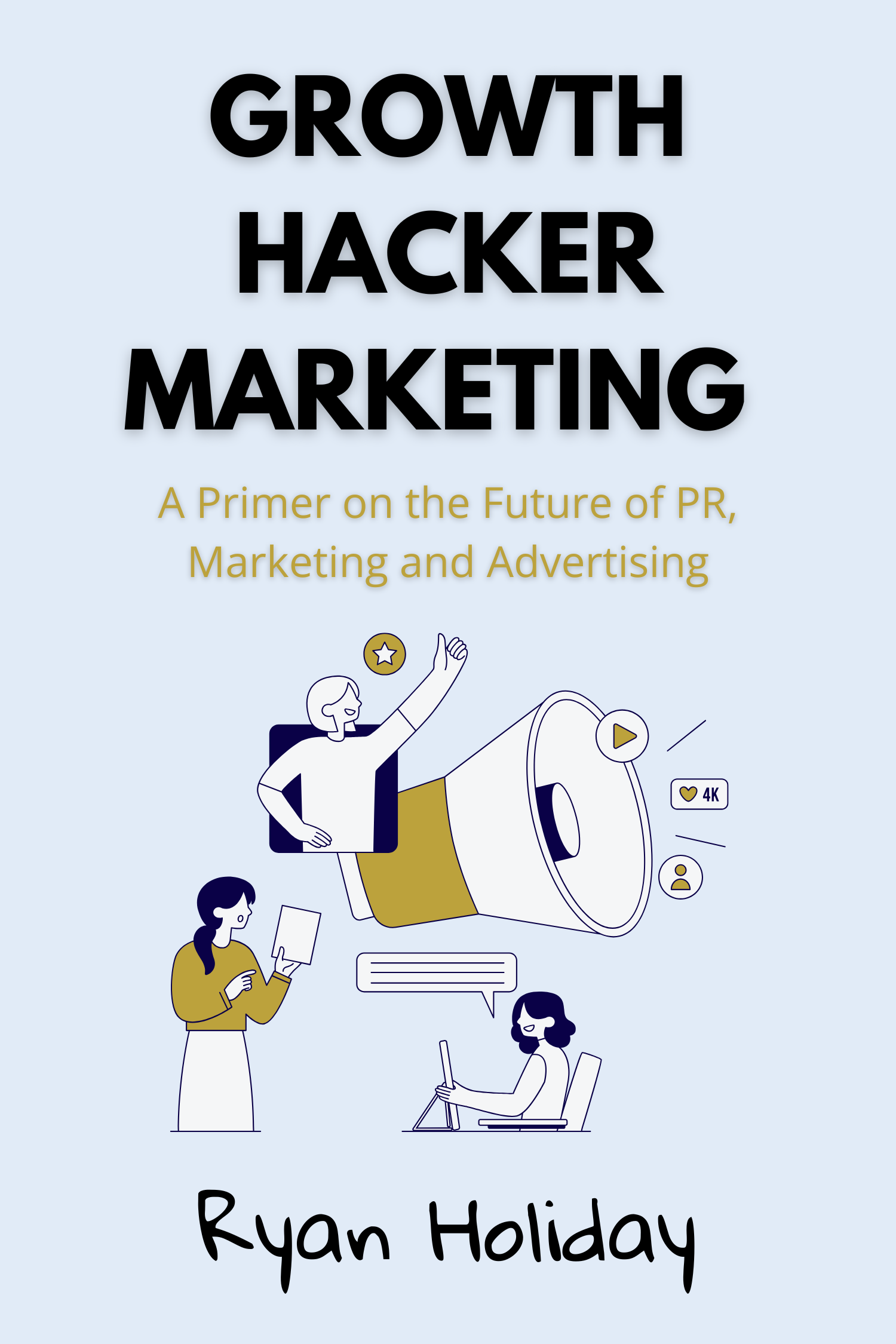
Book summary prepared by ReWio. Original book author: Ryan Holiday.
Introduction
Welcome to the world of growth hacking, where traditional marketing methods are giving way to innovative, low-cost strategies aimed at rapid growth. "Growth Hacker Marketing" by Ryan Holiday reveals the secrets of how companies like Dropbox, Instagram, Twitter, and Groupon have achieved exponential success using simple and effective growth hacking techniques.
Ryan Holiday, an experienced marketer and author, walks you through the basic principles of growth hacking that are transforming the way companies acquire and retain customers. This book offers practical advice and real-world examples that show that any business can achieve big results on a small budget.
Learn how to connect your product to your customers' needs, how to leverage viral marketing strategies, and how to continually optimize the user experience to retain loyal customers. "Growth Hacker Marketing" isn't just about marketing - it's about rethinking every part of your business to achieve sustainable, dynamic growth.
Dive into this book and uncover how you can take your business to the next level with growth hacking.
Growth hacking is a new, low-cost form of marketing aimed at rapid growth
Imagine a marketing strategy that doesn't need huge budgets for billboards or TV ads. Instead, it relies on creative and innovative approaches that are not only effective, but also inexpensive. This is the essence of growth hacking - an approach that is radically changing the rules of the game in the business world.
Growth hacking was created in response to the need for rapid growth in a startup environment where capital is often limited. It is a method that combines marketing techniques with analytics and product development to achieve exponential growth in user base. It's a route that many successful companies have chosen to establish
themselves in the market without the need for huge investments in traditional marketing campaigns.
Consider, for example, Dropbox, a cloud storage platform that has used a simple but effective trick - a referral program. Every user who invited a friend received additional storage for free. This move was not only cheap, but also extremely effective, leading to a rapid increase in the number of users. A similar strategy was adopted by Airbnb, which offered reciprocal benefits for both hosts and guests, which helped them expand their user base quickly.
A key element of growth hacking is understanding and leveraging technology. Unlike traditional marketers who focus on mass media, growth hackers analyze data about user behavior and adjust their products and marketing tactics accordingly. This technical approach allows them to constantly optimize and adapt to market needs.
One of the pioneers in this approach is Twitter, which saw a lot of interest but few active users in its early days. Rather than accept failure, they analysed the behaviour of new users and found that those who followed at least ten accounts on the first day remained active. So they implemented a simple change - they invited new users to manually select the accounts they wanted to follow, significantly increasing retention rates.
Growth hacking isn't just about marketing, it's also about the product itself. The key is to create something that people really want and need. Satisfied customers become brand ambassadors, spreading information organically, without the need for costly advertising. This approach is vastly different from traditional marketing strategies, where much of the budget is spent before the product is launched.
In today's digital age, where technology is constantly changing and evolving, the ability to adapt and innovate quickly is key. Growth hacking is therefore not just a set of techniques, but also a mindset that encourages constant experimentation and learning approaches. Success in this environment requires not only creativity, but also the ability to effectively use data to make informed decisions.
In this way, even small companies with limited resources can achieve great success
and compete with the big players in the market. Growth hacking thus represents a revolutionary approach that has changed the face of modern marketing and opened the door to new opportunities for entrepreneurs around the world.
The first step of growth hacking is to find out what people really want
Every business, regardless of size or focus, needs to start with one fundamental question: What do people really want? In growth hacking, the answer to this question is crucial to success. Finding the right product-market fit is the first step on the road to growth.
The first step in the growth hacking process is a deep understanding of customer needs and desires. It's about finding out exactly what customers expect and how your product or service can meet or exceed those expectations. This step is crucial because even the best marketing can't save a product that no one is interested in.
A great way to start is to involve customers directly in the development process. Many successful companies use beta testing, where real users test the product before it is officially launched. This approach not only allows you to gather valuable feedback, but also to create strong bonds with early users who can become brand ambassadors.
There are various methods to gain deeper insight into customer needs. Questionnaires, surveys, interviews or user behaviour analysis are just a few of them. It is important not only to collect data, but also to analyse it thoroughly and then implement the insights gained into product development.
For example, when launching a new product, it can be useful to monitor user behaviour and adjust features or product design based on this. If you notice that a certain feature is not being used or is difficult for users, this can be a signal to redesign or remove it.
Online presence and interaction with customers via social media or blogs also
provides valuable insights into their preferences and needs. Authors often use these platforms to test new ideas and get immediate feedback from their audience. This approach allows them to quickly tailor content and products to meet current market needs.
Analytical tools and technologies play an indispensable role in growth hacking. Collecting and evaluating data on user behavior helps identify patterns and trends that can be key to a product's success. It is important to track not only quantitative data such as site traffic or conversion rates, but also qualitative aspects such as customer satisfaction and loyalty.
Finding out what people really want is not a one-off process, but an ever-evolving cycle. Understanding market needs and being able to adapt quickly to changing demands are the cornerstones of success in growth hacking. By doing so, you can create a product that not only appeals to the market, but also ensures long-term success and growth.
This approach is ultimately about continuous learning and adaptation. It's the only way to ensure that your product not only meets your customers' needs, but also exceeds their expectations and becomes an integral part of their lives.
Targeting the right group of people
Every start-up faces the challenge of how to grow efficiently and quickly. One of the most effective strategies is to focus on the right group of people. Many businesses make the mistake of trying to reach as wide an audience as possible. However, the truth is that it is far more important for success to identify and focus on the specific group that has the greatest potential to become your customers.
Why is this so important? When you try to reach everyone, your marketing efforts become scattered and less effective. On the other hand, if you focus on a well- defined target group, you can better tailor your message and marketing strategies to resonate with their needs and desires.
One of the key elements of this strategy is identifying "early adopters" - people who are excited about new technologies and innovations. These people are willing to take risks and try new products, often provide valuable feedback, and can become loyal ambassadors for your brand. Their enthusiasm and recommendations can create a ripple of interest that spreads to the wider public.
For example, Uber used a strategy of targeting the right group of people during the South by Southwest (SXSW) event in 2013. During the event, they gave away free rides, which attracted influential tech enthusiasts and hipsters who not only tried the service but also told their friends about it. This purposeful approach allowed Uber to quickly gain popularity and build a solid customer base.
Another important aspect is creating a sense of exclusivity. Dropbox used an invite-only feature at its launch, creating the impression that access to the service was something special. This approach not only increased interest but also created a sense of urgency, which motivated people to join and invite their friends.
It is equally important to understand that each market has its own specificities. That's why it's important to conduct research and analyze data to identify the specific market segments that are most beneficial for your product. This approach allows you to create targeted marketing campaigns that are much more effective than generic ads.
One effective way to do this is by leveraging online platforms and communities that match your target audience. Instead of trying to be everywhere, focus on the places where your potential customers congregate. This will not only allow you to communicate your message more effectively, but also to better understand their needs and preferences.
Thus, targeting the right group of people is the cornerstone of a successful marketing strategy for startups. This approach not only allows you to use your resources more efficiently, but also to build a strong and loyal customer base that will support your growth and help you achieve long-term success.
Product virality is not accidental, but the result of strategic planning and analysis
Product virality is often seen as a mysterious phenomenon that only happens to the luckiest companies. However, the truth is that virality is not the result of chance, but the result of careful strategic planning and analysis.
At the outset, it is necessary to understand what motivates people to share. Emotional content that evokes strong feelings - whether joy, surprise or anger - is more likely to go viral. Products or campaigns that can elicit such reactions are often shared much more than those that remain neutral.
One classic example is Hotmail's campaign. For every email a user sent, the phrase was added at the end, "PS: I love you. Get your free email at Hotmail." This simple trick allowed the company to acquire millions of new users in record time because it leveraged existing communication channels to spread its message.
In addition to the emotional appeal, the ease of sharing is also important. If the sharing process is complicated or time-consuming, people are less willing to do it. It is therefore key to make the process as simple and intuitive as possible. Adding share buttons to social media, whether on websites or apps, can significantly increase the likelihood that people will share a product or content.
Referral programs are another effective tool. Dropbox, as mentioned earlier, provided additional storage for each friend invited. This model incentivized existing users to actively promote the product, which led to a massive increase in the user base.
Data analysis plays a key role in the viral propagation process. Collecting and evaluating data on user behaviour allows patterns and trends to be identified, which can then be used to optimise campaigns. For example, tracking which types of content are shared most often and why can help shape future campaigns to be even more successful.
It's also important to keep the right timing and context in mind when developing a viral campaign. A campaign launched at the wrong time or in the wrong context can easily fail. Therefore, not only the content and sharing mechanisms, but also the timing and the environment in which the campaign will run need to be carefully planned.
Virality is therefore the result of a combination of factors - emotional appeal, ease of sharing, incentive programmes, data analysis and the right timing. These factors must be carefully planned and implemented for the campaign to achieve the desired effect.
Strategic planning and analysis allow companies to leverage virality as a powerful tool for rapid growth and building brand awareness. When these elements come together in the right way, they can create an avalanche of interest and promote rapid spread of a product or service among the general public.
Optimising the user experience is key to customer retention
For any business looking to retain its customers and foster long-term growth, optimizing the user experience (UX) is essential. In an environment where competition never sleeps, it's crucial to make every interaction point between customer and product as smooth and enjoyable as possible.
A company's success often hinges on the ability to identify and remove obstacles that could make the user journey unpleasant. This includes everything from intuitive design, to page load speed, to effective customer support. Any negative experience can cause customers to leave for a competitor that offers a better experience.
Effective UX optimization starts with understanding your users' needs and expectations. This requires constant collection and analysis of feedback. Tools such as satisfaction surveys, user testing, and website or app behavior analysis provide valuable insights that can reveal weaknesses in the user experience. One of the most important aspects is ensuring that the product is easy to
understand and use. If customers can't quickly understand how a product works or run into technical issues, their frustration can lead to churn. That's why it's important to invest in a quality onboarding process that clearly explains all the features and benefits of the product to new users.
An example of a successful onboarding process is the file storage service Dropbox. When a new user signs up, they are guided step-by-step through an interactive guide that explains how the service works and what its main features are. This approach ensures that users know how to use the product to its full potential from the start, increasing their satisfaction and loyalty.
In addition, it is important to constantly monitor and optimise every aspect of the user journey. Analysing 'funnels' (a user's journey from page entry to conversion) helps to identify points where users often abandon the process and allows action to be taken to remove these barriers.
Agility and the ability to react quickly to change is also key when optimising UX. The market and technology are constantly evolving, so it's important to be prepared to adapt quickly to new trends and user demands. This can include regular product updates and enhancements, as well as responding quickly to customer feedback.
One of the best ways to improve UX is through constant iteration and experimentation. A/B testing is extremely useful in this context because it allows you to compare two versions of a page or feature and determine which works better. This way, you can gradually optimize all aspects of your product based on data and real-world results.
Optimizing the user experience is an investment that pays off in the form of increased customer satisfaction, higher retention rates, and overall growth. Companies that can deliver a superior experience earn the loyalty of their customers, who not only return, but also recommend the product to their friends. This creates a solid foundation for long-term success and sustainable growth.
Using agile marketing techniques
In today's rapidly changing marketplace, the ability to adapt and respond to new challenges and opportunities is critical to success. Traditional marketing plans that are fixed for months or years in advance are no longer flexible enough. That's why more and more companies are turning to agile marketing techniques that allow them to adapt and innovate quickly.
Agile marketing techniques are based on the principles of rapid iteration, continuous learning and adapting to market feedback. This approach allows companies to respond to changes in real time and to effectively exploit new opportunities as they arise.
One of the main benefits of agile marketing is the ability to quickly test and implement new ideas. Instead of spending months preparing a large campaign, you can try smaller experiments and use the results to decide whether it's worth investing more time and resources. This approach allows you to react more quickly to what works and what doesn't, while minimising the risk of failure.
For example, Netflix is known for its agile approach to marketing. They are constantly testing different versions of their promotional campaigns and deciding which versions are most effective based on data analysis. This approach allows them to quickly adapt their strategies to current trends and customer needs.
Agile marketing teams often use methods such as Scrum or Kanban, which allow them to work in short, timed intervals called sprints. Each sprint is focused on achieving specific goals, and at the end of each sprint, an assessment is made of what has been achieved and what needs to be improved. This cycle of continuous improvement allows the team to adapt quickly to change and increases efficiency.
Another important aspect of agile marketing is cross-functional collaboration. Teams that work agile are often made up of members with different skills and expertise. This diversity allows for a faster and more efficient approach to problem solving because each team member brings unique perspectives and ideas.
Real-time optimization is another key component of agile marketing. The ability to constantly monitor and analyze campaign performance in real-time allows for
quick changes and adjustments, leading to better results. This approach is particularly useful in digital marketing, where data is instantly available and allows for quick feedback.
Ultimately, agile marketing techniques help businesses not only survive, but thrive in a dynamic and ever-changing marketplace. The ability to adapt quickly, innovate and continuously learn is the key to long-term success. By adopting agile approaches, companies can better respond to the needs of their customers and gain a competitive advantage in an ever-changing business environment.
Retaining customers is more important than acquiring new ones; retention has a higher return on investment
In the business world, there is often an emphasis on acquiring new customers, but just as important, if not more important, is retaining existing customers. Customer retention has a significantly higher return on investment (ROI) than new customer acquisition, making it an essential strategy for long-term success.
Acquiring new customers can be costly and time consuming. Marketing campaigns, discounts and promotions require significant investments that don't always pay off. On the other hand, retaining existing customers is much more effective. Studies show that the probability of selling to an existing customer is 60- 70%, while the probability of selling to a new customer is only 5-20%.
One of the most effective ways to ensure high retention rates is by providing an exceptional user experience. Satisfied customers return and often recommend your brand to their friends and family, creating new business opportunities without additional marketing costs. That's why companies like Amazon place a huge emphasis on customer support and continuously improving their service.
Another key aspect of retention is personalization. Customers want to feel that they are important to a brand. Personalised offers, recommendations and communication based on their previous purchases and behaviour can significantly increase their satisfaction and loyalty. Netflix is a great example of a company that
uses algorithms to personalize content for its users, leading to higher viewership and customer satisfaction.
Customer loyalty is another factor that contributes to higher retention rates. Creating loyalty programs that reward customers for their repeat purchases is an effective way to keep customers engaged and motivated to make further purchases. Starbucks, for example, offers its loyalty members various benefits such as discounts, free drinks and exclusive offers, which leads to a high number of repeat visits.
Data analytics is key to understanding customer behavior and identifying the factors that influence customer satisfaction and loyalty. Companies that consistently monitor and analyse their customer behaviour data can better tailor their strategies to improve retention rates. Using tools such as A/B testing and market segmentation, it is possible to identify exactly what works and what doesn't and tailor marketing and product strategies accordingly.
Ultimately, customer retention is about creating value and building long-term relationships. Companies that invest in building strong relationships with their customers not only increase their retention rates, but also gain loyal brand ambassadors who contribute to organic growth. In this way, customer retention can be not only an effective but also a profitable way to achieve long-term success and stability.
Implementing testing and optimization strategies
Success in growth hacking depends on the ability to constantly test and optimize your strategies. Implementing testing methods such as A/B testing allows companies to make informed decisions and continuously improve their marketing and product approaches.
A/B testing, also known as split testing, is a method of comparing two versions of a website, email campaign, or other marketing material to determine which version is more effective. This approach allows companies to test different elements, such
as headlines, images, button colors, and other aspects, and optimize the final version based on the data.
An example of a successful use of A/B testing is Google, which uses this method to continuously improve its search algorithm and user interface. Google tests small changes on a small sample of users and analyses how these changes affect user behaviour and satisfaction. Based on the results, they then implement the best versions for the general public.
However, A/B testing is not limited to tech giants. Any business, regardless of its size, can use this method to optimize their marketing campaigns. For example, e- commerce stores can test different versions of product pages to see which version leads to higher sales.
Optimization strategies go hand in hand with A/B testing. It is a continuous improvement process that involves analyzing data, identifying weaknesses, and implementing changes based on the insights gained. This approach ensures that the product or service is constantly adapting to the needs and expectations of users.
One of the key tools in optimisation is Google Analytics, which provides detailed information about visitor behaviour on your website. This data allows you to identify where users are most likely to leave the site and take action to improve their experience.
In marketing, optimization can also include adjustments to social media campaigns, email campaigns, and other marketing channels. By constantly tracking and analyzing results, you can quickly adjust your strategies and get better results.
When implementing testing and optimization strategies, it's important to have clearly defined goals and metrics for success. These goals may include increasing conversion rates, improving customer retention, or increasing user engagement. Defining clear goals will allow you to better evaluate the success of your tests and optimizations.
Ultimately, A/B testing and optimization strategies are the cornerstones of successful growth hacking. They allow companies to make informed decisions based on data and continuously improve their products and marketing approaches. In this way, businesses can not only respond to changing market needs, but also anticipate trends and always stay one step ahead of the competition.
Final summary
The book "Growth Hacker Marketing" by Ryan Holiday brings a new perspective on marketing strategies that are proving to be essential for achieving rapid growth and success in today's digital world. The book shows how innovation and technology tools can replace traditional marketing methods that are often expensive and less effective.
Through concrete real-world examples, it shows how companies can use data- driven decision-making, testing, and optimization to adapt to market needs. Understanding the customer and continuously improving the user experience is also an important message, which is key to retaining loyal customers. Overall, the book emphasizes the importance of creativity, agility, and continuous learning in modern marketing, enabling companies to achieve big results even with limited resources.