

Free text
Summary and key ideas
Book summary prepared by ReWio. Original book author: Bessel van der Kolk.
Introduction
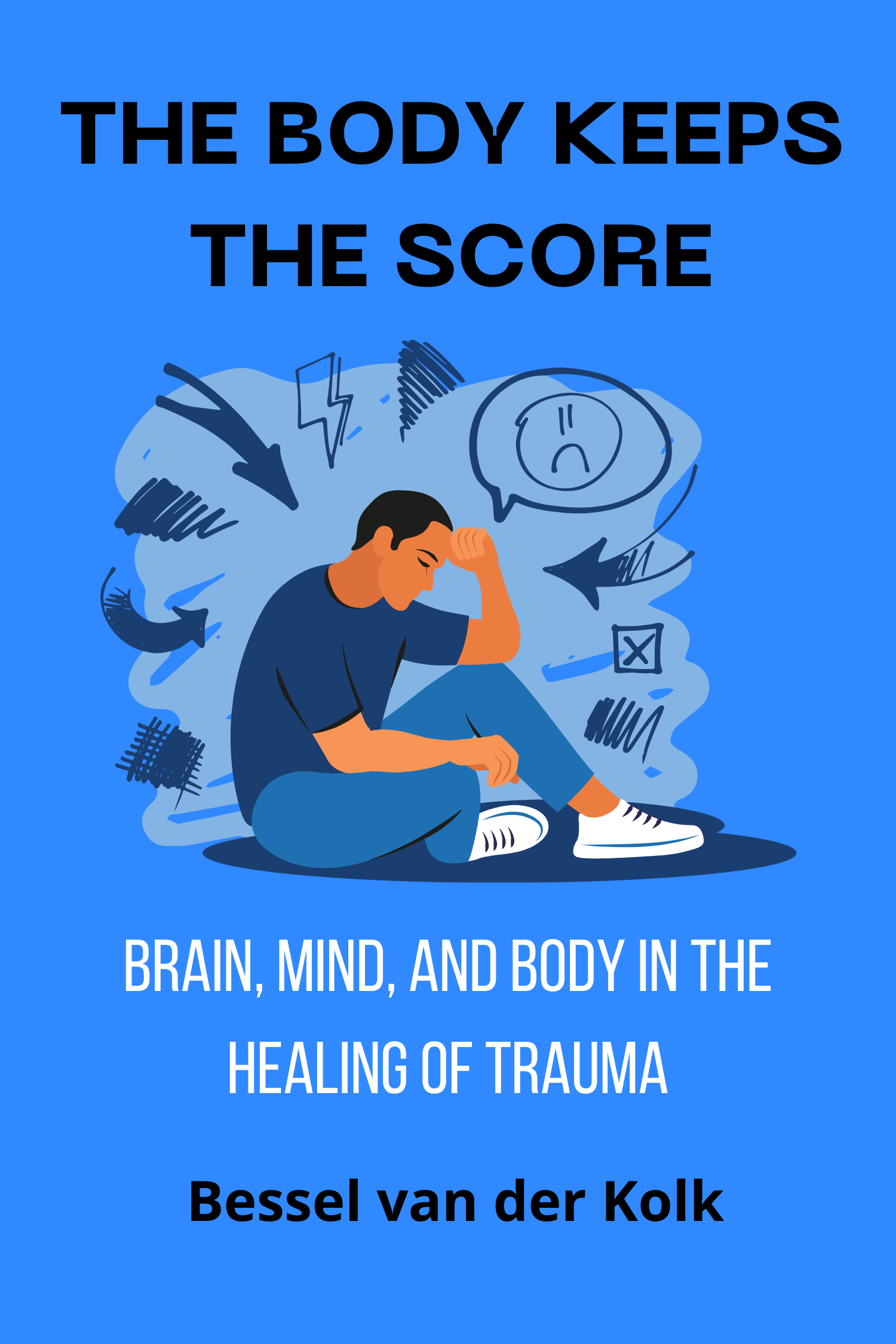
The book "The Body Keeps the Score" by Bessel van der Kolk offers an insightful look at how trauma affects the body and mind. This summary provides an overview of key ideas from the book that highlight the physical and psychological effects of trauma, the importance of post-traumatic stress disorder (PTSD), and ways to cope effectively with trauma. Key therapeutic methods include EMDR, yoga, mindfulness, and neurofeedback to help patients integrate traumatic memories, regain control of their lives, and support the healing process. These approaches represent hope for people suffering from trauma and point the way to recovery and mental balance.
Trauma affects both body and mind, causing physical and psychological reactions
Trauma has a profound and complex impact on both body and mind, triggering a wide range of physical and psychological reactions. When people experience traumatic events, their bodies often respond with intense physiological symptoms. These may include a sharp increase in blood pressure and heart rate, which are the result of the constant activation of stress reactions in the body. Research shows that when patients are confronted with memories of trauma, their bodies react as if the event were real and actual. This reaction is called a flashback and is characterized by the person reliving the mental and physical experiences of the trauma. During a flashback, the left side of the brain, which is responsible for rational thought, is often deactivated, causing people to be unable to recognize that the memories are not real.
The psychological effects of trauma are equally devastating. Trauma can affect brain function by disrupting the normal functioning of the areas responsible for rational thought and speech. This phenomenon was observed during experiments where patients were played recordings of scenarios that reconstructed their traumatic experiences. During these experiments, a marked deactivation of Broca's area of the brain, which is responsible for speech, was observed. This means that patients are often unable to talk about their experiences, contributing to feelings of helplessness and isolation.
In addition, the long-term effects of trauma can lead to chronic health problems. People with traumatic experiences often suffer from elevated levels of stress hormones that do not return to normal levels as quickly as in healthy individuals. This constant state of high levels of stress hormones can result in a variety of health complications, including autoimmune diseases. For example, patient Marilyn, who was sexually abused as a child, developed an autoimmune disease that damaged her eyesight, likely a result of the constant stress the trauma caused her body.
Children who have experienced trauma are particularly vulnerable because their brains are not yet fully developed. These children often expect bad things to happen, and this can have long-term negative effects on their mental health. In an experiment where children were shown pictures from magazines, traumatised children often interpreted a neutral image as a dangerous situation. For example, when they saw a picture of a father fixing a car, they imagined that the father would be injured, showing how trauma can shape their thinking and expectations.
Traumatic memories are special in that they are very vivid and unchanging, unlike ordinary memories, which fade and change over time. A study at Harvard Medical School followed 200 men, many of whom were veterans of World War II. The memories of the veterans who suffered trauma remained consistent more than 45 years after the war ended, unlike the memories of those who were not traumatized, which changed over time.
Overall, trauma leaves deep marks on the body and mind, manifesting in both immediate and long-term physical and psychological reactions. These reactions can significantly affect an individual's quality of life, health and ability to integrate into society and maintain healthy relationships.
PTSD leads to depression, substance abuse, and trust issues
Post-traumatic stress disorder (PTSD) has wide-ranging and profound effects on the lives of people who suffer from it. PTSD often leads to depression, substance abuse, and significant trust issues that further complicate an individual's ability to function in daily life and maintain healthy relationships.
Depression is one of the most common consequences of PTSD. People suffering from PTSD often experience a constant sense of hopelessness, loss of interest in activities they once found enjoyable, and deep sadness. This condition can be so intense that it leads to social isolation, loss of work skills and, in the worst cases, suicidal thoughts and attempts.
Substance abuse is another common problem among PTSD sufferers. Many turn to alcohol, drugs, or prescription medications as a way to escape the constant stress and anxiety that trauma brings. These behaviors may provide temporary relief, but in the long run lead to deterioration in mental and physical health and can cause addiction, further complicating the recovery process.
Trust issues are another significant aspect of living with PTSD. Traumatised people tend to distrust anyone who has not been through a similar ordeal to them, and this can lead to alienation from family, friends and partners. In therapy groups, such as those for Vietnam veterans, it has been shown that trust is often reserved only for those who share similar experiences. This can create social barriers and isolate individuals from the support they need.
Relationships with loved ones, including marriages, close friendships, and family ties, are severely disrupted. Traumatized people have difficulty trusting even those who love them most, which often leads to tension, misunderstanding, and ultimately the breakdown of relationships. Family members and friends may despair at their inability to help, which can lead to their own feelings of frustration and helplessness.
PTSD can also affect an individual's ability to maintain a stable job or career. Persistent psychological symptoms, such as flashbacks, anxiety, and difficulty concentrating, can reduce productivity and the ability to work as part of a team. This can lead to job loss and economic problems, further worsening a person's psychological state.
The overall impact of PTSD on an individual's life is extensive and devastating. Depression, substance abuse and trust issues form a vicious cycle that is difficult to break without appropriate treatment and support. Therapeutic interventions,
family and community support, as well as techniques such as EMDR and mindfulness, can help alleviate these symptoms and lead to a better quality of life.
Traumatic memories are vivid and unchanging, easily recalled
Traumatic memories are unique in their intensity, vivid detail and immutability. Unlike ordinary memories, which fade over time and adapt to new experiences, traumatic memories remain firmly rooted in the memory and are often recalled in the same form in which they were originally experienced.
When a person experiences a traumatic event, their brain records these experiences in a high level of detail, often involving sensory aspects such as smells, sounds or visual images. This intense sensory memory causes traumatic memories to be recalled whenever a person is exposed to similar stimuli, leading to unexpected and often frightening flashbacks.
One of the hallmarks of traumatic memories is their ability to be easily recalled. Ordinary memories often require purposeful recall, whereas traumatic memories can be triggered unexpectedly and without warning. It can be triggered by a variety of stimuli such as certain sounds, smells, places, or even certain emotions. For example, a person who has been in a car accident may have flashbacks whenever they hear a sound similar to a crash or see a location similar to the accident scene.
This unpredictability and intensity of memories can have serious consequences on an individual's daily life and mental health. Many people find it difficult to predict when they will face these painful memories, which can lead to a constant feeling of tension and fear. Such memories can also be very distracting and hinder a person's ability to concentrate on work, studying or other daily activities.
The overall impact of these vivid, unchanging and easily recalled memories is enormous, as they not only affect an individual's psychological state, but also interfere with their ability to function in social, work and family relationships. This is why it is important for individuals suffering from trauma to engage in therapeutic practices that help them to process and integrate these memories, thereby reducing their impact on daily life.
EMDR helps patients integrate traumatic memories and regain control
EMDR (Eye Movement Desensitization and Reprocessing) is a therapeutic technique that helps patients integrate traumatic memories and regain control of their lives. This method involves moving the patient's eyes behind the therapist's finger while the patient relives the traumatic memories and makes new associations that help to lessen the emotional charge of these memories.
One of the key benefits of EMDR is its ability to help patients integrate traumatic experiences into their ordinary memories. When traumatic memories are integrated, they cease to be constantly experienced as actual and frightening events. Instead, they become part of the past, allowing patients to process them and gain control over them.
This technique is effective because it allows patients to re-experience and re- evaluate their traumatic memories in a safe environment. During the sessions, the brain's capacity to process information is activated, which aids in integrating traumatic memories into the larger context of the patient's life. This leads to a reduction in the intensity of emotional and physical reactions to these memories.
EMDR also promotes the formation of new, positive associations. Patients can use their imagination to reframe memories during therapy. For example, they may imagine protective scenarios or symbolic acts that give them a sense of power and control over the situation. This creative reframing of memories can be extremely therapeutic and helps patients feel stronger and more resilient.
An example of the successful use of EMDR is the case of Kathy, who was forced into prostitution and experienced a gang rape. With the help of EMDR, she was able to observe her traumatic memories and create new imaginative associations that helped her regain control over these memories. After a few sessions, she made a significant recovery and later lived a happy and healthy life.
The overall goal of EMDR is to help patients gain control over their traumatic memories and their aftermath. By integrating these memories and allowing
patients to revisit and reframe their experiences, EMDR contributes to improving the mental health and overall quality of life of people suffering from trauma.
Yoga and mindfulness are effective tools to reduce the effects of trauma
Yoga and mindfulness are effective tools that can greatly help in mitigating the effects of trauma. These approaches offer a safe and holistic way to cope with the physical and emotional effects of traumatic experiences.
Yoga is a practice that connects the body and mind through physical exercises, breathing and meditation. For people suffering from trauma, yoga can provide a safe space to explore and process emotions stored in the body. Traumatic experiences often lead to the development of a hypersensitive alarm system in the body, meaning that even innocuous situations can trigger strong feelings of panic and anxiety. Yoga helps individuals connect with their bodies and become aware of these feelings without suppressing them.
An example is the patient Annie, who was raped and suffered from post-traumatic stress disorder. Initially, she had great difficulty with yoga because even gentle touches during the practice triggered her brain's alarm system. However, by continuing her yoga practice, she learned to accept and explore her negative feelings, which helped her to gradually cope with the trauma. Yoga allowed her to feel pain, vulnerability, and sadness without suppressing these emotions, which is key to the healing process.
Mindfulness, or mindfulness, is another effective tool for coping with the effects of trauma. Mindfulness is a practice focused on maintaining a conscious awareness of one's body and emotions in the present moment, rather than denying or repressing them. Traumatic memories can be very painful, which often leads people to try to avoid their feelings. Practicing mindfulness helps individuals to accept and confront these feelings, which is an important step towards healing.
Mindfulness can also alleviate the psychological and physiological effects of trauma, including depression, stress, and psychosomatic conditions such as chronic pain. In addition, it can improve immune responses, activate areas of the brain that help regulate emotions, and balance stress hormone levels. Practicing
mindfulness can be integrated into daily activities such as meditation, mindful breathing, and focusing on the present moment during ordinary activities.
The combination of yoga and mindfulness creates a powerful framework for healing trauma. Both approaches foster a mind-body connection and help individuals cope with the emotional and physical effects of trauma. By providing tools for accepting and processing emotions, yoga and mindfulness enable people suffering from trauma to regain control of their lives and improve their overall quality of life.
Neurofeedback helps to rewire the brain and promote relaxation
Neurofeedback is an innovative therapeutic technique that helps people who have suffered trauma rebuild their brains and promote relaxation. This method uses technology to measure brain waves and provide real-time feedback, allowing patients to learn to regulate their brain activity.
Brain waves are electrical signals that control our thought processes and emotional responses. Trauma can disrupt the normal functioning of brain waves, leading to problems with concentration, relaxation, and emotional regulation. For example, soldiers who have served in combat zones may produce fewer alpha brain waves, which are associated with calm and relaxation, and more brain waves associated with hyperactivity and stress, similar to children diagnosed with ADHD.
Neurofeedback allows patients to visualize their brainwaves on a screen, giving them the ability to see how their brain is functioning in real time. During the sessions, patients are encouraged to try to achieve a state of relaxation, which leads to an increase in alpha wave production. When they succeed in achieving the desired state, they see positive feedback, for example in the form of changes on the screen, which can be presented as a video game or other visual form.
This process helps patients learn to consciously regulate their brain activity. With gradual training, they can achieve better control over their emotional reactions and reduce symptoms associated with trauma, such as anxiety, depression and hypervigilance. Neurofeedback thus provides tools to rewire the brain, which can lead to lasting changes in its functioning.
The case of Lisa, one of our patients, illustrates the effectiveness of neurofeedback. Lisa experienced a difficult childhood filled with abuse and neglect, which left her brain in a constant state of stress and self-destructive behavior. During neurofeedback therapy, Lisa learned how to regulate her brain waves and achieve a state of relaxation. Through this therapy, she was able to talk about and work through her traumatic experiences without feeling overwhelmed.
Thus, neurofeedback not only helps to rebuild brain patterns, but also promotes relaxation and emotional stability. This technique is an important tool in trauma treatment because it gives patients an active role in their own healing process. It allows them to gain better control over their emotional and physical reactions, thereby improving their overall quality of life.
Final summary
The book "The Body Keeps the Score" by Bessel van der Kolk provides a comprehensive look at how trauma affects the body and mind. He emphasizes that trauma causes intense physical and psychological reactions that can severely disrupt daily life. PTSD often leads to depression, substance abuse, and trust issues, further complicating recovery. Traumatic memories are extremely vivid and unchanging, meaning they are easily recalled and relived with the same intensity as the initial experience. EMDR is an effective therapeutic technique that helps patients integrate these memories and regain control of their lives. Yoga and mindfulness are other tools that promote healing by helping patients better manage the emotional and physical effects of trauma. In addition, neurofeedback offers a way to rebuild brain patterns and promote relaxation, contributing to overall healing. The book emphasizes that there are effective methods for coping with trauma and that hope for healing is always present.