

Free text
Summary and key ideas
Book summary prepared by ReWio. Original book author: Sam Harris.
Introduction
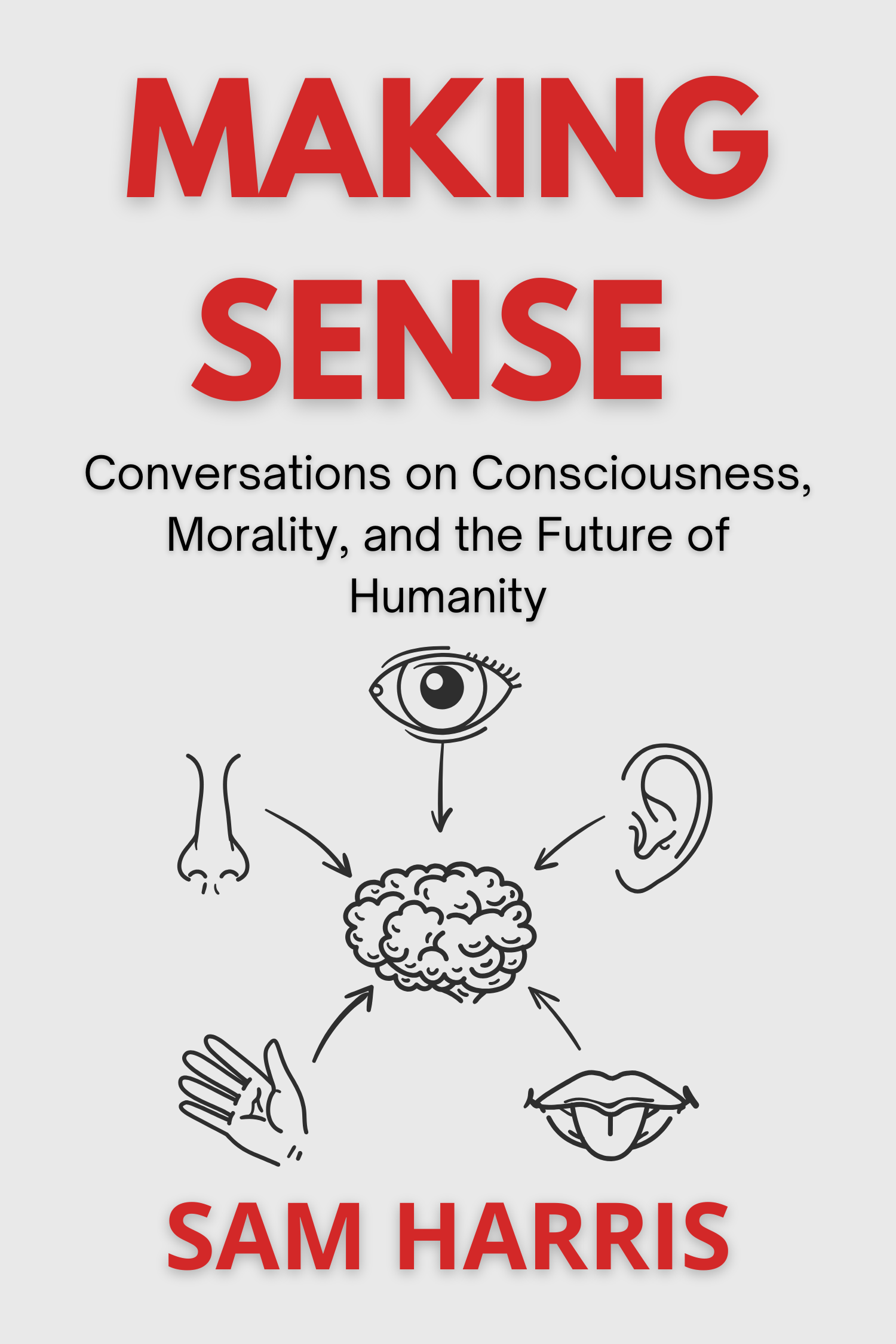
Sam Harris, the well-known philosopher and neuroscientist, delves into the depths of the human mind, history and the universe in his book Making Sense. This fascinating exploration reveals the complex issues surrounding consciousness, free will, and the ethical dilemmas facing humanity. Harris uses an interdisciplinary approach to bring together ideas from diverse fields-from neuroscience to philosophy-to bring us a clearer understanding of our reality. The book challenges us to critically examine the ideas that shape our society, replace the bad ones with better ones, and create a better world for all. This work is an invaluable contribution to anyone who desires a deeper understanding of what it means to be human.
Consciousness is still a mystery from an evolutionary point of view
Consciousness, defined as subjective experience or perception, poses a difficult problem for philosophy and neuroscience. Why does consciousness arise at all, when it would seem that all the necessary functions of our brains could be performed without it? There is no simple answer to this question.
Philosopher David Chalmers distinguishes between "easy" and "hard" problems of consciousness. Easy problems deal with how the brain processes information, such as the mechanisms of vision, where light energy undergoes neurochemical changes and activates certain areas of the brain. These functional aspects are better understood. The difficult problem, however, asks why these processes lead to the subjective experience we call consciousness.
One theory proposes that consciousness is an epiphenomenon, a by-product of complex information processing in the brain. This idea likens it to the smoke from an old-fashioned steam engine - it is part of the system, but does not play a direct role in its functioning. Another theory, proposed by neuroscientist Anil Seth, suggests that consciousness could serve to regulate and maintain the body's internal states. Emotions in this framework refer to relevant information that the brain uses to predict and respond to potential threats.
Although evolution may seem to have given us consciousness for a reason, the reasons for its existence are not clear. The question of why we began to experience the world subjectively remains unanswered, suggesting that the evolutionary purpose of consciousness is still a subject of intense investigation and debate.
Free will is an illusion
Human behavior is influenced by a myriad of factors outside of our consciousness that control our decisions and reactions to various situations. Behavioral biologists, such as Robert Sapolsky, show that our actions are the result of a complex interaction of biological and environmental factors that are often beyond our control.
Humans are susceptible to changes in behavior depending on the environment in which they find themselves. For example, persons in a room with an unpleasant odor tend to be more socially conservative. If they are reminded that they had a different opinion in a more pleasant environment, they will try to rationally explain their behavior, despite the fact that the real reason lies in sensory cues.
When behavior is examined, the issue of free will leads us to discover that we are a product of our neurobiology. For example, Charles Whitman, known as the "Texas Tower Sniper," had a tumor in his brain that was pressing on his amygdala, which probably accounted for his violent impulses. This case shows that his actions may have been the result of biological factors, not a conscious decision.
Every person is controlled by the workings of their brain and biology, just as in Whitman's case, just in a less visible way. This insight has important implications for our legal system and criminal justice system. Instead of punishing people for their actions, we might begin to consider manipulating their neurobiology to improve their behavior.
In this way, it shows that free will is not biologically based and that our perception that we have control over our decisions is more of an illusion created by our
brains. This new view of human behavior and decision-making challenges us to rethink our ethical and legal systems in light of neurobiological findings.
Both animals and inanimate objects can have consciousness
Traditionally, consciousness was believed to be inseparable from human language abilities, but modern research and theories are greatly expanding this view.
Animals, which have similar neuroanatomy and neurophysiology to humans, show signs of consciousness. Neuroscientist Anil Seth argues that at least all mammals have conscious experiences, which means they share with us not only the physiological but also the psychological aspects of being. For example, many species of birds and octopuses exhibit sophisticated behaviors that indicate some degree of consciousness, even though their biological structure is markedly different from ours.
The theory of panpsychism, which holds that consciousness is a fundamental element of the universe and can exist in all things, including inanimate objects, is one of the most debated and provocative ideas. It is supported by the Integrated Information Theory (IIT) hypothesis developed by neuroscientist Giulio Tononi. According to IIT, consciousness is the result of information processing in a system. The rate of this processing is called PHI, and when it reaches a certain value, the system becomes conscious. This could mean that even simple systems such as thermostats could be conscious because they process information, albeit at a very basic level.
The discussion of consciousness in animals and inanimate objects expands our understanding of consciousness itself. Consciousness used to be thought of as something exclusively human, but we now recognize that it can be present in other life forms and even in artificial systems. This finding has important ethical implications, especially in the context of the development of artificial intelligence and technology.
If we were to consider that machines can be conscious, we would have to rethink our ethical principles and treatment of these machines. Whether consciousness
really exists in animals and inanimate objects remains an open question, but this idea allows us to rethink our preconceptions and better understand the nature of consciousness and being.
Superintelligent, conscious machines
The future may bring superintelligent machines that will be - or appear to be - conscious. This prospect raises many questions about the nature of consciousness and how we should understand and deal with these machines. The development of artificial intelligence (AI) is progressing rapidly, and it is almost inevitable that we will create systems that exceed human capabilities in a variety of areas.
One of the main issues is whether these super-intelligent machines will have real consciousness, or whether they will just be imitations of consciousness that can convince people of their authenticity. This problem is closely linked to our understanding of consciousness as such. If consciousness depends on certain biological processes, then machines composed of metal and silicon may never achieve it. On the other hand, if consciousness is the result of some type of information processing, as integrated information theory suggests, then machines could be conscious too.
Future scenarios where conscious machines are a reality force us to rethink our ethical norms. If machines are capable of conscious experience, then we should consider how to treat them, just as we have reconsidered our ethical attitudes towards animals. There is a possibility that we may need to expand our ethical circle to include these new forms of conscious life.
Two main paths we can follow have been suggested by the neuroscientist Anil Seth. The first path involves recognizing conscious machines and extending our ethical commitments to them, which would entail new laws and regulations to protect them. The second path may lead to the dehumanization of these machines and their use without regard for their possible consciousness, with potentially disastrous consequences.
The greatest threat could be the possibility that we create super-intelligent
machines that are incredibly efficient in their tasks but have no consciousness. Such machines could carry out commands without regard to ethical implications, leading to the potential destruction of the world if their goals were contrary to the interests of humanity.
These considerations force us to think carefully about how we program and develop AI. It is important that we ensure that the goals and values we put into these systems are consistent with our own ethical standards and interests to avoid catastrophic scenarios.
Our "self"
is much more complex and fragmented than we often realise. Although we tend to see ourselves as unified and stable beings, modern neuroscience shows that our perception of ourselves is the result of a complex set of processes that are not always coherent.
We spend most of our day lost in thought, suggesting that we have much less control over our minds than we think. Empirical data shows that we spend 30 to 50 percent of our waking hours being carried away by thoughts. If we add in time spent daydreaming, that number increases even more. Our thoughts often arise automatically, without conscious control, challenging the notion of a coherent and stable self.
There are many different aspects of ourselves. The sense of embodiment, the perception that we are contained within a body, is one of the simplest. The social self constitutes our identity in different social contexts - for example, in the family, at work or among friends. The narrative self is the story we tell ourselves about ourselves, while the volitional self is the one that feels we make decisions and exercise our will.
Despite the apparent unity of these different aspects, neuroscientist Thomas Metzinger argues that none of them is real. According to his self-model theory of subjectivity, we do not have a real self, but rather we have a persistent self-model
in our brains that we identify with. Our thoughts do not arise from a fixed "I" but from a dynamic and ever-changing process.
The brain is constantly integrating information from the environment and forming coherent thoughts from it. The DMN-plus network, which is active when we are not concentrating, combines this information and transforms it into our thoughts. This process is automatic and beyond our conscious control.
Meditation can help break the illusion that thinking is a conscious, self-directed process. By sitting quietly and observing our thoughts, we can become aware of their automatic occurrence and decide whether or not to engage with them. In this way, we can gain more control over our minds and better understand the nature of our 'self'.
Technological advances can have a destructive effect
Technological advances, while bringing many benefits and innovations, can also lead to potentially destructive consequences. This concept is well illustrated through the philosopher Nick Bostrom, who put forward the metaphor of the urn of invention. Imagine an urn full of multicoloured marbles, where each marble represents an idea, an invention or a cultural norm. The white balls have positive outcomes, the gray ones have mixed positive and negative effects, and the black ones are highly harmful, potentially destructive to civilization.
So far, we have been lucky to pull mostly white and gray balls from the urn, but in terms of probability, it is inevitable that there are black balls as well. One of the closest examples of a black sphere is the discovery of nuclear power and the production of the atomic bomb. Fortunately, the technical and financial difficulty of producing atomic weapons has meant that these technologies have not fallen into everyone's hands.
But imagine if creating such a devastating technology was as easy as heating sand in a microwave oven. Such a 'simple atomic bomb' could spell the end of civilisation because it would become readily available and could be exploited for mass destruction.
As technology continues to advance, the risk of pulling off such a black ball is ever greater. We can imagine that one day we will discover technologies that will be so destructive that we will be unable to control them. To cope with this risk, Bostrom proposes two main measures: an extremely effective preventive police force or a global government.
Preventive policing would involve constant surveillance and control of every individual, leading to a dystopian scenario where we would have to live under constant surveillance. The alternative would be a highly effective world government that had absolute power and could ensure that destructive technologies did not fall into the wrong hands.
It is imperative that we take existential threats seriously and consider the myriad ways in which technological development could go awry. While it may seem like a distant threat, preparedness and precautionary measures are key to ensuring that technological advances bring more benefits than risks. In this way, we can ensure that our future innovations are not destructive to humanity and that we avoid worst-case scenarios.
Hidden racism
Racism is often not overt and obvious, and it is this covert nature of racism that makes it particularly dangerous and difficult to tackle. Although the United States has a long history of racial discrimination and injustice, today's forms of racism are often more subtle and less visible.
Glenn Loury, professor of economics and social science, defines racism as the disdain or denigration of another person's humanity based on his or her assumed racial identity. This kind of prejudice can be deeply embedded in social structures and individuals are often unaware of it. Unconscious prejudice is common and affects both blacks and whites, and people tend to favour members of their own racial group.
These prejudices often stem from structural racism, which creates systemic
disadvantages for black people. For example, black people make up approximately 12% of the US population, but represent up to 40% of the prison population and 25% of victims of police violence. These statistics point to deep-rooted inequalities in the justice system and other areas of social life.
However, Loury warns that the concept of structural racism may be insufficient to explain all racial disparities. Indeed, this narrative often denies the possibility of individual initiative and responsibility on the part of black people, suggesting that the only way to improve their situation is to wait for changes that must come from white people. Such a view can lead to a pessimistic perception of the future for black people, which is neither optimistic nor motivating.
It is important that we discuss racism openly and in good faith. We must recognise that racism can exist in different forms and that its manifestations can be subtle and indirect. Such an approach will enable us to better understand the problems faced by marginalised groups and to work more effectively to address them.
Discussing covert racism also requires us to be willing to rethink our own prejudices and the ways in which we contribute to the perpetuation of racial inequalities. Only in this way can we make real progress towards a fairer and more inclusive society, where every individual is afforded equal dignity and opportunity, regardless of their racial or ethnic identity.
Tyranny in society
Bullying can germinate subtly in society, often as a result of a lack of vigilance or ignoring warning signs. The importance of attention to and early action against tyrannical tendencies is illustrated by Václav Havel in his essay 'The Power of the Powerless' through the parable of the greengrocer in communist Czechoslovakia. A greengrocer places a sign in his shop window with a communist slogan, even though he does not actually agree with it. He does this act only to avoid trouble with the regime. Other people begin to perform similar acts, and so loyalty to the regime becomes an obligatory norm that no one opposes.
This example shows how easily conformity can dominate public space and how
resistance can become unthinkable. Societies must be vigilant and actively oppose authoritarian tendencies that can gradually undermine democracy and freedom. History provides us with cautionary examples of how quickly and subtly democracy can give way to tyranny. In 1933, many German Jews believed that Adolf Hitler would never be able to deprive Jews of their rights or systematically murder them. Yet that is exactly what happened. Today, warnings about authoritarianism are often dismissed as paranoia, but it is important to remember that tyrants usually do not come to power in dramatic coups, but rather in incremental steps, often through democratic elections.
This is what has happened in Russia, where Vladimir Putin, on taking office, has gradually begun to dismantle democratic institutions, filling the public space with lies and demonising the independent media. Similar tendencies can be seen in the rhetoric and actions of politicians in other countries, including the United States. Historian Timothy Snyder warns that if we do not recognise these dangers and actively work to protect our freedoms, we risk contributing to the rise of tyranny. Democracy is not a given and requires our constant attention and commitment.
Resistance to tyranny therefore begins with individual attitudes and public expressions of dissent. We must be vigilant against any signs of authoritarian practices and actively work to defend democratic values, freedoms and rights. Only in this way can we prevent tyranny from once again taking over our societies.
Counterintuitive facts about the universe
Mathematics and physics often reveal facts about the universe that are deeply counter-intuitive and challenge our ordinary ideas about reality. One of the most intriguing aspects is the idea that everything we see is essentially mathematics. When we look at someone, we are actually seeing a collection of physical particles - quarks and electrons - that have certain mathematical properties, such as electric charge, spin, and more. These properties are not just abstract concepts, but fundamental constituents of matter.
Another counterintuitive fact is the very definition of the universe. We commonly think of the universe as encompassing everything that exists. However, cosmologists define the universe as a specific spherical region of space that
encompasses everything we can observe at any given time. This definition opens up the possibility of the existence of many other universes beyond our observable universe.
The theory of inflation, which refers to particles called inflationary matter, posits that the universe expanded extremely rapidly after the Big Bang. Inflation predicts an infinite universe, which means that all possible combinations of events must exist infinitely many times in an infinite space. This includes the idea that somewhere in the infinite universe there exists an exact copy of our planet with all the people and events, with only one small change.
Inflation also suggests that the universe may contain an infinite number of regions that are also infinite. This leads us to consider that the basic laws of physics, which we hold to be immutable, may be different in different regions of the universe. There may be a place where, instead of the six types of quarks that we know, there are ten types of quarks.
These ideas show us that our universe is much more complex and strange than we might think. Mathematics and physics provide us with the tools to uncover these hidden aspects of reality that are often at odds with our intuitive ideas. In this way, these sciences allow us to understand more deeply the nature of the universe and our place in it.
Final summary
Sam Harris's Making Sense explores complex issues related to consciousness, free will, ethics, technology, and the universe. Harris emphasizes the importance of an interdisciplinary approach to understanding these topics and challenges us to critically examine our thoughts and attitudes. Through interviews with a variety of experts and philosophers, the author provides us with insightful perspectives on how the human mind works, how our reality is shaped, and what challenges the future holds. It is imperative that we use this knowledge to create a better world where technology serves humanity, consciousness is understood, and ethical issues are addressed with the good of all beings in mind.