

Free text
Summary and key ideas
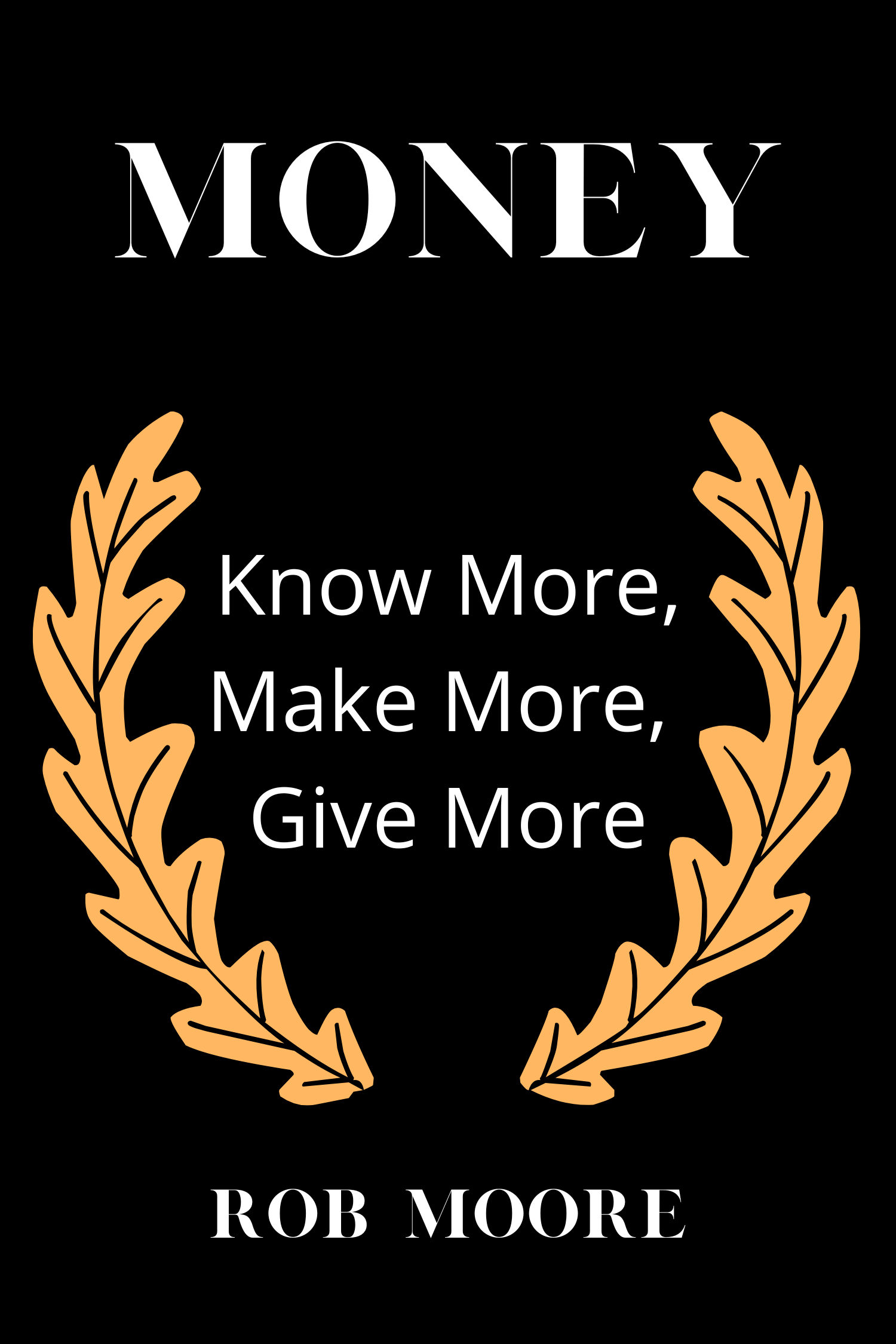
Book summary prepared by ReWio. Original book author: Rob Moore.
Introduction
The book "Money" by Rob Moore focuses on explaining why money is important and how it can affect every aspect of our lives. Rob Moore begins the book by talking about common myths and misconceptions about money, such as "money doesn't make you happy" or "there isn't enough money for everyone". He then debunks these myths and points out that money is a tool that can bring freedom and a better quality of life if understood and used correctly.
Moore also discusses the importance of financial education and explains how money can become a source of power and control in our lives. He argues that understanding the real rules of the money game and learning the right habits can lead to financial independence and prosperity.
Money acts as a lever
Money has the unique ability to act as a lever that can improve your financial life by allowing you to accomplish more with less time and effort. This idea is central to the book and explains how money, properly understood and used, can lead to significant increases in wealth and financial independence.
Leverage is a tool that allows us to magnify the effect of our actions. In the context of finance, this means that we can achieve more with money than we could on our own. For example, by investing in real estate using a bank loan, we can acquire a large asset that generates income and increases its value, while we have invested only a fraction of the necessary capital. This strategy uses the principle of leverage, where a small initial investment can yield large returns.
In the book, Moore describes an example where an investment in a £250,000 property using £750,000 from a bank loan can yield a significant profit after ten years due to the growth in the value of the property. If the value doubles, after deducting the loan and interest, the investor is left with a net profit. This scenario illustrates how leverage can multiply the return on investment.
Rob Moore also gives examples of successful people, such as entrepreneurs and
investors, who understand this principle and use it to maximize their wealth. He mentions that millionaires and billionaires understand that time and money are the most valuable resources they have and therefore use them strategically to achieve the best possible results.
Proper financial planning and education is an essential part of leveraging. Without a thorough understanding of financial principles and strategies, it is difficult to effectively use money as leverage. Therefore, it is important to continually educate ourselves and improve our financial skills so that we can make informed decisions that maximize our financial potential.
This approach allows us to turn our personal wealth - our skills, abilities and passions - into financial wealth, thereby achieving a higher level of financial independence and stability. Money, when properly understood and used, can be the most powerful tool to improve our quality of life and achieve our goals.
Independence is important
Financial independence is more than just an economic status, it is a way of life that gives you freedom and control over your own destiny. Moore discusses how important independence is to achieving personal and financial fulfillment.
Imagine no longer having to work at something that doesn't fulfill you just to cover your expenses. Financial independence means that you have enough passive income to cover your living expenses without having to work on a regular basis. This status allows you to focus on activities that bring you joy and meaning, whether it's traveling, spending time with family, or developing personal projects.
An example is Mark, an entrepreneur who achieved financial independence after years of running a successful business. Thanks to his passive investment income, he can afford to devote himself to charitable activities and spend more time with his family. Independence has allowed him to fully dedicate himself to the things he loves while contributing to the betterment of his community.
One of the key steps to achieving independence is understanding and overcoming
common myths about money. For example, the idea that money won't make you happy is a common misconception. The reality is that money provides opportunities and time for activities that actually make us happy. Quality time spent with family, traveling, or developing personal hobbies often requires funds and free time that independence provides.
Proper goal setting and planning is also an important aspect. Moore recommends using the VVKIK system - Vision, Values, Key Result Areas, Income Generating Tasks and Key Performance Indicators. This system helps to focus on the most important areas of life and business that contribute to achieving financial independence.
Investing in real estate, stocks and other assets is another key strategy. An example would be a person who systematically invests in a diversified portfolio that generates a steady passive income. These investments, properly managed, can provide steady income and capital appreciation, leading to long-lasting financial independence.
Financial independence is not just about money, it is about the freedom to make decisions about your life without the constraints that financial scarcity brings. It allows us to be fully fulfilled and to pursue what truly fulfils us.
Myths about money
There are many myths about money that often discourage us from achieving financial success and independence. Moore discusses these myths and shows why they are wrong and how overcoming them can open the path to wealth and prosperity.
One of the most common myths is that money doesn't make us happy. This myth often leads people to underestimate financial success. Money alone may not bring happiness, but it does allow us to gain freedom and time for activities that fulfill us. We can afford quality time with family, travel, pursue hobbies, and gain access to better education or healthcare. Real-life examples show that financially secure people are more able to invest in their personal development and lifestyle, which directly affects their overall wellbeing.
Another widespread myth is the belief that there is not enough money in the world for everyone. This myth creates a scarcity mentality and leads to pessimism. According to the former Governor of the Bank of England, Mervyn King, there is approximately GBP 80 trillion in the global economy and another GBP 150 to 180 trillion in stocks and bonds. These figures show that there is more than enough money; the problem is its uneven distribution and our perception of its availability. Moore points out that people who believe in abundance are more likely to get their fair share.
The third myth concerns the idea that money is the cause of all evil. This notion often hinders people in their pursuit of wealth because they fear that money will make them bad people. In fact, money itself has no moral value; it is a tool that can be used for both good and evil purposes. Money can be used to support charities, improve living conditions and create opportunities for others.
Another myth is that one can only get rich through hard work and sacrifice. While it is important to be disciplined and hardworking, hard work alone is no guarantee of wealth. Moore stresses the importance of working smart, using resources efficiently, and looking for opportunities that yield high returns with less effort. An example of this is the use of leverage, where small investments yield large returns, as discussed in real estate investing.
Money myths are obstacles that prevent many people from achieving financial independence and success. Overcoming these incorrect beliefs and gaining a realistic and positive view of money is key to achieving financial success and fulfilment. In his book, Moore provides not only an analysis of these myths, but also practical advice and strategies on how to overcome them and use money to improve your quality of life.
Achieving Prosperity
is a goal that may seem elusive, but with the right strategies and mindset, it is fully achievable. In this chapter, Moore provides a comprehensive guide to achieving financial prosperity and securing a stable future.
The first step to achieving prosperity is changing the way you think about money. Moore discusses the importance of a positive financial mind-set. Prosperity starts with believing in the possibility of achieving it and stop limiting yourself with myths of scarcity. This mental shift is essential to creating an openness to opportunities that will bring you financial success.
One of the key strategies for achieving prosperity is the effective use of financial tools and investments. Moore recommends diversifying your portfolio and investing in a variety of assets such as real estate, stocks, and businesses. This way, you can minimize risk and maximize potential returns. For example, investing in real estate can not only provide regular rental income, but also capital appreciation due to the growth in property value.
An example of a successful path to prosperity is the story of an entrepreneur who invested in several real estate projects. Through good timing and smart investment management, he was able to create a steady and growing income that allowed him to expand into other areas. This case shows how a diversified investment portfolio can create a solid foundation for long-term prosperity.
Moore also stresses the importance of learning and expanding financial knowledge. Financial literacy is a key success factor. The more you understand financial markets, investment strategies and economic trends, the better able you will be to make informed decisions that will increase your chances of prosperity. For example, understanding the concept of compound interest can significantly impact your investment strategies and help you build wealth efficiently.
Tracking and managing your net worth is also a practical step. Creating a clear record of all your assets and liabilities will allow you to better plan and make informed decisions about your finances. This approach will give you a clear picture of your financial situation and allow you to identify areas where improvement is needed.
Examples of successful individuals and entrepreneurs show that achieving prosperity is not just about luck, but about the right strategies, discipline and
continuous learning. In his book, Rob Moore provides a comprehensive guide on how to apply these principles in practice and achieve financial success.
The Money Paradox
is a fascinating concept that is described in detail in the book. The paradox is that to achieve financial success, you must find a balance between different approaches to money that may seem contradictory at first glance. You need to know when to save and when to invest, when to share and when to be careful with spending.
One of the key aspects of this paradox is understanding the difference between saving and hoarding money. Saving is important for ensuring financial stability and being prepared for unexpected expenses. Hoarding money, however, can lead to stagnation because money that is not invested does not bring any value. An example would be a person who has substantial savings but keeps them in a current account with minimal interest. This money could be used more efficiently by investing in stocks, real estate or other assets that yield higher returns.
Another important aspect is money sharing and philanthropy. Moore points out that sharing wealth can be very beneficial, not only for society but also for the donor. Philanthropy and charitable contributions can bring a sense of satisfaction and contribute to a positive image, which can also indirectly support business interests. For example, well-known entrepreneurs such as Warren Buffett and Bill Gates have donated significant portions of their wealth to charitable causes, which has not only brought them social recognition but also enhanced their brand and public trust.
Moore also talks about the necessity of proper time management. In today's world where time is one of the most precious resources, it is important to know how to use it effectively. Financially successful people often delegate tasks that do not bring them high value to others. An example is an entrepreneur who, instead of spending time on administrative tasks, invests his time in strategic planning and business development, which brings him a much higher return.
The paradox of money is also reflected in investment decisions. It is important to
have the courage to invest in riskier but potentially more profitable assets, while at the same time being cautious and diversifying your portfolio to minimise risk. For example, investing in technology start-ups can yield high returns but is associated with high risk. Therefore, it is important to combine these investments with safer assets such as government bonds or real estate.
As a result, understanding and mastering this paradox allows you to manage your finances effectively and achieve long-term financial success. The key is to strike a balance between conflicting financial strategies and be flexible in your approach to money management. In this way, it is possible to achieve not only financial stability, but also personal satisfaction and prosperity.
The VVKIK system
, which Rob Moore presents in his book, is an effective tool for achieving financial success and proper time and resource management. The system stands for five basic elements: Vision, Values, Key Result Areas, Income Generating Tasks, and Key Performance Indicators.
Vision is the first and most important step. It is a clear idea of what you want to achieve in your life and career. Moore recommends that you set big, ambitious goals that will motivate you. A vision helps you maintain direction and gives you a reason to strive. An example would be an entrepreneur who sets a goal to become a leader in his or her industry and create a company that will change the marketplace.
Values are the second element of the system and determine how you want to achieve your vision. They are the principles that guide your decisions and behaviors. Moore recommends that you write down your values and review them regularly to make sure they are aligned with your vision. Values such as integrity, transparency and innovation can be key guides for your decisions.
Key Result Areas (KRAs) are high-value areas that you should focus on to achieve your vision. These areas are critical to your success and can include activities such as relationship development, marketing, or product innovation. Examples of KRAs
for a start-up might be new product development and building a strong customer base.
Income generating tasks (IGTs) are specific activities that directly contribute to increasing your revenue. Moore stresses that not all tasks are of equal value, so it's important to identify those that bring the greatest financial benefit. Examples might be making sales calls for a salesperson or creating content for a marketer that will attract new clients.
Key Performance Indicators (KPIs) are measurable metrics that allow you to track your progress and performance. They are concrete numbers that show you if you are getting closer to achieving your vision. Examples might be monthly revenue growth, number of new customers, or return on investment. These metrics give you feedback and allow you to adjust your strategies in real time.
Implementing a VVKIK system can help individuals and businesses achieve high levels of efficiency and success. By focusing on these key areas and continuously monitoring and improving them, you can achieve your goals faster and with less effort. This systematic approach is designed to help you maintain focus on what's really important and eliminate activities that don't deliver value.
The law of value and fair exchange
This law states that intrinsic value is determined not just by what we think something is valuable, but by how that value is perceived and accepted in the marketplace. Value is therefore subjective and is constantly shaped by the needs and desires of others.
One of the key elements of this law is the understanding that the value we bring should always be fairly exchanged for the value we receive. This means that if we want to gain financial success, we must first offer something of value to others. This principle applies in business, career and personal relationships.
Moore often cites examples of successful entrepreneurs and innovators who have understood and used this law to their advantage. For example, Steve Jobs created
products that revolutionized the way people use technology. Products like the iPhone and iPad were not just technological devices, but tools that brought tremendous value to users by simplifying and improving their lives.
This law also explains why some business models work and others fail. If the value offered is significantly below the expected price, customers will be unwilling to pay for it. On the other hand, if the value is high and the price is fair, the exchange will be successful and sustainable. For example, many start-ups fail because their products or services do not deliver enough value to justify the price they ask.
Fairness of exchange is also an important part of this law. Long-term success is only possible if exchanges are fair and mutually beneficial. If we focus only on maximising profit without regard to the value to the other party, we may make money in the short term but lose trust and customers in the long term.
This law is applicable not only in business but also in personal finance. If we want to increase our income, we must continually increase the value we offer to our employer or customers. This means continually educating ourselves, improving our skills, and looking for ways we can be more valuable to others.
An example would be an employee who is constantly working on their professional development, gaining new certifications and experience that allow them to offer more value to their employer. Such an employee is then a more likely candidate for promotion and a pay rise.
The law of value and fair exchange is a key principle that helps individuals and businesses achieve success by focusing on delivering real value and creating fair and sustainable exchanges. This approach not only increases the chances of financial success, but also builds trust and long-term relationships with partners, customers and the community.
Final summary
In his book, "Money," Rob Moore offers insightful perspectives on financial literacy and strategic planning that are essential to achieving financial success and
independence. He emphasizes the importance of a positive approach to money, continuous education, and the intelligent use of leverage to maximize returns. The VVKIK system he presents is a practical tool for effective personal finance and business management. Moore also debunks common myths about money and provides guidance on how to achieve prosperity through a fair exchange of value. The book is a comprehensive guide that shows readers how to properly handle money so they can live a life of financial stability and freedom.