

Free text
Summary and key ideas
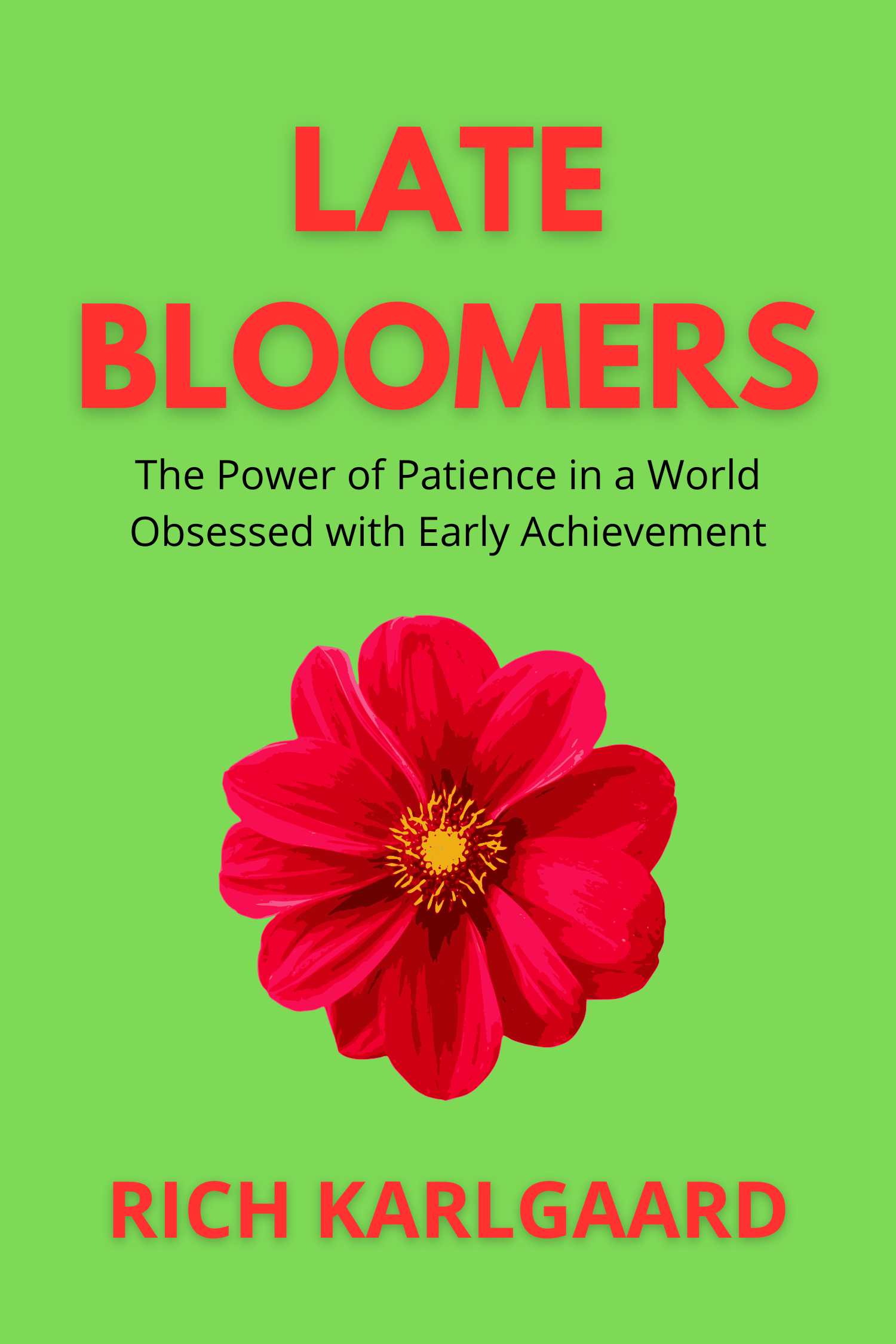
Book summary prepared by ReWio. Original book author: Rich Karlgaard.
Introduction
In "Late Bloomers", Rich Karlgaard explores the concept of success and debunks the myth that we must achieve our greatest success at a young age. Through stories and scientific findings, he shows that many people blossom later in life, when they discover their true talents and potential. The author emphasizes that everyone's path to success is unique and should be viewed with patience and understanding. The book is an inspiration to all who are searching for their place in life, and offers guidance on how to overcome societal pressures for early success and find contentment and success on one's own terms.
The impact of society's obsession with early success on individuals
Society is often obsessed with the idea of achieving success at a young age, which can have serious consequences for individuals. This culture glorifies 'child
prodigies' who achieve extraordinary success at a young age, putting pressure on others to achieve similar results as early as possible. Historically, this trend began in the mid-20th century, when the United States shifted from an aristocracy to a meritocracy, where success began to be measured by ability rather than by ancestry or money. This shift caused students, parents, and employers to become obsessed with test scores and prestigious universities.
This obsession can lead to many negative consequences, especially for young people who are not prepared to handle such pressure. Young people are often forced to strive for success before they are cognitively or emotionally ready to do so. This can lead to feelings of failure if they do not achieve the expected results in the time allowed. An example is the story of Jonah Lehrer, who became successful at a young age and set the standard for other young people. Lehrer was a child prodigy who won an essay contest at the age of 15 and later published three books by the age of 31. His success became a symbol of what was expected of young people, which created enormous pressure to achieve similar results.
The problem is that this model of success does not take into account individual differences in the pace of development and can cause considerable stress. Many young people may feel that if they do not achieve success by a certain age, they have failed. This pressure can lead to mental health problems such as depression
and anxiety. Statistics show that rates of depression among young people are steadily rising, precisely because of unrealistic expectations of success. Society should recognise that each person has their own unique time frame for success and that delayed flourishing can be just as valuable and satisfying as early success.
It is important to understand that the pressure to achieve success at a young age can be destructive for many. Rather than celebrating only those who achieve success quickly, we should acknowledge and encourage different paths to success. Each person has their own story and pace at which they progress, and society should create an environment that respects and supports this. This could lead to a healthier and happier life for many individuals trying to find their path to success.
The pressure to succeed and its impact on mental health
The pressure to succeed at a young age has a significant impact on young people's mental health. Today, society has become obsessed with test scores and prestigious universities, leading to enormous stress among students. This pressure is often fueled by parents who spend thousands of dollars a year on prep courses and tutoring in the hopes that it will help their children gain admission to a prestigious college. The test-prep industry generates nearly $1 billion a year, with some tutors charging as much as $1,000 an hour, as in the case of Anthony-James Green of New York.
This constant pressure can have serious consequences for young people's mental health. Many students feel overwhelmed and do not know how to cope with the stress associated with constant competition and high expectations. In 2014, the World Health Organization found that depression is the most common cause of illness in adolescents. This condition leads to an increase in suicide rates among young people. For example, between 2014 and 2015 at Gunn High School in Palo Alto, three talented students committed suicide and 42 others were hospitalized or treated for suicidal thoughts.
Jean M. Twenge, an expert in adolescent psychology, explains that the rise in depression among young people is linked to a shift from internal to external goals. Internal goals include personal development and self-knowledge, while external goals focus on material achievement and status, such as test scores, high income,
and good looks. Society places more emphasis on external goals, causing young people to feel constantly pressured and inadequate.
This pressure can lead to a feeling that if young people do not achieve certain accomplishments in a set amount of time, they have failed. This setting of expectations makes young people feel inadequate and lose confidence in their abilities. Many then resort to self-harm or other forms of self-destruction to cope with stress and anxiety.
It is important that society changes its approach and starts to place more emphasis on young people's mental health and well-being. This means encouraging them to explore and develop their inner goals and to measure success not only by external measures but also by personal development and happiness. This approach could help reduce stress and improve young people's mental health, creating a healthier and more balanced environment for future generations.
Brain development and individual rate of progress
Brain development and the rate at which individuals achieve success varies and is strongly influenced by biological factors. Author Rich Karlgaard, using his own example, shows that many people may not achieve their greatest success at a young age. Karlgaard had mediocre grades in college and spent his twenties doing jobs that didn't fulfill him. It wasn't until later in life that he discovered his true abilities and founded a successful magazine in Silicon Valley.
New research shows that the brain does not fully develop until the age of 25, and even later for some individuals. This process is called postadolescence and involves a period when young people have not yet reached full cognitive maturity. The prefrontal cortex, which is responsible for planning, organizing, and problem solving, is the last to develop. This means that young people are biologically predisposed to flourish later in life.
One of the most significant studies that supports this theory is a longitudinal study by the National Institute of Mental Health that followed 5,000 children from age 3 to 16 through their early adulthood. The results showed that the brains of these
individuals did not fully mature until age 25 or even later. This research underscores that trying to get young people to achieve early success is pointless because their brains are not yet fully developed to handle challenging tasks and responsibilities.
Karlgaard's personal experience also supports this idea. In his twenties, he experienced a pivotal moment when his brain "woke up". He was able to read challenging publications and generate business ideas, something he had not been able to do before. This sudden development of ability shows that some people need more time to discover their true talents and achieve success.
An important conclusion is that society should accept different rates of progress of individuals and not create pressure to achieve success early. Young people should be allowed to discover their talents and interests at their own pace without feeling that they are failing if they do not reach certain milestones at an early age. Such an approach could promote long-term happiness and success by allowing each individual to blossom at a time when they are biologically and emotionally ready to do so.
Emerging adulthood as a period of self-realisation
Emerging adulthood, the period between adolescence and full adulthood, has become an important time for self-realization. Social and economic changes have led to young people today often finishing school later, becoming financially independent later in life and delaying starting a family. This period, which psychology professor Jeffrey Arnett has dubbed "emerging adulthood," typically takes place between the ages of 18 and 30.
Emerging adulthood is a period of discovery and exploration as young people try out different lifestyles and career paths without the commitments that come with full adulthood. Arnett believes this period is crucial for personal development and cognitive growth. Young adults have the opportunity to travel, experiment with different relationships and jobs, and find their true interests and passions.
Cultural changes, such as fewer entry-level jobs and a greater need for higher education, have contributed to the lengthening of this period. Many young people
are opting for a gap year or a break before, during or after college. This break can be cognitively beneficial because it maintains brain plasticity, the brain's ability to renew itself and make new connections. The break also promotes independent thinking, acquisition of new skills, and increased motivation.
An example of a positive use of emerging adulthood is the Mormon religion, which encourages young people to take a two-year break from college to go on missions. Many of them graduate at age 24 instead of the usual 22. This model allows them to reach cognitive maturity before they begin their careers or start a family. The extended period of emerging adulthood is not just about relaxation and fun. It is a period of intense learning and self-fulfilment. Young adults should be encouraged to engage in cognitively stimulating and challenging activities that will help them develop new skills and perspectives.
This period provides young people with the opportunity to explore their true interests and potential, which can lead to long-term happiness and success. Society should recognise and support the importance of emerging adulthood as an important period for self-fulfilment and cognitive development.
The benefits of ageing for cognitive abilities
As we age, our cognitive abilities do not necessarily change only for the worse; some of them even improve and reach their peak. The idea that we are best equipped for life when we are young and then gradually decline is wrong. Research shows that different cognitive abilities peak at different ages, which means that we can discover new strengths and abilities even in middle age and beyond.
In 2015, researchers Laura Germine and Joshua Hartshorne conducted research that measured the cognitive abilities of nearly 50,000 people through online brain tests. They found that information processing speed peaks in the late teens, while short-term memory improves until about age 25 and then stabilizes for the next decade. The ability to evaluate complex patterns, including other people's emotional states, reaches a peak in one's forties or fifties. Our crystallized intelligence, which is a lifelong accumulation of facts and knowledge, peaks only after sixty or seventy.
The Seattle Longitudinal Study, ongoing at the University of Washington since the 1950s, shows the brain's adaptability in middle age. Sherry Willis, the study's leader, found that air traffic controllers, although they lose mental processing speed and short-term memory as they age, are able to maintain high performance. That's because their spatial reasoning and emotional calm, key skills for the job, improve with age.
The adult brain has the ability to rebuild and integrate years of experience and behavior, leading to greater emotional stability, less neuroticism, and better handling of social situations. These abilities are important for successful aging and show that middle age and old age bring many cognitive benefits.
For those who invest in their health, education, and curiosity, these benefits can bring new peaks throughout life. Therefore, it is important to recognize and value the cognitive abilities that develop in later life and to understand that aging brings not only declines but also new opportunities for personal and professional development.
Working in one place is no longer modern
The traditional career model, where individuals are expected to work in one place and gradually climb the career ladder until retirement, is no longer sustainable in the modern world. This linear approach often leads to burnout and under- utilisation of employees' potential. We need a new approach to career development that allows people to continually grow and flourish throughout their lives.
In most companies, good employees are rewarded with higher titles, more authority and higher salaries. However, when they reach their peak, they often find themselves at a dead end. Companies can't keep increasing their salaries and giving them new titles, leading to a practice called "up-and-out" in law and accounting firms, where employees are simply let go when they reach a certain age or level.
This practice is a waste of talent and experience. Many employees who are made
redundant are still full of energy and skills that could contribute to the development of the company. The author suggests that we look at careers as a series of arcs where even older employees can still do valuable work. The new model for career development should include stopping salary and title growth after a certain point, with employees able to move into consulting or mentoring positions. This approach would allow senior staff to continue working and sharing their experience with junior colleagues, ensuring continuity of knowledge and experience.
In addition, the social norm regarding retirement age should also be changed. Forced retirement at the age of 60 or 65 is an outdated concept that does not reflect the abilities and contribution of older workers. Instead, people should be able to work for as long as they wish and are able to contribute.
The new career model should be flexible and allow people to experiment with different roles and projects throughout their careers. This would ensure that employees are motivated and engaged, which is key to long-term success and satisfaction. Companies that adopt this approach will have an advantage in retaining talented and experienced employees, leading to better performance and innovation.
It's time to rethink how we approach career development and create an environment that enables continuous growth and flourishing for all employees, regardless of their age or career level. This new approach could bring not only individual success, but also the overall development of the company.
Cultural influences often shape our expectations
and self-image, which can lead to paths that are not appropriate for us. Erik Wahl is an example of how separating yourself from these influences can be the catalyst for discovering true passion and success. Wahl was raised with the belief that he had to get perfect grades, go to a prestigious college, and get a high-paying job. This mentality led him to success in business, where he became a partner in a firm providing entertainment and speakers. However, everything changed during the economic crash of 2008 when he lost everything he had worked for.
After that experience, Wahl realized that the old belief system he grew up with was no longer working. He began to meet artists he had always admired for their free thinking, and began to learn how to paint. At first his paintings were terrible, but the harder he tried, the better he got. Eventually, he was able to make more money as an artist than as a businessman and investor.
Wahl's story illustrates how cultural influences can hinder our true potential. Each of us is influenced by our family, peers and society. These influences often lead to expectations that may not match our true interests and abilities. If we feel like we haven't had a chance to blossom, it's important to examine these influences and see if any of them are holding us back.
For example, if family is pushing us to take a job that isn't a good fit for us, it's time to take a step toward independence. This doesn't mean rejecting love or giving up family expectations, but choosing our own path that will allow us to blossom. Declaring independence from these influences can be challenging, especially when it comes to the people we love.
One of the first steps is to identify these cultural influences. If we find that we have conformed to expectations that are not appropriate for us, we can begin to work on creating our own path. This may mean finding new interests, trying new things, and meeting people who inspire and support us in our true interests.
Ultimately, it's important to understand that each of us has our own unique story and path to success. Stepping away from cultural influences that don't help us and shaping our own destiny is the key to truly flourishing. Wahl's story is just one of many examples of how this process can lead to personal and professional fulfillment.
Rediscovering ourselves
For those who blossom later in life, it is important to rediscover themselves and break free from outdated ideas about their abilities and capabilities. This transformation often requires the courage to make radical changes in one's life in order to reach one's full potential.
Many people experience periods when they feel stuck in old roles or identities that no longer match their current abilities and aspirations. There may be a boss in the workplace who only sees us in the context of our past performance and doesn't allow us to develop new talents. In this case, it is essential to find a new environment that will support our growth.
Kimberly Harrington is a great example of how a change of environment can lead to flourishing. As a copywriter and creative director at ad agencies, she has always aspired to write longer copy and books. However, the competitive environment of Los Angeles hindered her development. After moving to rural Vermont, where she was surrounded by academics and environmentalists, her perspective broadened considerably. In the relaxed environment, she began a freelance business, which gave her the space to create and eventually publish her first book at the age of 50.
This story highlights that late-blooming individuals can reach their full potential if they have the courage to assert themselves in a new environment that supports their personal and professional development. This may involve moving, changing jobs or forming new social circles. Such change is not easy, but it can be crucial for personal development.
Refocusing also means freeing ourselves from expectations and labels that prevent us from growing. Like Harrington, people in their late bloom need to seek out new identities and opportunities that will allow them to develop their talents. This process requires self-awareness and a willingness to leave one's comfort zone.
Changing environments and letting go of old identities can lead to the discovery of new skills and perspectives that will enable us to achieve success and contentment later in life. This approach to life and career is important not only for individuals, but also for society as a whole, as it encourages continuous growth and development.
For all those who feel that they have not yet reached their full potential, it is important to understand that it is never too late to change. Breaking free from old influences and asserting oneself in a new environment can open the door to new
possibilities and fulfillment. Harrington's story is proof that even late-blooming individuals can achieve great things if they have the courage to discover and follow their own path.
Final Summary
The book "Late Bloomers" offers an inspiring look at the success and development of talents that often emerge later in life. The author demonstrates through his own experiences and scientific research that late bloomers can be just as, if not more, valuable as early successes. He explains that biological and cognitive processes, cultural influences, and individual rates of development play a key role in when and how people achieve their greatest successes.
Karlgaard criticizes societal pressure to achieve early success and points to the negative effects on young people's mental health. He stresses the importance of patience, self-development and the ability to separate oneself from unproductive cultural influences. Instead of the traditional linear career model, it proposes a more flexible approach that allows for continued growth and flourishing at any age.
Through stories of people who blossomed later in life, and through his own example, Karlgaard motivates readers to find their own path to success. The book is a celebration of the diversity of human experience and offers hope to those still searching for their place in life. He recognizes that everyone has their own unique time frame for achieving success and that true fulfillment comes from discovering and developing one's own talents, regardless of age.