

Free text
Summary and key ideas
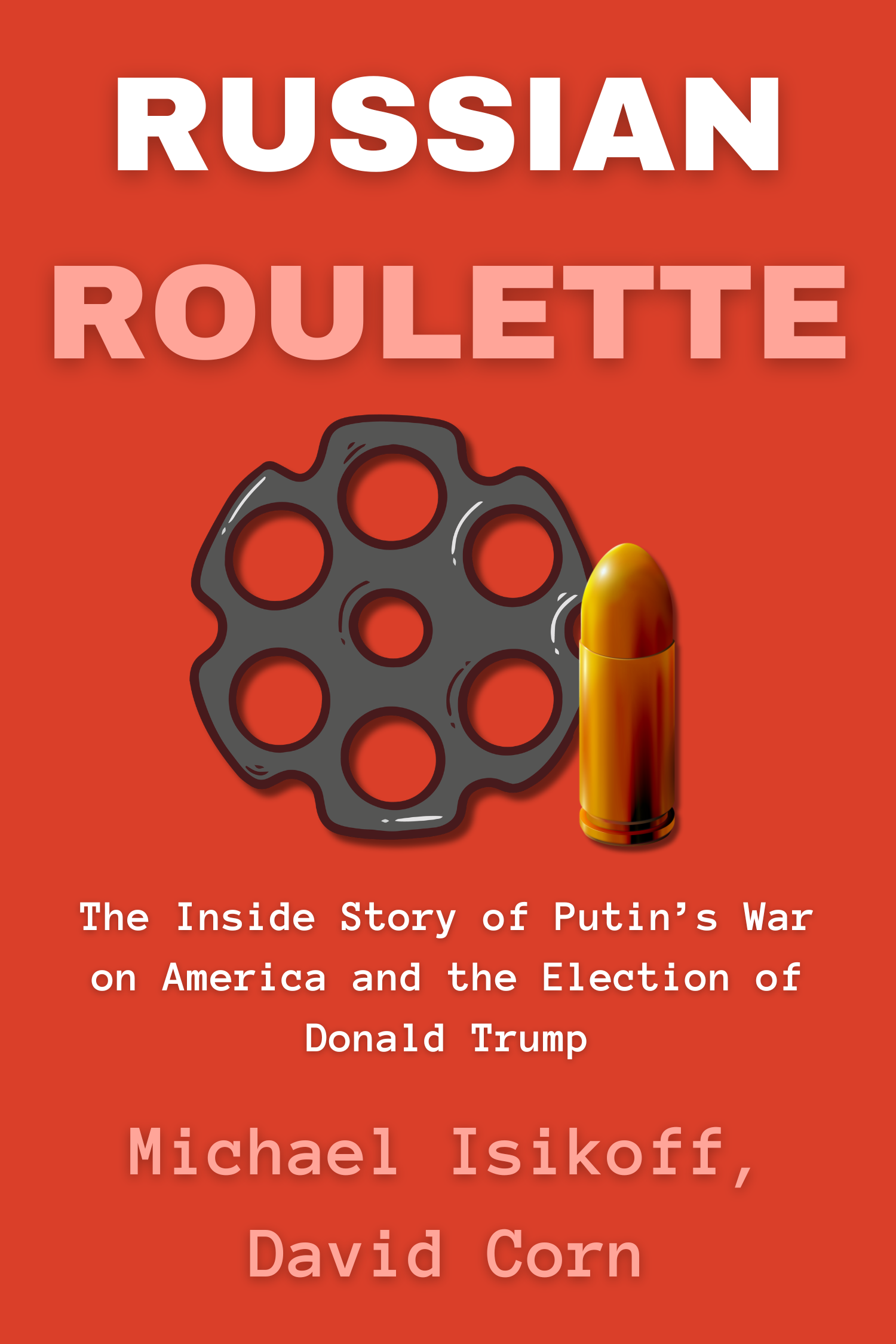
Book summary prepared by ReWio. Original book author: Michael Isikoff.
Introduction
Written by Michael Isikoff and David Corn, “Russian Roulette” provides a fascinating behind-the-scenes look at one of the biggest political scandals of the modern era. At a time when the United States was undergoing a dramatic presidential campaign, information began to surface about a mysterious and influential Russian intervention that had a profound impact on both the conduct and outcome of the election.
The authors examine the spread of Russian disinformation, cyberattacks on democratic institutions, and the disturbing ties between the Trump campaign and Russia. This book reveals how Russia has managed to exploit weaknesses in the American system to destabilize society, revealing that modern warfare tactics no longer take place only on the battlefield, but also in cyberspace and information space.
Russia's disinformation campaign
has left an indelible mark on the United States, which was evident in the 2016 election. According to the authors, this was a well- thought-out and sophisticated plan by the Kremlin to use new technologies to advance its geopolitical goals. Russian operatives used social media in particular to spread false information, with the goal of strengthening divisions among Americans and undermining trust in both traditional media and democratic institutions.
The year 2014 was a turning point for Russia - after the annexation of Crimea and the imposition of Western sanctions, Vladimir Putin began to see the US as a major adversary. The Kremlin understood that classical military methods may no longer be the most effective in the struggle for influence. Instead, it focused on hybrid warfare that combined cyber attacks, espionage and manipulation of public opinion. This created fake accounts that simulated ordinary Americans, contributing to debates and spreading contradictory views.
One of the most notorious incidents was the hacking of the Democratic National Committee's emails in the summer of 2016, when sensitive information about
Hillary Clinton and her campaign was leaked to the public. This created an image of political chaos that increased the chances of Trump's election. Unlike traditional spying techniques, this was not about classified information, but a public blow to the credibility of one of the candidates.
Also impressive was the ability of Russian trolls to interfere in discussions about racial and political issues that were already sensitive in the US. The Russians purposely polarised society through posts about movements such as Black Lives Matter, thereby increasing tensions between different communities. Such tactics reflect the old wisdom that the enemy is best weakened by internal strife.
When one considers that this disinformation campaign also influenced the mainstream media, where reports from Russian sources were often mixed with truthful information, it becomes clear just how powerful this plan was. US intelligence services were initially caught off guard and their reaction came too late.
Disinformation has become an integral part of modern conflicts, where war takes place not only on the battlefield but also in the minds of the people. The spread of chaos has become a new weapon, the consequences of which are still being felt by the US.
The vulnerability of the American electoral system
The American electoral system as we know it has a long history. But it was its technical flaws and inconsistencies across states that proved to be a serious weakness in 2016, which Russian cyber forces were able to exploit to their advantage. Some states used outdated electronic voting machines without adequate protection, which allowed Russian hackers to study these vulnerabilities and even try to gain access to voter databases.
In Ohio and Illinois, attempts to penetrate databases to gather sensitive voter information have been reported, posing a serious risk to the privacy and security of citizens. While there was no direct vote switching, it was a warning of potential future interference that could undermine the credibility of the results.
Russia proceeded with "border-testing" tactics. Hacking attacks and penetrations were conducted in a manner designed to test what safeguards each state had in place, setting the stage for possible interference in future elections. This plan was not just aimed at a one-off action, but at creating long-term pressure on the credibility of American democracy.
The public only became aware of this interference later, when investigations revealed the extent of Russian attempts to gain access to electoral systems. This information sparked a wave of concern and forced US politicians and security services to rethink security measures to prevent similar attacks in the future.
While the Russian hackers did not directly interfere with the election results, their efforts to destabilize the system had a psychological effect - creating distrust among voters and making visible weaknesses that could be exploited for future manipulation. Ultimately, then, electoral interference became a threat not only to the electoral process but also to the very principle of democracy.
This problem has also highlighted the fact that in the digital age, the traditional electoral system must also be prepared for new kinds of threats or risk losing public trust. Indeed, without careful measures, it is likely that efforts to influence elections will only increase in the future.
Ties between the Trump campaign and Russia
The links between the Trump campaign and Russia have aroused huge suspicions in the American political arena. Key members of Trump's team, including Paul Manafort and Michael Flynn, have had close contacts with Russian officials or their close allies. Manafort, a former adviser to Ukraine's pro-Russian government, has been in contact with individuals closely connected to the Kremlin, raising questions about his roles and intentions.
One of the most notorious moments was a 2016 meeting between Trump's son Donald Trump Jr, Manafort and Trump adviser Jared Kushner with a Russian
lawyer at Trump Tower. The meeting was allegedly orchestrated with the promise of obtaining compromising information on Hillary Clinton, again raising a wave of suspicions about possible coordination with Russia.
It was these events that fostered the impression that the Russian side had reason to support the Trump campaign. However, the connection between the Trump team and the Russians was not just about political strategies; it was also about issues that touched on commercial interests. Some members of Trump's inner circle saw potential cooperation with Russia as a possibility for future business opportunities, which further muddled the question of their loyalty.
As the FBI and congressional investigations began to escalate, more information surfaced about meetings and phone calls with Russian diplomats and businessmen. Flynn, a former national security adviser, resigned shortly after taking office over lies about his contacts with Russian Ambassador Sergey Kislyak. This case caused a public scandal and prompted a deeper investigation.
Although Trump and his team have consistently denied any links to Russia, new information has continued to raise suspicions and questions about their true intentions. It was possible that Russian officials used this "open arms" as an opportunity to gain influence in the highest echelons of American politics.
The whole situation regarding the Trump team's Russian contacts has prompted Americans to reflect on how far it is possible to trust political leaders who walk a fine line between national and private interests. This chapter thus reveals the complexity of relations between great powers, where business opportunities and power games often overtake loyalty and ethical values.
Vladimir Putin's interest in Trump's election
Vladimir Putin saw the election of Donald Trump as a chance for Russia to gain greater influence in the world and weaken the position of the United States. Trump's statements about the need to improve relations with Russia and his criticism of NATO were an encouraging signal to the Kremlin that he could achieve
what he had failed to do for decades - weaken American influence in Europe and create more space to pursue his geopolitical ambitions.
Putin, who had a career in the KGB, understood very well that he was at a time when he could use manipulation and strategies to achieve goals that would otherwise require much more direct and overt intervention. Despite Trump's public statements about NATO, which he called "obsolete," a wave of uncertainty swept through European allies who began to question American support.
By backing Trump, Putin hoped he could create a more favourable environment for Russia that would allow it to expand its influence in Ukraine or Syria. Putin's vision was a rebirth of Russian influence in the post-Soviet space, and Trump's rhetoric, which at some points seemed almost friendly to Russia, gave him hope of a diplomatic win.
Putin's strategy was not accidental; it was based on a long-standing desire to restore Russian power and influence that the country had lost after the fall of the Soviet Union. By supporting Trump's campaign through disinformation and cyberattacks, Putin sought to portray Russia as a world power that could influence outcomes abroad without direct military intervention.
While this may seem like a big risk, Putin was willing to take it because Trump's election promised to strengthen his position. He assumed that a Trump administration would be friendlier towards Russia, which would mean lifting or easing sanctions and opening the door for economic cooperation.
This plan shows how effectively Putin can use situations to his advantage, manipulating public opinion and creating an atmosphere of uncertainty that allows him to pursue his strategic objectives. Putin's interest in Trump's election was not accidental, but part of a larger plan to achieve Russia's geopolitical goals.
Political chaos in the US
One of the main goals of the Russian campaign was not only to support Trump's candidacy, but to create maximum political chaos in the United States. Through the dissemination of controversial and polarising information, Russian trolls were able to manipulate public opinion and divide American society into antagonistic camps. Social networks have become an arena where the Russians have increased tensions between liberal and conservative groups, purposefully reinforcing social divides.
Russian fake accounts and organizations created and promoted discussions on sensitive topics such as racial equality, the rights of the LGBTI community, and immigration issues. Under fake identities, Russian operatives published posts and surveys designed to provoke emotional reactions and intensify existing conflicts. As a result, topics that were already tense became a source of even greater conflict and polarisation.
One of the tactics used by the Russians was to promote extreme views on both sides of the spectrum. They created sites and groups that presented themselves as "real American movements" - some with a right-wing, some with a left-wing bent. An example was a fake account that supported the Black Lives Matter movement and one that supported extreme nationalists. In this way, the Russians increased tensions between groups that naturally found themselves in conflict, further widening the divide in American society.
This Russian plan of polarization has had profound effects. As the news reached the mainstream media, the debate deepened and more and more Americans came to believe that their country was disunited and threatened from within. The division of opinion between the left and the right became one of the most prominent elements of the political scene, affecting American society to this day.
In this way, the Russians have succeeded in getting Americans to focus on their own internal disputes and thus less on the global geopolitical situation. This plan to weaken American cohesion and focus their attention on internal contradictions has been extremely effective for the Kremlin.
Disinformation and manipulation by foreign players can undermine a country's stability without firing a single shot.
Trump's motivations and business interests
Trump's election was more than just a political success for some members of his team - it also meant potentially huge business opportunities, particularly in terms of relations with Russia. Trump, while still a businessman, had been exploring investment opportunities in Russia for years, and his interest in Moscow dated back to the 1990s. The various contacts he made over the years, and his thoughts on building luxury real estate in Russia, suggested that the Kremlin viewed Trump as an ally who might be open to economic cooperation.
Thus, during the campaign and after the election, questions were raised as to whether Trump's positive attitude towards Russia and his friendly remarks about Vladimir Putin were not just a manifestation of his political vision, but whether they were related to his business interests. For example, at the time of the campaign, there was talk of the possible construction of a 'Trump Tower Moscow', which would have been a significant financial and symbolic investment for Trump. For this reason, his outspokenness towards Russia was suspicious to many.
Some members of Trump's campaign, such as his lawyer Michael Cohen, have reportedly negotiated with Russian officials to pursue this construction, although publicly these ties have been denied. Cohen was even said to have attempted to approach Vladimir Putin directly in order to obtain permission and support for the project, which only added to suspicions about the Trump campaign's links to Russian business interests.
Trump's rhetoric about the need to improve relations with Russia has thus taken on a new dimension. While many of his supporters believed that this was a strategic shift in foreign policy, his critics saw these statements as motivated by personal economic ambitions. This raised questions about the extent to which the president could be detached from his business interests, and whether he could be so neutral in making decisions about international relations.
In modern political relations, business interests can become dangerously intertwined with national interests. Trump's ties to Russia thus symbolised a new era of politics, where the lines between business and governance can be thin and where power and money can influence global decisions.
The US response to Russian interference
Russian interference during the U.S. election revealed the lack of preparedness of U.S. intelligence and government officials for this new kind of threat. Despite warnings and some early indications of possible foreign interference in the electoral process, only minimal action was taken. Russian hackers and disinformation campaigns thus had a relatively free field of action, which they used to spread chaos.
U.S. security and intelligence services, such as the FBI and CIA, only began gathering information about Russian activities at an advanced stage of the campaign, when interference was already underway. Efforts to disrupt the election were seen particularly in cyberspace, where the Russians targeted private data, spread false information, and influenced voter sentiment. While there were indications during the campaign that something was going on, no substantial measures were implemented.
The political divisions between Democrats and Republicans made it even more difficult to intervene quickly. Republicans were reluctant to admit that Russian interference could have affected the outcome of the election, while Democrats feared that public disclosure of information about the interference could undermine confidence in the entire electoral process.
However, this approach proved short-sighted, as the failure to respond in a timely manner to the Russian threat further exacerbated tensions between the political camps. After the elections, investigations were launched and information about the extent of Russian interference gradually leaked out. The investigation revealed a number of disturbing details about Russian strategy and how fragile the American system was to such attacks.
In 2017, as the full extent of the interference came to light, the U.S. government began taking new measures to protect election systems and increase cybersecurity. But these steps came too late to change the consequences of the 2016 election. U.S. institutions were thus faced with the uncomfortable truth that a modern threat like cyberattacks requires an immediate and consistent response.
Ignoring warnings can have serious consequences that affect not only elections but also the core values of a democratic society. The American experience of Russian interference serves as a warning to countries around the world that no electoral system is secure unless it is rigorously protected from outside influences.
Implications for future elections
The book highlights how Russian meddling during the 2016 U.S. election set a precedent for future electoral interference, raising questions about the future of democratic processes. Using techniques of disinformation and cyber-attacks, Russia has shown the world how vulnerable democracies can be to non-military interference. This has opened up the debate on how democracies can effectively defend themselves against such threats.
The United States and its allies have been quick to respond, putting measures in place to protect electoral systems. In some cases, there have been upgrades to voting machines, tighter cybersecurity, and an increase in public awareness of the risks of disinformation. However, the question still remains whether these measures are sufficient to protect against sophisticated foreign interference, which can only improve in the future.
The interference in the 2016 US election has come to symbolise a new era of conflict, where physical warfare is replaced by information warfare. Russian interference has set the bar for how an entire country can be destabilised through cyber and the manipulation of public opinion. The authors recall that the key to the success of the Russian plan was to strike a strategic blow in the places where they least expected it - within society itself.
Democracies now face the challenge of adapting to this new reality and protecting their electoral systems from similar attacks in the future. U.S. investigations after 2016 resulted in recommendations to improve election security, but much of the public remains skeptical that these measures are sufficient and that voters can be assured of full confidence in future elections.
The authors also point to the importance of international cooperation, which is necessary to effectively safeguard democracy. Cyber threats know no borders and require coordination between countries in order to identify and neutralise attempts at foreign interference in a timely manner.
This idea is thus not only an analysis of Russian influence, but also a call for accountability on the part of democratic countries in their efforts to strengthen their electoral processes. The book concludes with the message that without robust systems of protection and cooperation, elections, which are at the heart of democracy, are at risk of manipulation, which could have disastrous consequences for citizens' trust in the very foundation of the democratic system.
Final summary
“Russian Roulette” is not only a record of how Russia interfered in the US election, but also a warning of how fragile democracy can be in the face of modern forms of attack. Isikoff and Corn reveal in detail how Russian actors used technology and the polarization of society to spread chaos, leaving deep wounds in both the political and social spheres. Their narrative provides a sharp analysis of the risks facing democratic countries and calls for the need to strengthen the protection of electoral systems and increase society's resilience to disinformation. This book is a wake-up call that without thorough preparation and international cooperation, future elections - and thus the very core of democracy - may be at serious risk.