

Free text
Summary and key ideas
Book summary prepared by ReWio. Original book author: Maxwell Maltz.
Introduction
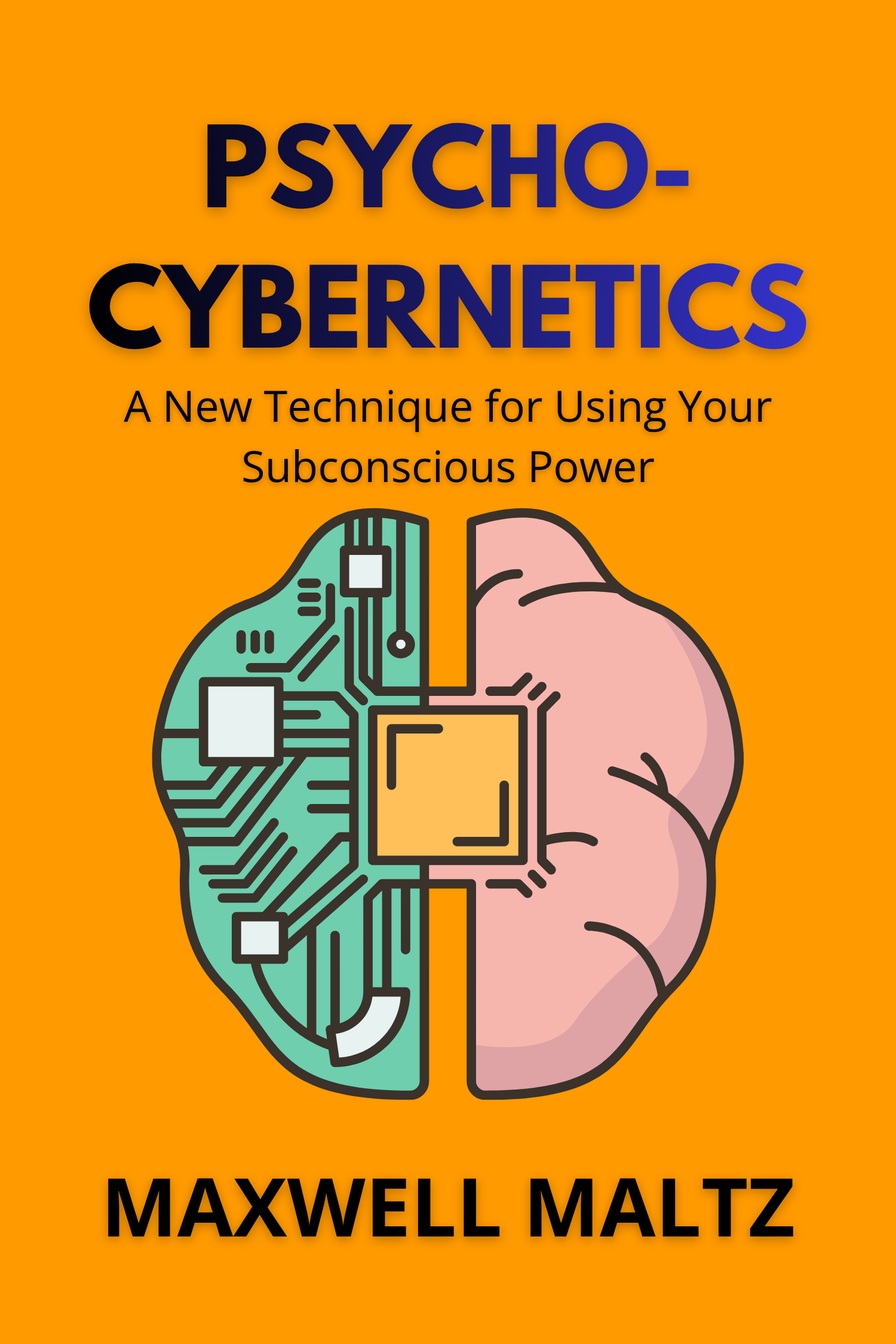
“Psycho-Cybernetics,” written by Maxwell Maltz, is a fascinating book that explores the connection between our mind and body, and how our self-image affects our behavior and success in life. Maltz, originally a plastic surgeon, noticed that even after making physical changes, his patients often did not experience the expected increase in self-esteem. With this observation, he began to explore how the mental image we have of ourselves shapes our reality.
The book offers valuable insights into how we can use mental training and imagery techniques to overcome negative beliefs and build a positive self-image. Psychocybernetics combines the principles of cybernetics, the science of machines and mechanics, with psychological methods to achieve personal growth and success. In this book, Maltz details how we can create a successful personality, why our thoughts are crucial to achieving our goals, and how negative beliefs can hold us back.
Self-image determines our behavior and success
Every person has a mental blueprint that describes the kind of person they are. This self-image includes the beliefs a person has about themselves based on past experiences, successes and failures. Self-image is a critical factor because people behave in accordance with the image they have of themselves. If someone thinks they are a failure, they are more likely to fail. Conversely, if he considers himself successful, he will look for ways to succeed.
These vital ideas about ourselves are often formed for logical reasons. For example, if someone has had a bad year at school after his parents divorce, he may begin to see himself as a failed student. Some people are able to quickly overcome such events and get back on the road to success, but others get trapped in a negative self-image that holds them back from reaching their potential.
Negative self-image can also be the result of thinking that others are judging them. One example is a man who suffered from feeling that he had an "ugly" appearance, which caused him insecurity and unhappiness. In reality, the problem was not how others perceived him, but his own negative self-image that affected
his behaviour and interpersonal relationships. If this man changed his view of himself, he could break the vicious cycle of negative behavior.
These examples illustrate how crucial self-image is to how a person experiences his life and achieves his goals. Changing one's perception of oneself can lead to fundamental changes in behavior and success. Rationalizing and reevaluating negative beliefs about oneself is the first step to begin to act in accordance with a positive self-image and achieve better results in life.
Negative beliefs are often based on incorrect conclusions
Everyone is hypnotized in one way or another by their beliefs, whether positive or negative. These beliefs have tremendous power over how we perceive ourselves and the world around us. Negative beliefs, however, are not always the result of facts or real experiences, but rather the conclusions we draw from them.
An example might be when someone misunderstands math in school and the teacher convinces them that they have no talent for the subject. This conclusion can become a self-fulfilling prophecy as the student begins to believe that he will never be good at math. Even though the situation may change and the student suddenly understands a complex equation, his negative beliefs may persist if he does not turn them into positive experiences and self-confidence.
Negative beliefs are often the result of misinterpretations of our experiences. People tend to generalize and create false images based on a few negative experiences. If someone experiences failure in one project, they may incorrectly conclude that they are incompetent and that they will always fail. Such thinking then influences his or her future actions and increases the likelihood of further failures.
Overcoming these negative beliefs is possible through the power of rational thinking. Asking "why" can help uncover irrational conclusions and rethink them. If a person encounters a thought such as "I failed yesterday, therefore I will fail today", he or she should stop and consider whether this conclusion is actually justified. Every day presents a new opportunity for success, and learning from the past can help overcome old, negative beliefs.
The human nervous system cannot distinguish between experiences we imagine and those that actually happened. Therefore, we can use imagination and rational thinking to reprogram our subconscious mind and get rid of incorrect negative beliefs. In this way, it is possible to change the self-image and begin to act in accordance with new, positive beliefs, which opens the way to success and satisfaction in life.
Imagination can influence our nervous system
The human imagination has tremendous power and can affect our nervous system just as much as real experiences. This phenomenon is key within psycho-kinetics, where the brain and nervous system function as a servomechanism that responds to stimuli from the outside world as well as from our imagination.
The human nervous system cannot distinguish between real and imagined experiences. If a person vividly imagines something, his body reacts as if it were real. For example, hypnosis can create a state in which people do not feel pain during surgical procedures without anesthesia if they believe they do not feel pain. This effect was demonstrated by the research of Dr. Theodore Xenophon Barber at American University in Washington, D.C. in the 1950s.
Similarly, imagination can affect physical abilities. The world-famous pianist Arthur Schnabel rarely practiced on an actual piano and instead perfected his art in his head. He imagined playing the piano, and his nervous system responded as if he were really playing. This mental training technique is also known among athletes, such as darts players and golfers, who imagine successful performances and thereby improve their real-world abilities.
Imagination also plays a key role in achieving our goals. The success mechanism that we have built into our brains is activated precisely through positive visualizations. A child learning to catch a rattle has no previous experience to refer to, so he tries and repeats the movement until he succeeds. In this way, he remembers the successful attempts and forgets the unsuccessful ones.
For adults, a similar principle applies. If we imagine success and repeatedly
visualize achieving our goals, our brain and nervous system react as if we have already achieved it. In this way, we gradually prepare ourselves for success in real life. These positive mental images boost our self-esteem and increase the chances of achieving our goals.
Thus, imagination is not only a tool for mental preparation, but also a powerful means of influencing our physical performance and overall life success. By training the mind through positive visualizations, we can make significant improvements in all areas of our lives.
Creativity and happiness can be stimulated by changes
Creativity and happiness are two important areas of human life that can be greatly stimulated by changing our actions and thought processes. When we find ourselves in a creative block or experiencing a lack of happiness, change can be the key to restoring our inspiration and contentment.
Creativity often surprises us when we are not actively working. The best ideas come when we are relaxed and let our minds wander freely. Thomas Edison, the famous inventor, often solved problems by taking short naps. After these restful moments, he often found the solution he was looking for. This phenomenon is not accidental - when we stop forcing ourselves to think and relax, our brains have room to generate new, creative ideas.
In the same way, happiness is something we can stimulate by changing our approach and focusing on the present. Most people see happiness as something that will come in the future when they achieve certain goals or acquire certain things. However, true happiness is an inner feeling that comes from our thoughts and attitudes in the present moment. If we learn to focus on the positive aspects of our lives and let the negative things go, we can develop a habit of happiness.
Happiness and creativity are linked to the ability to adapt to change and be flexible in our thinking. When we face a creative block, changing our activity can reboot our creativity. If we change our environment, move or engage in a completely different activity, it can lead to new ideas and perspectives. This principle also
works in our personal lives - when we are feeling unhappy, a change in routine or new experiences can bring a boost and increase our overall satisfaction.
It's important to remember that change is not just an external factor, but an internal process as well. By actively changing our thoughts and attitudes, we can influence our emotions and achieve higher levels of creativity and happiness. It is a process that requires conscious effort and a willingness to experiment with new approaches, but the results can be very beneficial to our overall well-being.
Creativity and happiness can be stimulated by changing
Creativity and happiness can be stimulated by changes
Creativity and happiness are two important areas of human life that can be greatly stimulated by changing our actions and thought processes. When we find ourselves in a creative block or experiencing a lack of happiness, change can be the key to restoring our inspiration and contentment.
Creativity often surprises us when we are not actively working. The best ideas come when we are relaxed and let our minds wander freely. Thomas Edison, the famous inventor, often solved problems by taking short naps. After these restful moments, he often found the solution he was looking for. This phenomenon is not accidental - when we stop forcing ourselves to think and relax, our brains have room to generate new, creative ideas.
In the same way, happiness is something we can stimulate by changing our approach and focusing on the present. Most people see happiness as something that will come in the future when they achieve certain goals or acquire certain things. However, true happiness is an inner feeling that comes from our thoughts and attitudes in the present moment. If we learn to focus on the positive aspects of our lives and let the negative things go, we can develop a habit of happiness.
Happiness and creativity are linked to the ability to adapt to change and be flexible in our thinking. When we face a creative block, changing our activity can reboot our creativity. If we change our environment, move or engage in a completely different activity, it can lead to new ideas and perspectives. This principle also works in our personal lives - when we are feeling unhappy, a change in routine or new experiences can bring a boost and increase our overall satisfaction.
It's important to remember that change is not just an external factor, but an internal process as well. By actively changing our thoughts and attitudes, we can influence our emotions and achieve higher levels of creativity and happiness. It is a process that requires conscious effort and a willingness to experiment with new approaches, but the results can be very beneficial to our overall well-being.
The seven elements of a successful personality
Success in life is not the result of chance, but rather the result of certain personality traits that we can develop. The following seven elements form the basis of a successful personality.
A sense of direction - every person needs a goal to go towards. This goal provides motivation and orientation, much like a climber needs a mountain peak to climb. It is important to always have something in front of us that moves us forward and keeps us moving.
Understanding - Success is often the result of correctly understanding the situations and people around us. Failures are usually the result of distorted perceptions that are influenced by fear, anxiety or desire. It is important to learn to see things objectively and not to burden our perceptions with emotions that can lead to wrong conclusions.
Courage - courage is essential to make our dreams come true. Courage means taking calculated risks and standing up for your ideas, even if it requires overcoming the fear of failure. Without courageous action, we will never get to the realization of our goals.
Charity - Being successful means being attentive and considerate to the needs and dignity of other people. Helping others, showing empathy and respect are important aspects of being a successful person because true success is linked to positive relationships and community.
Respect - if you think "I can't do this" you will never move forward. Low self-esteem is not a virtue, but rather a threat to your success. Self-respect means believing in your abilities and being aware of your worth.
Self-confidence - such a feeling is built on the basis of experiencing success. Remembering your past triumphs and forgetting the failures that threaten your self-esteem is key to maintaining a positive self-image and continuing to succeed.
Self-acceptance - without coming to terms with yourself, your mistakes and weaknesses, you will never be able to achieve what you desire. Self-acceptance means being comfortable with your authentic self and continuing to grow personally without constant self-criticism.
Together, these elements form the foundation of a successful personality. Developing and cultivating these characteristics can lead to greater success and satisfaction in life.
The seven characteristics of failure
include elements that can hinder the achievement of goals and happiness. The first is frustration, which arises when you feel you cannot achieve an important goal. This feeling creates a self-fulfilling prophecy because you begin to see yourself as incapable, which increases the likelihood of further failures.
The second element is aggression. This energy, if channeled in the wrong direction, can lead to self-defeating tendencies such as worry and rudeness, instead of being used to achieve positive goals.
Insecurity is the third element. This feeling often stems from mismeasuring your abilities, comparing yourself to unrealistic or impossible ideals. Such an approach leads to a constant feeling of not measuring up, which undermines self- confidence.
The fourth element is loneliness. When you feel alienated from others, it can lead to isolation and an inability to establish healthy social relationships. Lonely people often avoid interactions that could help them achieve success.
Insecurity in the form of avoidance of mistakes is the fifth element. This is a fear of making decisions and taking action that stems from a desire to avoid failure. By choosing to be idle, one actually reinforces the feeling of insecurity and prevents oneself from achieving success.
The sixth element is resentment, or anger toward injustice. This attitude is often used to justify personal failures by blaming external circumstances or other people. Resentment prevents taking responsibility for one's own life and limits the ability to learn and grow.
The final characteristic is emptiness. This feeling arises from the belief that life is boring and no effort is worthwhile. Emptiness leads to a loss of motivation and sense of purpose, which can result in passivity and apathy.
If you notice any or all of the above characteristics in yourself, it's time for a change. Recognizing these factors is the first step to overcoming them and achieving success. Each of these traits is an obstacle that hinders personal development and satisfaction, but by identifying them and taking a proactive approach to change, it is possible to remove these negative influences and open the path to success.
Forgiveness is the key to removing emotional scars
Forgiveness is the key to removing the emotional scars that arise as a result of hurts, wrongs and negative experiences. Just as physical injuries create scars, emotional injuries can create protective barriers that shield us from further harm. These emotional scars, however, not only protect but also isolate, preventing entry not only to enemies but also to friends.
In order to get rid of these emotional scars, we must learn to forgive. Forgiveness
is like a surgical instrument that can remove old wounds and thus allow healing. True forgiveness is more than a verbal statement. It involves a deep release of feelings of wrongdoing and forgetting the very act that was done to us. This process is important because it allows us to let go of the anger, resentment and negativity that hold us captive to the past.
When we choose to forgive, we can remove the protective barriers we have created. In this way, we release our true personality and allow it to express itself fully. Many people have inhibited personalities that prevent them from tapping into their creative potential and expressing themselves fully. For example, stuttering can be the result of excessive self-control and inhibitions that prevent free expression.
To overcome these inhibitions, we need to practice disinhibition, which means releasing our natural reactions and feelings. For example, speaking before we start thinking can help us get rid of negative thoughts like "should I have done that?" and "what do others think of me?" By becoming less controlling of our spontaneous reactions, we can gradually weed out self-criticism and strengthen our self-confidence.
Forgiveness allows us to overcome emotional inhibitions and free ourselves from past hurts. It is a process that takes time and conscious effort, but results in the ability to live more fully and authentically. When we let go of emotional scars, we can better tap into our potential, create deeper relationships, and live a more satisfying life.
Relaxation and peace of mind
Achieving relaxation and a calm mind is key to managing stress and increasing overall quality of life. In today's hectic world, where we are constantly exposed to various stimuli and distractions, it is important to find ways to calm your mind and achieve inner peace.
The first technique to achieve peace of mind is to avoid the various "ringers" in our lives. These rings are distractions that take us out of our focus and cause restlessness. These may be phone calls, email notifications, or other forms of
interruptions that disturb us. Instead of automatically reacting to these stimuli, we can learn to ignore them and keep calm. An easy way to start is to count to three before taking a call or responding to a notification. This small time gap will help us maintain control and gradually lengthen the time between stimulus and response.
The second technique is to create a "mental quiet room". This is a mental place where we can retreat to find refuge from external stresses. This quiet room can be filled with anything that soothes us and brings a sense of well-being - a beautiful landscape, a favorite piece of art, or just imagining a place where we feel safe and calm. When we have a moment between meetings or while riding public transportation, we can close our eyes and imagine we are in this quiet room. This simple mental escape can help us relax and restore peace to our minds.
Another method is to practice deep breathing and relaxation techniques. Deep, slow breathing helps to reduce stress hormones in the body and promotes a sense of relaxation. Try finding a quiet place to sit or lie down and focus on your breathing. Breathing in should be deep and slow, trying to breathe into the abdomen. The exhale should be longer than the inhale, which will have an even greater relaxing effect. By repeating this exercise for at least 10 minutes a day, we can greatly improve our ability to cope with stress and achieve a deeper calm.
Practicing these techniques regularly can help us develop a habit of relaxation and calm. A relaxed and calm mind is not just a state we achieve by accident, but the result of conscious effort and practice. By taking time to relax and unwind on a regular basis, we can improve our ability to cope with everyday stresses and live a more balanced and contented life.
Final summary
Maxwell Maltz's “Psycho-Cybernetics” offers a profound insight into how our thoughts and ideas shape our lives. The underlying principle of the book is that our self-image profoundly influences our behavior and success. By improving this self-image through positive mental techniques, we can achieve better results in various areas of life. The book also emphasizes the importance of forgiveness, relaxation, and creating a peaceful mind for personal growth and happiness. These techniques allow us to overcome negative beliefs, get rid of emotional scars
and achieve higher levels of satisfaction and success. Maltz's work provides practical guidance and inspiration that can help anyone striving for a better and more fulfilling life.