

Free text
Summary and key ideas
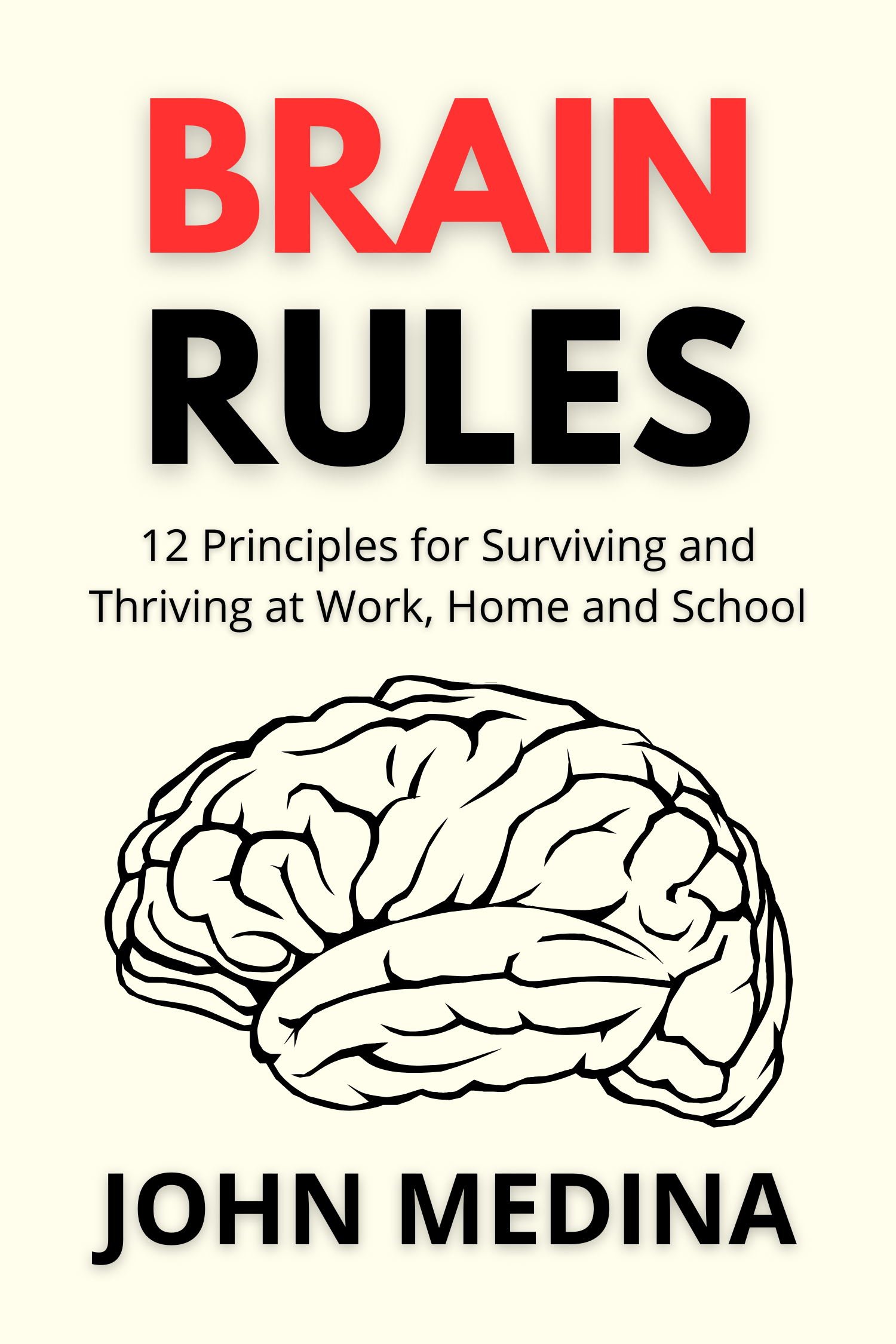
Book summary prepared by ReWio. Original book author: John Medina.
Introduction
“Brain Rules” by John Medina is a fascinating book that reveals the secrets of how the human brain works and provides practical advice for improving cognitive function in everyday life. Medina, an expert in molecular biology, presents twelve key principles in the book, which he calls "Brain Rules." These rules are based on the latest science and cover aspects ranging from the importance of exercise for brain function to the impact of stress and sleep on cognitive abilities.
Medina explains how our brains process information, why multisensory learning is important, and what role emotions play in remembering information. The book offers practical tips on how to optimize brain function, including the importance of regular exercise, quality sleep, and proper stress management. Each chapter is accompanied by real-world examples and scientific studies that support each principle.
"Brain Rules" is not only information-rich, but also a reader-friendly book that will help you understand how you can use knowledge about the brain to improve your productivity, learning, and overall well-being.
Exercise boosts brain performance
Physical activity significantly affects brain performance, which is supported by numerous scientific studies. Regular exercise increases blood flow to the brain, improving oxygen and nutrient delivery. This process promotes the formation of new blood vessels and optimizes overall brain functioning. Exercise releases brain- derived neurotrophic factor (BDNF), which is crucial for the growth of new neurons and synapses, contributing to sharper cognitive abilities.
History shows us that an active lifestyle has played an important role in the evolution of the human brain. Our ancestors spent most of the day walking or running in search of food and escaping from predators. This constant movement stimulated both their bodies and their brains, promoting the development of cognitive abilities.
Modern research has shown that physical activity has the same effect today. Regular exercise improves cognitive function, memory and the ability to learn. In addition, exercise acts as a prevention against neurodegenerative diseases such as Alzheimer's disease. Researchers at the University of British Columbia have found that aerobic exercise increases the size of the hippocampus, the area of the brain responsible for learning and memory.
Regular physical activity can also improve mood and reduce stress, positively affecting cognitive abilities. When we exercise, our bodies release endorphins, which reduce the perception of pain and improve mood. This leads to better mental health and an increased ability to concentrate and problem solve.
It's important to remember that exercise doesn't have to be intense or geared towards peak performance. Even moderate physical activity such as walking, yoga or swimming can have a positive impact on our brain performance. The important thing is to move regularly and incorporate movement into our daily routine.
Integrating physical activity into our lives is a simple but effective way to support our brain health and increase brain performance. Regular movement not only improves our physical health, but also our cognitive abilities, contributing to our overall well-being and quality of life.
The human brain has evolved to solve problems
The evolution of the human brain is a fascinating process that has allowed us to become one of the most adaptable and intelligent species on the planet. Our ability to solve problems is the result of millions of years of evolution, during which we have faced different challenges and sought solutions to survive.
Throughout evolution, the brain has continually adapted and changed to help us better navigate our environment. Imagine our ancestors who had to face predators, search for food and shelter. These challenges required quick and efficient decision-making, which stimulated the development of cognitive abilities. The prehistoric environment was full of dangers and opportunities that required the ability to analyze situations, make predictions, and develop survival strategies.
In modern times, although our everyday problems are different, the principle remains the same. Our brains are constantly occupied with solving problems, whether it is complex mathematical tasks, planning our days, or making decisions at work. This process is underpinned by our ability to learn from past experiences and adapt our behaviour to new situations.
One key aspect of our problem-solving ability is neuroplasticity - the brain's ability to change its structure and function in response to new experiences. This phenomenon allows us to learn new skills, improve our abilities, and adapt to changing conditions. Research shows that the adult brain is always capable of forming new neural connections, which is the basis for continuous learning and problem solving.
Although modern life is full of technologies that make everyday tasks easier, our brains are still stimulated by a multitude of complex problems. Whether it's solving logistical problems at work, creatively tackling challenges in the arts, or managing interpersonal relationships, all of these situations require different parts of the brain to be activated and work together to find effective solutions.
The evolution of the human brain for problem solving is deeply rooted in our history and everyday life. Our ability to analyze, plan, and perform complex tasks is one of the key factors that distinguish us from other species and allow us to thrive in a variety of environments and situations.
Each brain is wired differently
Each human brain is unique, the result of our unique experiences and life paths. These individual experiences shape the neural pathways in the brain, creating different ways of processing and storing information. This phenomenon is known as neuroplasticity, the ability of the brain to change its structure and function in response to new experiences.
From early childhood, through adolescence and into adulthood, our brains are constantly adapting to new information and experiences. Children who learn new languages, play sports or musical instruments make new neural connections that
help them excel in these activities. This process continues into adulthood, where our professional and personal experiences further shape our cognitive abilities.
Neuroscience research shows that different areas of the brain are activated by different activities. For example, people who pursue math or science disciplines tend to have more developed areas of the brain associated with logical thinking and problem solving. On the other hand, artists and musicians often have stronger connections in the areas of the brain responsible for creativity and visual-spatial skills.
Another important aspect is that each individual's brain processes information differently. For example, some people learn better visually, while others prefer auditory or kinesthetic learning. This individual learning style affects how effectively we can process and retain new information.
Genetics also plays a significant role in shaping the structure and function of the brain. Each person has a unique genetic code that influences their neurobiological development and cognitive abilities. For example, research suggests that certain genetic variations can affect learning and memory ability.
This diversity in brain wiring helps us understand why some people excel in certain areas while others may struggle with challenges. Acknowledging and respecting these differences is key to creating effective learning and working environments that take into account each individual's needs and strengths. Understanding that each brain is wired differently allows us to better accommodate and support the development of each person's potential.
Inattention hinders learning
Our ability to focus is a key factor in the learning process. The brain is constantly bombarded with a vast amount of information from which it must choose what is relevant and what is noise. This selection is essential in order for us to learn and remember new information effectively.
One of the main reasons why non-remembering or lack of attention hinders
learning is that our brains simply cannot process and store information effectively to which we do not pay enough attention. When we try to focus on too many things at once, the brain doesn't have enough capacity to process the information deeply, leading to shallower retention and less ability to recall the information later.
Emotions play an important role in this process. Information that engages us emotionally has a better chance of capturing our attention and thus being better processed and remembered. For example, studies show that students remember classroom material better if it is presented in an interesting and engaging way, as opposed to a monotonous lecture with no emotional involvement.
Lack of attention can also be caused by information overload, which is very common today given the constant flow of digital stimuli. Multitasking, which involves performing several tasks at once, often leads to lower efficiency and impaired learning. The brain is designed to focus on one thing at a time, and attempts at multitasking can result in no task being performed well.
Research in neuroscience suggests that creating conditions that minimize distractions and promote focused attention are essential for effective learning. This can include creating a quiet and calm learning environment, scheduling regular breaks to refresh attention, and using techniques such as mindfulness to help improve the ability to focus.
Significant research in this area has also been carried out by psychologist Martin Seligman, whose work on learned helplessness shows how repeated exposure to negative stimuli can lead to a decline in motivation and the ability to concentrate. Learned helplessness can significantly reduce individuals' ability to learn and remember information effectively.
In order to increase our ability to learn, it is important to consciously work on improving our attention. This includes regulating stress, which can interfere with our ability to focus and learn. Creating environments that promote focused attention and emotional engagement is key to effective learning and improved cognitive abilities.
Repetition is necessary for remembering
Repetition is one of the most effective ways to ensure that we retain new information in our long-term memory. This concept is supported by many scientific studies and research in neuroscience and psychology.
When we learn new information, our brains first process and store it in short-term memory. Without regular repetition, however, we quickly forget this information. The process of repetition helps strengthen neural connections in the brain, allowing information to move from short-term to long-term memory. Hermann Ebbinghaus, a German psychologist who became famous for his research on memory, developed the concept of the "forgetting curve." This curve shows how quickly we can forget information if we don't repeat it regularly. His research has also shown that interval repetition - repeating information at regular intervals - can significantly improve information retention.
School systems and work environments often underutilize repetition techniques. People are expected to remember information after a single exposure, which is not consistent with how our brains work. Effective repetition should be part of educational programmes and training to ensure better retention and understanding of new information.
We can also see the practical use of repetition in everyday life. For example, students who review material at regular intervals before an exam perform better than those who learn everything at once at the last minute. Similarly, professionals who regularly review and practice their skills will retain and improve those skills.
In addition to repetition, making meaningful connections between new and previously learned information is also important. In this way, we can better retain and recall new knowledge. This process, known as elaborative repetition, involves deep processing of information and linking it to existing knowledge.
Repetition can also be fun and creative. Using a variety of techniques such as flash cards, group study, or hands-on applications can help keep the repetition process
engaging and effective. Modern technology, such as learning apps and online platforms, also offer innovative ways to use repetition effectively in learning.
Incorporating repetition into our learning and working practices is key to improving our ability to remember and use new information. This simple but effective approach not only helps us to retain our memory skills, but also to continually improve and grow in our knowledge and skills.
Stress interferes with learning
Stress is one of the biggest enemies of effective learning. When we find ourselves in a stressful situation, our body goes into "fight or flight" mode, causing the release of hormones such as adrenaline and cortisol. This process, which was evolutionarily designed for short-term protection from imminent danger, has negative effects on our cognitive function when exposed for long periods of time.
Chronic stress, unlike acute stress, is harmful to the brain and learning. Long-term exposure to stress can lead to damage to the hippocampus, the part of the brain responsible for learning and memory. Research shows that high levels of cortisol can reduce the hippocampus's ability to form new neurons, negatively affecting learning and memory.
Stress can also lead to a reduced ability to concentrate. When we are stressed, our brains tend to focus on threats, which reduces our ability to pay attention to other tasks. This overloaded attention hinders effective processing of new information. Therefore, it is important to create environments and conditions that minimize stress and promote calm and concentration.
To manage stress and its negative effects on learning, it is important to practice stress reduction techniques such as meditation, deep breathing, regular physical activity, and getting enough sleep. These practices can help regulate cortisol levels and improve overall mental health, thereby promoting better cognitive function and more effective learning.
Research shows that work and learning environments that promote emotional
well-being and provide support for stress management can significantly improve cognitive ability and performance. It is therefore important to pay attention not only to the technical and professional aspects of learning, but also to the emotional and psychological factors that can significantly affect our ability to learn and remember new information.
Multisensory environment improves learning
Learning is a complex process that involves all our senses. The brain processes information not only through sight and hearing, but also through touch, smell and taste. Multisensory learning harnesses this ability of the brain by engaging multiple senses at once, increasing the efficiency of learning and retaining information.
Research shows that when information is presented in multiple sensory ways, the brain is better able to process and remember it. A study led by cognitive psychologist Richard Mayer found that students who had the opportunity to learn information through a combination of text and images performed better compared to those who had the information in text-only form. Thus, the combination of visual and auditory elements allows for a deeper understanding and retention of the learning.
One of the reasons why multisensory learning is so effective is that it stimulates multiple areas of the brain simultaneously. When we use multiple senses, our neurons make richer and stronger connections. These connections are the basis for better memory and faster information recall. For example, using physical objects or hands-on activities can greatly improve children's ability to understand and remember new concepts.
Multisensory learning is also supported by the concept of visual superiority, which suggests that visual information is easier for our brains to process and remember than text or auditory stimuli alone. Experiments have shown that humans are able to remember and recall up to 90% of visual information after a few days, whereas for auditory information this figure is significantly lower.
Practical applications of multisensory learning can be seen in a variety of educational techniques and tools. The use of interactive whiteboards, educational
videos and digital simulations in schools is an excellent example of how multiple senses can be involved in the learning process. These technologies allow students not only to see and hear information, but also to explore and manipulate it interactively.
Also, in the work environment, a multisensory approach can enhance training and skill development. The use of hands-on exercises, simulations, and a variety of sensory stimuli can help employees learn new procedures more quickly and remember them better.
Ultimately, multisensory learning harnesses the brain's natural ability to process information and creates a richer and more effective learning experience. By engaging multiple senses, learning becomes not only more efficient, but also more fun and engaging, which promotes better outcomes and long-term retention of information.
Male and female brains differ in structure and biochemical processes
Male and female brains differ not only in structure but also in the biochemical processes that take place within them. These differences affect behaviour, emotional responses, cognitive abilities and many other aspects of life.
One of the main differences between the male and female brain is the size and structure of certain areas of the brain. For example, the amygdala, the area of the brain associated with emotional reactions, is larger in men. Conversely, the hippocampus, which is responsible for memory and learning, is larger in women. These structural differences may contribute to the fact that men and women react differently to stressful situations and have different cognitive abilities.
Another important difference is the biochemical processes that take place in the male and female brain. For example, levels of serotonin, a neurotransmitter that affects mood, are generally higher in women, which may be one reason why women are more prone to depression and anxiety disorders. On the other hand, men have higher levels of dopamine, which is associated with reward and motivation, which may influence their tendency to seek out risks and new experiences.
Genetic differences between men and women also play an important role. Women have two X chromosomes, while men have one X and one Y chromosome. The X chromosome carries approximately 1,500 genes, many of which are linked to brain development. This means that women have more genetic material that can influence brain function, which may contribute to greater variability in their cognitive abilities.
Studies also show that men and women have different patterns of brain connectivity. Research from the University of Pennsylvania has shown that male brains have more connections within the hemispheres, which supports motor and spatial abilities. Conversely, female brains have more connections between hemispheres, which may contribute to better verbal and emotional communication.
These differences may have practical implications in everyday life. For example, men may be better at tasks that require spatial abilities, such as navigation or mathematical tasks, while women may have an advantage in tasks that require verbal communication and emotional understanding.
While these differences exist, it is important to note that they are averages and do not apply to every individual. Each person is unique and their brain may have different characteristics regardless of gender. Understanding these differences can help us better understand how men and women process information, communicate, and interact with their environment.
Understanding the differences between male and female brains can also help us create more effective learning and working environments that take into account the different needs and strengths of both genders. In this way, we can promote optimal cognitive development and emotional well-being for all.
The brain has a natural ability to explore new things
The human brain is constantly curious and has a natural ability to explore and learn new things. This ability is a key element of our survival and evolutionary
success. From childhood to adulthood, our brains encourage us to explore our surroundings, learn new skills, and adapt to changing conditions.
From an early age, children are naturally curious and have a strong impulse to explore the world around them. This curiosity is driven by their need to understand the world and their role in it. A child's brain is like a sponge that soaks up new information, leading to rapid cognitive development. For example, children often try different ways to manipulate objects, experiment with language, and play, thereby learning the basic principles of how the world works.
In adulthood, this natural ability to explore manifests itself in various forms of learning and professional growth. The adult brain remains plastic, which means it can change and adapt based on new experiences and learning. This process, known as neuroplasticity, allows adults to learn new languages, improve professional skills, and adapt to new technological advances.
One of the key mechanisms that supports this ability is the reward system in the brain. When we discover or learn something new, the brain releases neurotransmitters such as dopamine that reward us with feelings of satisfaction and pleasure. This process motivates further learning and exploration. Studies have shown that people who are curious and constantly seeking new information have more active and efficiently functioning brains.
An example of how curiosity and the ability to explore leads to significant discoveries is the story of scientists and researchers pushing the boundaries of knowledge. For example, Isaac Newton, who explored motion and gravity, or Marie Curie, who discovered radioactivity, are examples of people whose curiosity and thirst for knowledge led to revolutionary discoveries.
Curiosity also plays an important role in creativity and innovation. People who are curious are often able to connect seemingly unrelated information and generate new and innovative ideas. This ability is crucial in fields such as science, art and technology, where the constant search for new solutions and approaches leads to progress and improvements in the quality of life.
The brain's ability to explore new things is one of its greatest strengths. This ability
drives us to constantly learn, adapt and improve. Fostering curiosity and the desire for knowledge in our daily lives can lead to personal and professional growth and contribute to the overall progress of society.
Final summary
In "Brain Rules," John Medina reveals the complexity and amazing abilities of the human brain. Through a series of scientifically-based principles, he shows how our daily habits, such as exercise, sleep, and stress management, can profoundly affect our cognitive function. The book also emphasizes the importance of visual cues and multisensory learning for effective memorization and information processing. Medina leads us to understand that our brain is a constantly changing and adapting organ that responds to new experiences and challenges. This dynamic process of neuroplasticity underlies our ability to learn and adapt throughout life. At the same time, the book highlights the structural and biochemical differences between male and female brains and their impact on our behavior and cognitive abilities. "Brain Rules" provides practical advice for improving brain functioning and shows how we can use this knowledge to improve our daily lives and overall well-being.