

Free text
Summary and key ideas
Book summary prepared by ReWio. Original book author: Jocko Willink.
Introduction
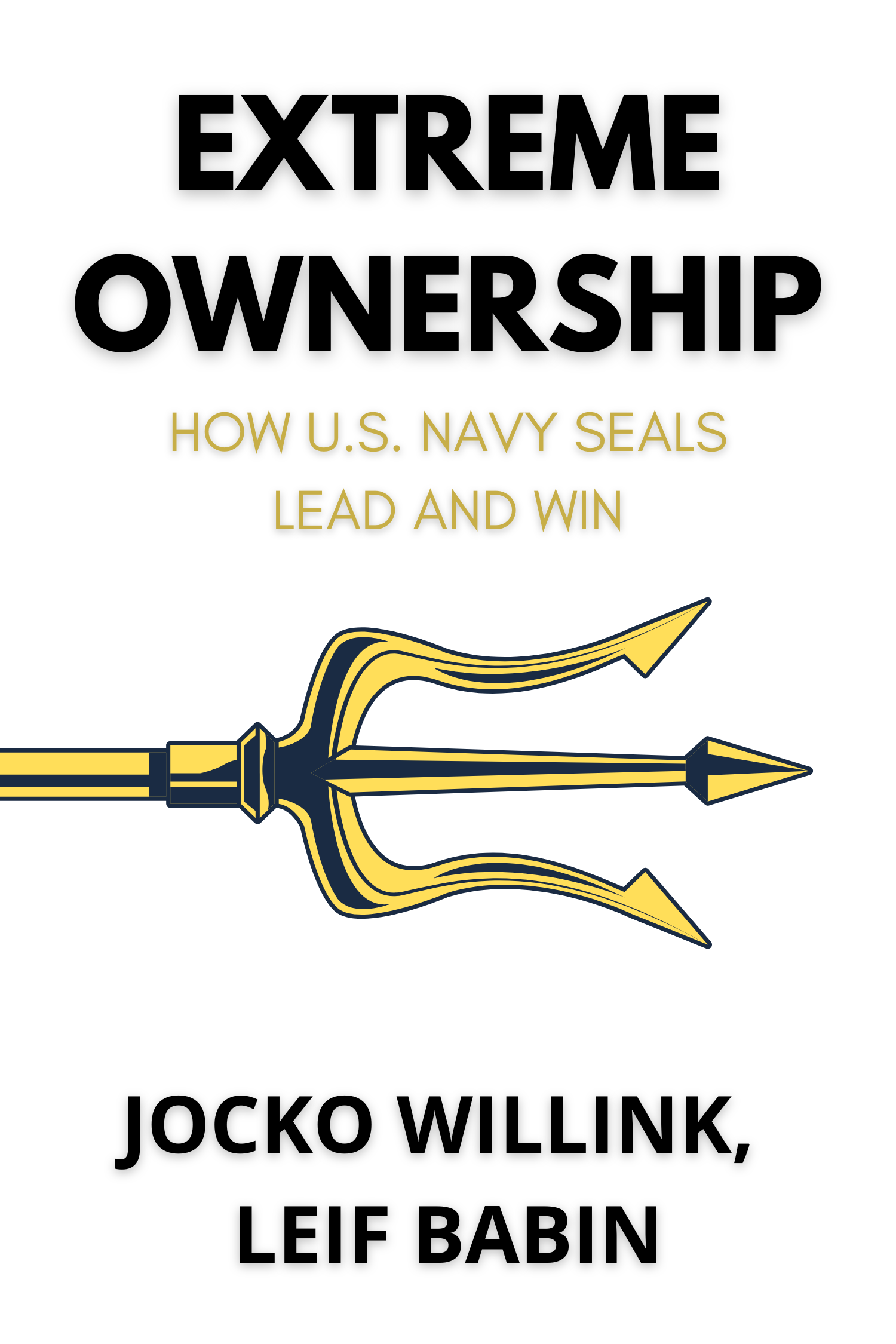
Jocko Willink and Leif Babin's book "Extreme Ownership" offers a unique perspective on team leadership based on the experiences of two former Navy SEAL commanders who served in one of the most dangerous battlefields in Iraq. Through dramatic stories from the fighting in Ramadi, the authors present key leadership principles that are applicable not only in the military, but also in the business world and in various types of organizations.
This summary highlights the book's main ideas, which emphasize taking personal responsibility, effective communication, and teamwork. The authors also offer practical advice on how to deal with difficult situations and achieve success in challenging circumstances, providing valuable tools for any leader.
Extreme accountability in leadership
Taking extreme responsibility for one's leadership role is a core principle that separates exceptional leaders from mediocre ones. Based on Jocko Willink and Leif Babin's experiences in elite Navy SEAL units, this concept emphasizes that leaders must accept complete responsibility for the team and its results. This means that when a problem arises, the leader does not look for blame in other team members or external factors, but admits his or her failures and takes steps to correct them.
Leaders who embrace extreme accountability build a culture of responsibility within the team, inspiring other members to perform their roles responsibly and contribute to the team's success. This approach leads to greater effectiveness because everyone feels committed to delivering maximum performance and proactively solving problems.
Extreme accountability also implies the ability to admit one's own mistakes and continuously improve. Leaders who openly admit their failures set an example to the team that learning from mistakes is essential for growth. This attitude encourages openness to feedback and constructive criticism, which is key to the long-term development of the team.
Taking extreme responsibility also involves problem solving and actively seeking solutions instead of blaming others. Leaders must ensure that all team members have clearly defined goals and responsibilities. This creates an environment where
everyone knows what their roles are and is prepared for challenges, leading to continuous improvement of the team.
Equally important is ensuring effective communication, not only downwards to subordinates, but also upwards to superiors. By providing relevant information to their superiors, it allows leaders to better understand the situation and support them, which improves the decision-making process. This aspect of accountability is often overlooked, but is key to maintaining good relationships and support within the hierarchy.
Ultimately, extreme accountability leads to a cohesive and effective team, fostering trust and cooperation among all members. This approach increases not only the performance but also the resilience of the team, and is applicable in any environment - whether in the military, business, or any other field where quality leadership is critical to success.
Accepting responsibility for mistakes and failures
Leading a team to success means taking full responsibility for every failure. This principle emphasizes that the leader should be held accountable for all team results, regardless of whether they are positive or negative. The key is for the leader to accept blame for mistakes instead of blaming others. For example, Jocko Willink, when friendly fire occurred during a mission in Ramadi and one soldier died, took full responsibility for the tragedy. This move not only helped him preserve his position, but also demonstrated that good leaders must own up to mistakes and learn from them.
Acceptance of responsibility by leaders contributes to better team results. The SEAL teams that perform best have leaders who admit mistakes, seek constructive criticism, and continually improve. Conversely, leaders who blame others create a culture where team members escape accountability and defend their own failures. Such an environment leads to ineffectiveness and a lack of team ability to achieve goals.
A culture of accountability starts with the leader. When leaders accept responsibility for their decisions and mistakes, subordinates adopt this attitude, which leads to an overall improvement in team performance. The leader must lead by example and be held accountable for all aspects of their role, from planning to execution.
Taking responsibility also involves ensuring effective communication and collaboration within the team and with external teams. When Leif Babin forgot to coordinate support with a nearby SEAL team during a mission, he put his team at greater risk. This experience showed him that effective leadership requires cooperation and coordination with all available resources.
Overall, leading a team to success means being prepared to take responsibility for every setback, learning from mistakes, fostering a culture of accountability, and ensuring effective communication and collaboration. This approach not only improves team performance, but also fosters trust and cohesion among team members, which is the foundation for long-term success.
Understanding the importance of the mission
To successfully execute your mission, you must understand its importance. This principle points to the need for leaders to understand the larger context and strategic goals they serve. As an example, Jocko Willink cites a situation where his elite SEAL team was to work with the newly formed Iraqi army. Initially, this seemed like an ineffective and risky decision, as he considered the Iraqis to be undertrained and unreliable. Before he would have voiced his disapproval, however, Willink sought clarification from his superiors.
He found that engaging the Iraqi Army was a strategic move to prepare it for independent operations and to enable the withdrawal of U.S. forces from Iraq. Once he understood this broader goal, he was able to support the mission and persuade his team to do the same. If Willink had publicly criticized the plan without understanding its strategic value, he could have provoked doubt and resentment among his men, jeopardizing the success of the mission.
Therefore, it is important that leaders not only carry out orders, but also understand the reasons and objectives behind them. When a leader believes in the importance of the mission, he or she can pass that belief on to his or her team, which increases the commitment and dedication of its members.
Leaders should be proactive in gathering information to fully support the mission objective. If they don't understand something, they should ask their superiors and seek clarification. This understanding will enable them to lead their team more effectively and ensure that each member understands his or her contribution to
the success of the mission.
Ultimately, understanding the importance of the mission and its goals helps leaders make informed decisions, inspire the team, and ensure that everyone is working toward the same goals. This approach is key to achieving success, whether in military operations or in business projects.
Collaboration and coordination
Think of your allies as support, not competition. This principle emphasizes the importance of cooperation and coordination between teams to achieve common goals. When Leif Babin and his SEAL unit were on a mission in the dangerous Iraqi city of Ramadi, they found themselves deep in hostile territory without support. Instead of asking a nearby SEAL team for help, Babin focused only on his unit's problems, unnecessarily increasing the risk to his men.
The Navy SEALs employ the tactic of "cover and move," where all elements of the team work together and support each other to achieve the overall objective. Had Babin asked for help, his team would have been less vulnerable and the mission would have been safer. This example shows that leaders must maintain a broader view of the situation and incorporate support from other teams and units into their plans.
Similarly, in a business environment, leaders should view other teams in the organization as allies, not competitors. When Babin worked as a business consultant, he noticed that different teams in one corporation often competed and blamed each other. Such behavior violated the principle of "cover and move," according to which internal teams should support each other and focus on external competition, not internal conflicts.
Effective leadership requires leaders to foster cooperation and coordination among all parts of the organization. It is important to keep an eye not only on the current mission, but also on the broader context of the organization and to look for opportunities to support each other across teams. This approach can ensure that all teams are working together toward a common goal, contributing to the overall success of the organization.
Consider your allies as a support network, not competition. Collaboration and mutual support are key to achieving success, whether in combat operations or in
business. By building strong relationships and coordinating efforts, you increase the chances of achieving common goals and ensuring long-term success.
Successfully managing crisis situations
Stay effective under pressure by setting clear priorities and acting on them. This principle is key to managing crisis situations and solving complex problems in any environment. An example is the situation experienced by Leif Babin when his SEAL team in Ramadi faced extreme danger. During a nighttime operation, one team member fell through a tarp on a roof and collapsed 20 feet below, sustaining serious injuries. The team was deep in hostile territory, with no backup, an injured member, and an enemy bomb at the exit of the building.
It is easy to feel overwhelmed in situations like this, where a number of contemporary problems are emerging. To remain effective, leaders must remain calm and set clear priorities. Babin recalled the "prioritize and act" principle he learned during training. This principle taught him that the key to managing crises is to remain calm, reassess the situation, and proceed by addressing the most important tasks.
Leaders can verbalize this principle by using the mantra "relax, look around, and decide" to help them focus and not allow themselves to be overwhelmed by all the issues at once. In Babin's case, this meant first ensuring the safety of the team, then providing assistance to the wounded soldier, and then checking on the situation with all members. This approach allowed him to handle the situation effectively even under extreme pressure.
A similar approach can be used by business leaders. In a crisis situation, they should begin by assessing the highest priority, briefly communicate that priority to the team, solicit input from key leaders, and focus the team's resources on executing the plan. When priorities change, it is important to inform the team of the change so that all members know what is currently most important.
This approach increases efficiency in dealing with crisis situations while building trust and collaboration within the team.
Stay effective under pressure by setting clear priorities and acting on them. This principle will enable you to handle even the toughest challenges and set your team up for success in any situation.
A proactive approach to risk management
Planning for success is about comprehensively identifying and mitigating risks in advance. This principle emphasizes the importance of a proactive approach to risk management and consistent planning to increase the chances of success even in difficult and unpredictable situations. An example is Leif Babin's experience when his SEAL unit planned the rescue of an Iraqi hostage held by al-Qaeda. Just before the operation, he received information that the hostage was surrounded by explosives and guarded by gunmen with machine guns.
Despite the new information, Babin did not abort the mission because he anticipated such risks and included them in the original plan. Careful planning and preparation meant that his team was ready to face these additional dangers without the need for improvisation or delay. Babin implemented a series of risk mitigation measures that allowed the unit to continue the mission with confidence in their readiness.
Babin recognized the importance of preparation so much so that he used similar situations in his training of rookie SEALs. He often asks them the question: "Would you have carried out this mission even with all these identified risks?" The correct answer is always yes, because leaders anticipate and plan for even the worst-case scenarios, minimizing risks and setting their team up for success.
Leaders should take the time to create detailed plans that identify, quantify, and mitigate all potential risks. Such planning also includes contingency plans and alternative strategies that allow the team to respond quickly and effectively if the situation changes. This way, each team member knows exactly what to do in the event of unexpected events, reducing uncertainty and improving the team's ability to achieve success.
However, it is important to recognize that not all risks can be completely mitigated. Experienced leaders focus on those risks they can control and prepare their team for unknown challenges by teaching them to be flexible and adaptable.
Planning for success is about identifying and mitigating risks in advance. This approach not only increases the chances of success, but also builds team confidence and preparedness, which is essential for long-term success and effective crisis resolution.
The importance of effective communication
Instead of berating supervisors for their interference, make sure you are providing them with all the information they need. This principle emphasises the importance of effective communication up the chain of command. An example is Leif Babin's experience when, during his time in Iraq, he frequently went to his superior, Jocko Willink, and complained that senior commanders were constantly bombarding him with e-mails and questions that he thought were unnecessary. Willink simply answered him: "No, because you don't take responsibility for telling them."
This realization helped Babin understand that senior commanders need to be kept in the loop, and they only ask questions because they lack sufficient detail about the progress of missions. When superiors don't have enough insight, they feel the need to intervene to get information and make fact-based decisions.
Leaders can avoid these situations if they regularly and proactively provide their superiors with all relevant information. This includes documenting plans, operations and results in detail and sharing this information transparently and promptly. In this way, supervisors gain confidence in the abilities of the leader and his or her team, reducing their need to interfere in the process.
Many leaders don't realize that if bosses don't have visibility into what's going on, they interfere and ask questions that could have been avoided. When leaders take responsibility for keeping their supervisors informed, it improves trust and relationships in the chain of command. Transparent and open communication enables supervisors to better support their teams and make decisions that are aligned with the organization's broader strategic goals.
Providing supervisors with the information they need is an important part of leadership. Leaders who take responsibility for keeping their bosses informed help create an environment of trust and collaboration. This approach ensures that everyone in the chain of command has enough information to perform their tasks effectively, leading to the overall success of the organization.
Final summary
The book "Extreme Ownership" by Jocko Willink and Leif Babin teaches that
leaders must take full responsibility for the team and its results. Admitting mistakes and proactively solving problems create a culture of accountability and increase team effectiveness. Understanding the broader mission goals and communicating them clearly to the team is also key so that the team has the full support of the members.
Collaboration between teams is essential; leaders should view their allies as support, not competition. Setting clear priorities maintains effectiveness even under pressure, and planning for success means identifying and mitigating risks in advance, increasing team readiness.
Leaders should provide critical information to supervisors on a regular basis, fostering trust and collaboration in the chain of command. Overall, "Extreme Ownership" demonstrates that taking ownership, effective communication, and teamwork are key factors for success in any environment.