

Free text
Summary and key ideas
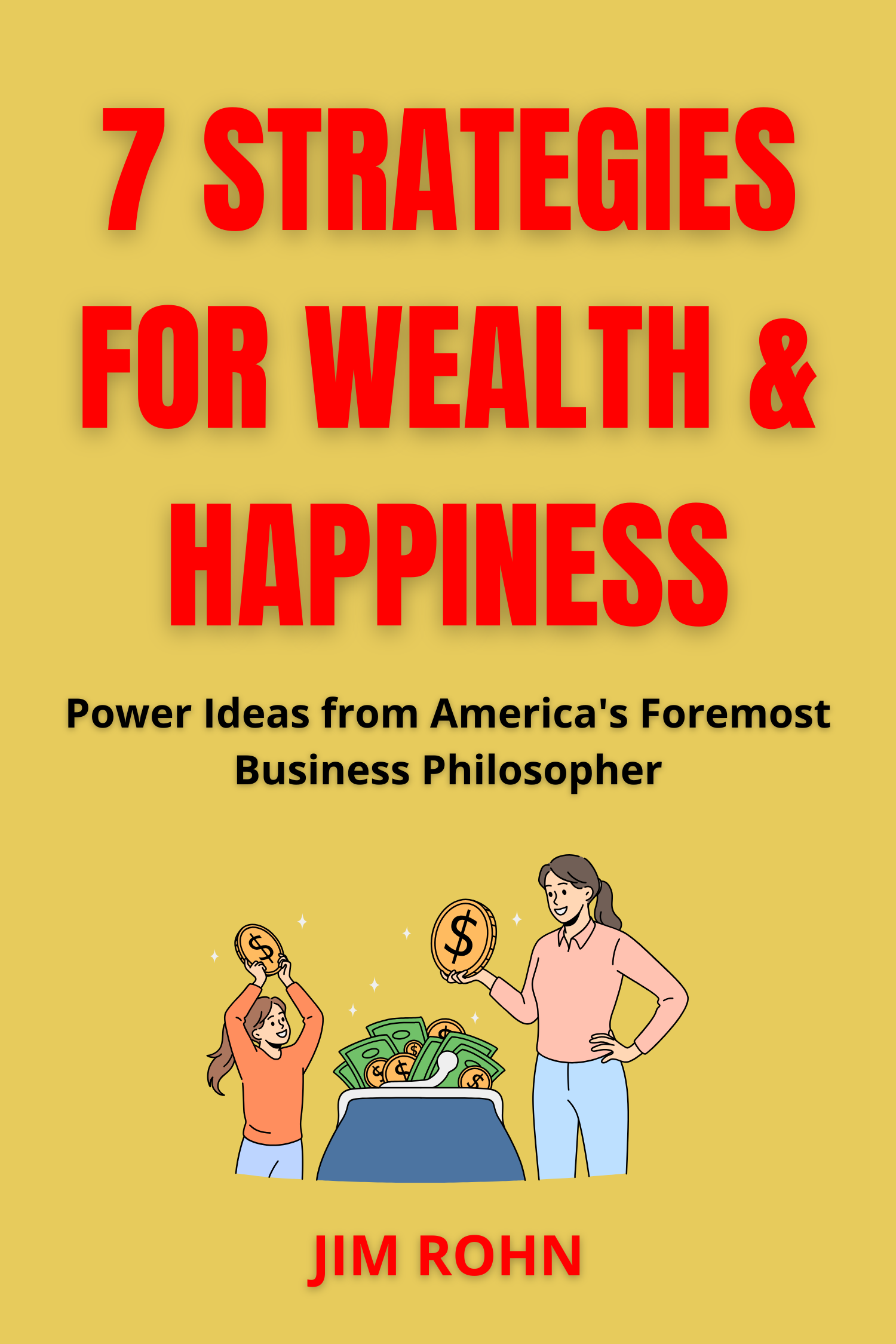
Book summary prepared by ReWio. Original book author: Jim Rohn.
Introduction
All of us long for a life of success and happiness. However, it often seems that these two things are unattainable for many of us. Financial problems, personal challenges and ever-changing life circumstances can leave us frustrated and without hope. Is there a path to lasting wealth and true happiness?
Jim Rohn has spent years searching for the secrets of success. In the process, he has learned that wealth and happiness are not the result of chance or luck, but are the result of a clear plan, discipline, and a certain mindset. In this book, he presents the seven essential strategies he learned that helped him achieve financial success and personal fulfillment.
These strategies are not just theories, they are practical steps that every person can apply to their life. His goal is simple: he wants you to understand that you have the power to change your life. No matter where you are right now, you can start taking steps toward a better future today.
Each of these strategies is important on its own, but together they form a comprehensive approach to achieving wealth and happiness. Read this book with an open mind and a willingness to learn. Rohn often repeats examples of successful people in which he demonstrates these strategies and the qualities that helped them achieve wealth, success, and happiness.
Take charge of your life
Taking full responsibility for your life is one of the most important strategies on the road to success and happiness. It's about understanding that your life and its outcomes are in your hands. You have the power to decide in each moment how you will respond to the situations that life brings you.
In his book, Jim Rohn shows that accepting responsibility means to stop blaming others or circumstances for your problems. If you're not doing well at work, it's not your boss's or your colleagues' fault; if you're having financial problems, it's not
because of the economy or the government. The key is to understand that you are the one in control of your decisions and actions.
Rohn often refers to his own story. After dropping out of college to work as a human resources manager, he worked hard, but the results weren't coming. Things changed when he met his mentor Earl Shoaff. Shoaff taught him that the only way to succeed is to take full responsibility for your actions and not wait for miracles or outside help. This realization allowed Rohn to transform his life and by the age of 31, he became a millionaire.
Examples from the lives of successful people often show that taking responsibility is an essential step to achieving great things. Henry Ford faced many setbacks, but he always learned from them and instead of blaming others, he looked for ways to improve himself and his business. This approach eventually enabled him to build one of the most successful automotive empires in the world.
But responsibility isn't just about big life decisions. Everyday small steps are just as important. Rohn recommends starting by setting goals and creating a plan to achieve them. For example, if you want to improve your health, don't wait for ideal conditions or external motivation. Start by taking small steps every day - choose healthier foods, go for a walk, avoid bad habits. Each small success will bring you closer to bigger goals.
Although taking responsibility can be challenging, it also brings great freedom. You no longer have to feel like a victim of circumstance. You can begin to actively create your life as you wish. Rohn reminds us that change can come quickly if you choose to take the right steps. Simple decisions like stop complaining and start taking action can have a huge impact on your life.
For many people, the fear of failure is a barrier. However, Rohn stresses that failure is a natural part of the path to success. Every setback is an opportunity to learn and grow. The important thing is not to get discouraged and to keep moving forward. As an example, he cites Thomas Edison, who went through thousands of failed attempts before inventing the light bulb. Edison did not see these attempts as failures, but as steps towards success.
Taking responsibility for your life also means being honest with yourself. You have to acknowledge your weaknesses and work to improve them. If you tend to procrastinate, set specific tasks and deadlines to help you be more efficient. If you struggle with finances, educate yourself about financial management and start keeping a budget. Being honest with yourself and taking responsibility for your mistakes is key to personal growth.
One of the most inspiring stories is that of Oprah Winfrey. Oprah was born into poverty and faced many personal and professional obstacles. Instead of giving up or blaming her circumstances, she decided to take full responsibility for her life and work on her personal and professional development. Her determination and work on herself led her to become one of the most influential and successful women in the world.
Taking responsibility for your life is about accepting that each of us has the power to create our own destiny. No matter what challenges are in front of us, we always have a choice in how we respond to them and what actions we take. This ability to make choices and take action is the foundation of true success and happiness.
Invest in yourself
Investing in yourself is the cornerstone that enables lasting success and fulfillment. This principle encompasses various aspects of personal and professional development. True wealth and happiness do not only come from external achievements, but more importantly from how we continuously improve, learn and grow as individuals.
Jim Rohn often talks about the importance of continuous learning and personal growth. The experience and knowledge we gain makes us more valuable and better able to handle the various challenges that life brings us. His life's journey is a testament to this principle. When he met his mentor, he started working hard on his education and personal development, which enabled him to become a successful entrepreneur.
One of the key ways to invest in yourself is by reading books. Napoleon Hill, in his
famous book "Think and Grow Rich", underlines that successful people are always avid readers. Bill Gates, one of the richest people in the world, reads about 50 books a year and stresses that these books help him gain new insights and inspiration.
Attending seminars and conferences is another great investment. Rohn often mentions that in-person meetings and discussions with successful people can provide invaluable insights and new perspectives. These meetings offer an opportunity not only to learn, but also to build important professional contacts. Warren Buffett, a well-known investor, once commented that his best investment was attending courses on public speaking, which helped him develop his communication skills and self-confidence.
Physical health is another critical area to invest in. Tony Robbins, another prominent motivator and speaker, stresses that a healthy body is the foundation for a healthy mind and the ability to perform at high levels. Regular exercise, a healthy diet and getting enough sleep are investments that pay off in the form of increased energy, better concentration and overall well-being.
Keeping a journal and regular self-reflection are other ways to work on yourself. Rohn recommends writing down thoughts, goals, and reflections on a daily basis. This practice helps us understand ourselves better, track our progress, and identify areas that need improvement. Oprah Winfrey is an advocate of keeping a journal, claiming that it has helped her overcome many personal and professional challenges.
Personal development includes investing in relationships with positive and inspiring people. The circle of people we spend the most time with greatly influences our thoughts, attitudes and behaviours. Steve Jobs, co-founder of Apple, was known for surrounding himself with talented and creative people, which contributed to his company's innovation and success.
Taking time to pursue your own hobbies and passions is just as important. Rohn encourages us to make time for activities that fulfill us and bring us joy. This approach helps us maintain a work-life balance, which is essential for long-term happiness and satisfaction.
Ultimately, investing in yourself means being constantly open to new opportunities to learn and grow. Every day presents a new opportunity to improve, gain new knowledge and skills, and become a better version of yourself. This constant process of personal development not only makes us more successful, but also happier and more satisfied with our lives.
Build relationships
One of the most important elements of the path to success is building strong and valuable relationships. Jim Rohn often talks about how much influence the people we surround ourselves with have on us. Friends, colleagues and mentors can greatly influence our thinking, decisions and overall life path.
Rohn's own career is a testament to this principle. When he met Earl Shoaff in his youth, his life changed completely. Shoaff not only provided him with the guidance and advice, but also the encouragement Rohn needed to achieve success. This relationship shows that the right mentor can have a pivotal impact on our life direction.
The key to building relationships is authenticity and concern for others. Rohn often mentions that successful people are those who care about their loved ones and colleagues. Being genuinely interested in other people's lives allows us to build deep and lasting relationships. People like Richard Branson, founder of the Virgin Group, are known for their ability to build strong relationships based on trust and respect. Branson believes that the success of his companies stems from the strong relationships he builds with his employees and partners.
Building relationships also means actively seeking opportunities to meet new people. Networking events, conferences and seminars are excellent opportunities to expand our circle of contacts. Bill Gates and Warren Buffett often attend conferences and seminars where they not only present their ideas but also make new contacts that help them grow and develop.
Rohn also points out that building relationships takes time and effort. It's not enough just to make contact; you need to invest in maintaining those
relationships. Regular meetings, phone calls, or just small gestures of attention can keep relationships strong and vibrant. Oprah Winfrey is known for valuing and maintaining relationships with her friends and colleagues. She regularly meets people who inspire her and keeps in close contact with them.
One of the greatest benefits of strong relationships is mutual support and motivation. People we are close to and respect can encourage us when we face challenges and celebrate our successes with us.
But relationships are not just about receiving, they are also about giving. Helping others and being generous are the foundation of strong relationships. Rohn often talks about the importance of being generous and helping others achieve their goals. This mutual help creates an environment of trust and cooperation that is invaluable for personal and professional growth.
Investing in relationships also includes the ability to forgive and resolve conflict. Solving problems with empathy and understanding strengthens relationships and builds trust. Nelson Mandela, who spent years fighting apartheid and was imprisoned, is a great example of a man who was able to forgive and build strong relationships even with those who once hurt him. His ability to resolve conflict and forgive was key to the unification of South Africa.
Our ability to build and maintain relationships can have a profound impact on our lives and careers. Whether it is professional success, personal fulfillment or happiness, strong and valuable relationships are integral to any successful journey. Creating and nurturing these relationships is an investment that will pay us back many times over.
Continuous learning
In today's fast-paced world, continuous learning is the key to both personal and professional success. Jim Rohn considers lifelong learning to be one of the pillars of his success and emphasizes that everyone should constantly seek new knowledge and experiences in order to continually improve.
The story of Jim Rohn himself is a great example of the importance of continuous learning. After he left college and started working, he realized that if he wanted to achieve anything, he needed to learn outside of the traditional education systems.
One of the most important aspects of lifelong learning is reading. Warren Buffett spends a large part of his day reading. He says he reads 500 pages a day to continually expand his knowledge and understanding of current trends. This approach allows him to make informed decisions and stay on top of the rapidly changing world of finance.
Similarly, Elon Musk, founder of Tesla and SpaceX, is an avid reader. Musk learned to build rockets mainly by reading books on rocket science and engineering. His constant thirst for knowledge has enabled him to turn his dreams of commercial spaceflight into reality.
But lifelong learning is not just about reading. Attending courses, seminars and conferences is also essential for personal and professional growth. According to a 2018 LinkedIn study, 94% of employees said they would stay at their job longer if their employer provided learning and development opportunities. This statistic highlights the importance of investing in training to improve job satisfaction and employee retention.
Tony Robbins believes that continuous learning is the key to staying motivated and inspired. Robbins hosts numerous seminars and workshops where he shares his knowledge and experience with thousands of people around the world. His approach to education involves not only acquiring new knowledge, but also putting it into practice immediately.
Another example is Sheryl Sandberg, COO of Facebook, who promotes continuous learning and female leadership development through her Lean In initiative. Sandberg emphasizes that women should continuously work on their personal and professional development so that they can face challenges and overcome obstacles on the road to success.
Education is not limited to formal settings. Self-reflection and learning from one's
own experiences are equally important. Every day provides new opportunities to learn and improve. Journal writing, recording thoughts and reflections on daily events can provide deep insights into one's own behavior and decisions.
Lifelong learning is thus a continuous process of seeking new knowledge and experiences that enrich and move us forward. No matter what age or stage of life we are in, there is always room for growth and improvement. This approach allows us to not only achieve success, but also to live a fulfilled and meaningful life.
Practice discipline and perseverance
Discipline and perseverance are essential to achieving any significant goal. These qualities do not come naturally; they need to be cultivated and continually worked on. Jim Rohn explains in his book that without discipline, dreams become mere illusions and without perseverance, our plans remain unrealized.
Inspired by his mentor Earl Shoaff, Jim Rohn discovered the power of discipline in his own life. When he began to apply Shoaff's advice on daily discipline, he experienced dramatic changes. The discipline he developed enabled him to achieve goals that had previously seemed unattainable. An example is his journey to financial freedom, which he achieved through regular saving and investing, not impulsive decisions.
An important aspect of discipline is the ability to take actions that are necessary, even when we do not feel like taking them. Arnold Schwarzenegger is one of the most famous examples of discipline and perseverance. His journey from bodybuilding to acting and politics has been full of challenges, but Schwarzenegger has always followed a rigorous training regimen and has never given up on his goals. His mantra "Early to bed, early to rise, work like hell and advertise" emphasizes the importance of a daily routine and perseverance.
Research supports the importance of discipline in various areas of life. A study conducted at the University of Chicago showed that students who exhibited greater discipline and self-control performed better academically than those who were more intelligent but less disciplined. This study proves that discipline often trumps talent and natural ability when it comes to long-term success.
Discipline and perseverance are also key in business. Musk, founder of Tesla and SpaceX, faced many setbacks and skeptics who did not believe in his vision. Yet he did not give up. His ability to remain disciplined and persevere in the search for solutions even in the toughest of times has allowed him to turn dreams of electric vehicles and commercial spaceflight into reality.
Personal examples from people like J.K. Rowling, author of the Harry Potter series, show how perseverance can turn setbacks into successes. Rowling was rejected by many publishers before her first book was published. Nevertheless, she continued to write and believed in her story. Her persistence eventually paid off when her books achieved worldwide success.
Discipline and perseverance are the foundation of daily practice. Jim Rohn suggests starting with small steps, such as getting up regularly and planning your day, so that these qualities become a natural part of our lives. Each small accomplishment strengthens our ability to be disciplined and persistent, allowing us to gradually achieve larger goals.
Discipline also means being able to control our thoughts and emotions. Nelson Mandela, who spent 27 years in prison, is an example of extreme discipline of mind. During his imprisonment, he worked on himself, read, studied and planned for the future of South Africa. His ability to maintain mental discipline and not give up on his goal was crucial to his later success as a leader who united the country.
The importance of discipline and perseverance is also reflected in sporting achievements. Michael Jordan, considered one of the best basketball players of all time, is known for his work ethic and determination. His famous quotes such as "I've failed time and time again and that's why I'm successful" emphasize that the road to success is full of setbacks, but discipline and perseverance will get us through them.
Success, regardless of the area in which we want to achieve it, requires discipline and perseverance. These qualities keep us on the path even in difficult times and allow us to achieve our highest goals and dreams. Every step forward, even the smallest, is a testament to our determination and a promise of future success.
Take calculated risks
Taking calculated risks is an integral part of the path to success. It is the courage to step out of your comfort zone and onto unknown ground with thorough preparation and an understanding of the potential benefits and drawbacks. Jim Rohn believes that success comes not to those who stay safe, but to those who are willing to take risks with discernment and strategy.
When we talk about taking risks, we don't mean reckless gambling. Calculated risk means that before taking action, we consider all the options, analyse the possible consequences and prepare a plan to minimise potential losses. We can see this approach in the stories of many successful people.
Musk is one of the most striking examples of a person who constantly takes calculated risks. When he sold PayPal, he could have simply enjoyed life on the billions he made. Instead, he invested his money in Tesla, SpaceX and SolarCity, three companies with enormous risk and uncertainty. His decision was based on a careful analysis of markets, technology and his own vision of the future. Despite the huge risks he took, these companies have become leaders in their industries and Musk has become one of the most innovative entrepreneurs of our time.
Another example is Richard Branson, founder of the Virgin Group, who built an empire based on his willingness to take risks. Branson's approach to business is unorthodox; he was always willing to try new things and enter markets that were too risky for others. But his decisions were never impulsive. Every new venture was thoroughly analysed and Branson always prepared a back-up plan in case of failure.
Risk is an inherent part of investing. Warren Buffett, often referred to as the "Oracle of Omaha," is known for his conservative approach to investing. Yet he takes calculated risks by investing in companies and sectors that he thoroughly researches and understands. His investment strategy is based on the principle that risk is minimized when an investor understands his subject matter and takes a long-term perspective.
Jim Rohn reminds us that taking risks is not just about financial or business decisions. It is also about personal and career risks. Steve Jobs, co-founder of Apple, risked his reputation and career when he returned to Apple after being fired. Under his leadership, Apple entered new product lines that became revolutionary. His ability to see potential where others saw only risk, and his willingness to risk everything on those visions, changed the technology industry forever.
Similarly, in personal life, taking calculated risks can be the key to growth and success. Oprah Winfrey faced many challenges and decisions that required the courage to take risks. When she decided to leave her successful television show and start her own network, OWN (Oprah Winfrey Network), she faced great uncertainty. However, her careful planning and clear vision allowed her to turn this risky move into another success.
A Harvard University study showed that entrepreneurs who take calculated risks are 50% more likely to achieve long-term success compared to those who avoid risks. This statistic underlines the importance of a strategic and informed approach to risk.
The key to successful risk-taking is preparedness and the ability to adapt to unforeseen circumstances. Flexibility and the ability to react quickly to change are invaluable. Jeff Bezos, founder of Amazon, is known for his approach to risk, where he experiments with new ideas and is prepared to change direction when the situation demands it.
Taking calculated risks is essential for growth and innovation. By analyzing possible outcomes, making plans, and remaining flexible, we can reduce negative impacts and maximize the chances of success. Without risk there is no progress and without progress there is no success. This philosophy is at the heart of the path to achieving our greatest dreams and ambitions.
Be generous
Generosity is a virtue that goes hand in hand with success and happiness. In his
book, Jim Rohn says that generosity allows us to share our wealth, knowledge, and time with others, which creates a positive impact on society while also enriching ourselves. Generosity is not just about giving money, but also about how we approach other people and how we seek to contribute to their lives.
One example of generosity is Warren Buffett, who has pledged to donate 99% of his wealth to charity. Together with Bill Gates, Buffett founded The Giving Pledge, an initiative that calls on the world's richest people to donate the majority of their wealth to charitable causes. This act of generosity not only helps millions of people around the world, but also inspires other wealthy individuals to make similar pledges.
Rohn also emphasizes that generosity also shows up in how we treat those around us. Oprah Winfrey is a great example of a person who uses her platform and resources to help others. Her Oprah Winfrey Foundation supports education and development for young people from marginalized communities. Oprah believes that investing in education is one of the most effective ways we can contribute to positive change in society.
Generosity can take many forms. Sheryl Sandberg, COO of Facebook, is known for her willingness to mentor young women and help them grow in their careers. Her book "Lean In" and the Lean In Foundation encourage women around the world to believe in themselves, fight for their rights, and strive for leadership positions. Sandberg's generosity lies in sharing her experience and knowledge, which has had a tremendous impact on the lives of many women.
A study conducted by Harvard University shows that generous people are often happier and more satisfied with their lives. The act of giving releases endorphins and oxytocin, the hormones of happiness, which brings us a sense of satisfaction and well-being. This is known as the 'helper's high', the feeling of joy and fulfilment we experience when we help others.
In his book, Rohn reminds us that generosity should be part of our daily routine. Big gestures are significant, but even small everyday acts of kindness can have a big impact. Whether it's helping a colleague at work, giving time to volunteer, or
simply a smile and a kind word for someone in need, every act of generosity contributes to creating a positive and supportive environment.
J.K. Rowling's story is another example of generosity. After the success of the Harry Potter series, Rowling became one of the richest women in the world. Despite this, she donated a significant portion of her fortune to charitable causes, particularly to support single-parent families and multiple sclerosis research. Her generosity helped improve the lives of many people and showed that the true value of wealth lies in how we can use it to help others.
Generosity can also have a positive impact on the work environment. Studies show that leaders who show generosity and care for their employees create stronger and more loyal teams. Leaders like Virgin Group's Richard Branson are known for investing in their employees and supporting their personal and professional development, leading to higher productivity and job satisfaction.
In the book, Jim Rohn emphasizes that generosity is not just about material things, but also about how we invest our time, energy, and love in others. Truly generous people are those who give without expectation of reward, and who believe that every act of generosity has the potential to change the world for the better.
This approach helps us create deep and meaningful relationships, enriches our own lives, and brings us inner peace and satisfaction. Generosity is the foundation not only of success and happiness, but also of true fulfillment in life.
Final summary
In "7 Strategies for Wealth and Happiness," Jim Rohn presents a series of practical advice and strategies designed to help readers achieve personal and financial success. Each chapter of the book addresses a different aspect of life and provides concrete steps on how to put these principles into practice. Rohn emphasizes the importance of goal setting, continuous learning, building strong relationships, investing in yourself, and discipline in everyday life.
His own story of transformation from an average-income manager to a successful
entrepreneur and millionaire serves as proof that these strategies work. The book is filled with inspiring stories and examples from well-known personalities that show that success is not a matter of luck, but the result of specific actions and decisions.
Rohn's philosophy is based on the idea that everyone has the power to change their lives and achieve their goals through a disciplined approach and a willingness to take risks and learn. His advice is practical, applicable, and encouraging, giving readers the tools and motivation to change their lives for the better. The overall message of the book is clear: with the right attitude and commitment, anyone can achieve success and fulfillment in life.