

Free text
Summary and key ideas
Book summary prepared by ReWio. Original book author: Hunter Clarke-Fields.
Introduction
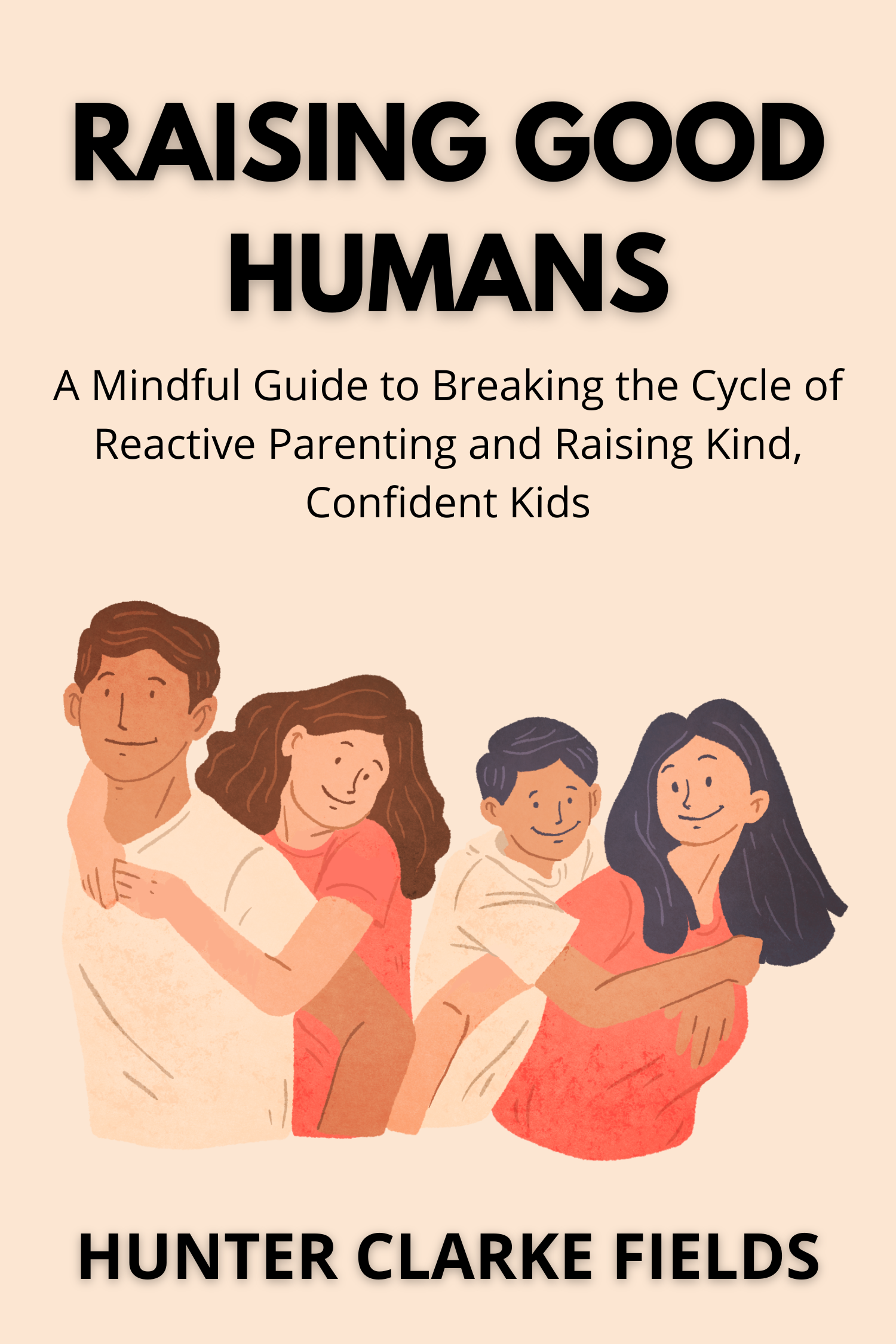
Parenting is one of the biggest challenges people face, and one of the most significant. “Raising Good Humans” by Hunter Clarke-Fields offers parents a unique perspective on how to consciously and empathetically guide children so that they grow up to be kind and compassionate people. It is not just a set of advice, but a profound approach that requires reflection, patience, and a commitment to changing established patterns of behavior. The book highlights mindfulness, self- compassion and respect as key elements not only for parents but also for their children. Through practical guidance, examples, and everyday situations, it shows that parenting can not only be a source of stress, but also a path to personal growth and family harmony.
The basis for conscious parenting
Imagine a common situation: a child spills a glass of water on the table just as a parent is on the phone preparing dinner. Many parents would react immediately and impulsively, often with a raised voice. But what if instead they stopped, took a deep breath, and realized that spilled water is not a disaster? This is exactly the principle on which mindfulness and self-compassion are built - the ability to stop, notice the present moment, and respond with calm. Mindfulness means being fully present in the moment, without being controlled by emotion or stress. It's not just a modern trend, but a time-honored practice that has been around for thousands of years. In Buddhist monasteries in Asia, monks were taught that mindful awareness of each moment brings inner peace. In the context of parenting, this means seeing the child not only as a source of obligation, but as a being in need of love and patience. Self-compassion is an integral part of this approach. Parents who are able to be kind to themselves teach children that it is okay to make mistakes. Imagine a father who constantly pushes himself to be perfect and compares himself to other parents. This approach leads to frustration and exhaustion. Conversely, a parent who allows themselves to relax and admit that everything doesn't have to be perfect creates a safe and supportive environment for their children. One tool to develop these skills is the regular practice of meditation or simple mindful breathing. Just five minutes a day can make a significant difference. For example, you can notice how your breathing changes during stress and how
consciously slowing your breathing helps calm the mind. With these small exercises, parents can respond to situations with more perspective and less impulsiveness. Another way is to use reflection. At bedtime, a parent can ask themselves the questions, "What was the most challenging moment today? How did I react? Could I have done it differently?" This simple practice teaches not only to self-reflection, but also to growth. When parents begin to apply these principles, their children naturally adopt the same behaviors. A child who sees a parent respond calmly and without remorse in a difficult moment learns that conflict and stress are a natural part of life, but can be handled with calm and respect. Mindfulness and self-compassion are not just tools for coping with difficult situations. They are the foundation for healthy and strong family relationships. When parents create an environment where peace and acceptance reign, they build not only their children's emotional resilience, but also their capacity to become kind and empathetic people.
The path to conscious parenting
Parenting is often a reflection of how we ourselves were raised. Imagine a mother who automatically yells at her child when she does something wrong, even though she knows it's not ideal. But this reflex is not accidental - it's the result of behavioural patterns she picked up in childhood. Breaking these habitual reactions is not easy, but it is an essential step towards parents being able to give their children a better start in life. Neuroscience research shows that our reactions are largely controlled by the limbic system, which is activated in stressful situations. This mechanism has had evolutionary significance in the past - protecting us from danger. In the modern world, however, it can lead to unnecessary exaggeration or anger, especially in parenting. The key to change is to understand that these reactions are learned and not inevitable. Imagine a father who realizes that his tendency to get angry quickly was inherited
from his father. This man may ask himself: "Do I want my children to remember me as someone who always yelled, or as someone who could stay calm?" This self- reflection is the first step to breaking the cycle. The next step is creating new, consciously chosen responses. For example, when a child disobeys, a parent can stop the automatic anger response by repeating the phrase in his or her head: "My child is not my enemy." This reminds himself that the child is not acting intentionally to harm him, but perhaps needs more attention or clearer guidance. Practicing empathy plays an important role in this process. When a parent perceives a situation from the child's point of view, he or she is better able to understand the child's emotions and needs. For example, if a parent notices that a child is crying because he or she is tired and not because "he or she is spoiled," he or she can respond to the situation with more understanding and patience. Changing these deep-seated reactions is not a matter of a day. It requires patience, repeated practice, and the ability to forgive oneself for mistakes. However, a parent who chooses to move beyond their old patterns creates an opportunity to change not only their own life, but the lives of their children as well. When children grow up in an environment where there is less anger and more understanding, they learn to handle conflict and stress effectively and calmly. This positive cycle is then passed on to the next generation, creating a family tradition based on empathy, respect and conscious communication. Breaking the cycle of learned responses is more than a parenting technique - it is a decision to change the world by changing ourselves. Every conscious step, every moment of reflection, and every decision to act with love contributes to raising a generation of kind and compassionate people.
The foundation for children's emotional stability
The relationship between parent and child is not just about daily chores, but above all about creating a safe and loving environment. Children need to know that their parents love and respect them not only for what they do right, but also in spite of
their mistakes and failures. Such a relationship is the foundation of their emotional stability and their ability to develop healthy relationships in adulthood. Imagine a child who breaks a favorite vase. The parent has two choices: to react with anger and shouting, or to use the situation as a learning opportunity. If, instead of reproaching, the parent calmly explains that the vase was valuable and shows the child how to make the situation right, the child will learn responsibility while retaining trust in his or her parent. Respecting the child also includes the ability to listen to him or her. When children see that their opinions are heard and taken seriously, they feel important and accepted. For example, if a child does not want to eat dinner, instead of pressuring, a parent may ask a question: "What would you like to have today? We can include that in the next meal." This builds a dialogue that fosters trust. Physical closeness is also an important aspect of love and respect. A hug, a caress or a look in the eye strengthens the emotional connection between parent and child. Researchers have found that physical contact releases the hormone oxytocin, which reduces stress and promotes feelings of security. Regular physical affection is not only a sign of love, but also a way to build a child's emotional resilience. Children also need boundaries, but these need to be set respectfully. For example, if a child is playing late at night and refuses to go to bed, a parent can say: "I see you're having fun, but you need to be fresh tomorrow morning. What if we set a time to play and then read together before bed?" This approach shows that rules are not punishment, but a way to protect their well-being. Building a relationship on respect and love also takes time. In today's hectic world, it can be difficult to give children our full attention, but brief moments of full concentration - such as playing together, talking or taking a walk - are of great importance. These moments show children that they are a priority. A relationship based on love and respect is not only a gift for the child, but also for the parent. When parents invest in this approach, they gain not only emotionally stable children, but also a deeper and more lasting relationship with them.
Children who feel unconditional love and respect grow into individuals who carry that attitude forward into their own relationships and society.
Accepting your own mistakes
Bringing up children is full of challenges in which every parent encounters his limits. At a time when the pressure for perfection is omnipresent - from social media to expert advice - many parents feel they have to be flawless. But the truth is, children don't need perfect parents. They need parents who admit mistakes and know how to learn from them.
The story of the mother who, in anger, yells at her child for messing up, but later realizes that her reaction was inappropriate, is a common one. It is what follows that is important. If the mother admits, "I'm sorry, I got very upset today. I should have handled it more calmly," this shows the child that mistakes are part of life and that they can be corrected.
Accepting one's own mistakes has a powerful educational effect. Children who see that their parents are not infallible gain a healthy view of humanity. They learn that it is okay to make a mistake as long as the effort is made to correct it. For example, when a father misses his son's school game, instead of making excuses, he can say: "I'm sorry I didn't show up. I really wanted to be there and I failed. I'll do better next time." This approach builds confidence and shows the child the value of honesty.
Examples from history show that great leaders who have admitted their mistakes have earned more respect. Abraham Lincoln was famous for being able to publicly admit mistakes and take responsibility for his decisions. The same philosophy applies in parenting - the ability to show your vulnerability creates a deeper connection.
Accepting one's own shortcomings, however, begins with oneself. Many parents carry the burden of self-criticism that stems from their own experiences. Self-love and self-compassion are key to helping parents better manage their own mistakes. An example might be a mom who realizes that yelling at her child wasn't ideal, but instead of self-deprecating thoughts, she tells herself: "I made a mistake, but I have a chance to fix it."
It is a rare gift for children to see that failures are not final. Accepting mistakes also opens up space for conversations. A parent who is not afraid to admit mistakes creates a safe environment where even children can talk about their feelings and failures without fear of rejection.
Education is not a competition for perfection, but a journey full of mistakes from which we can learn. When parents can accept their mistakes and talk openly about them, they teach children that their value lies not in perfection but in their willingness to grow and improve. Such a message is more valuable to children's lives than any illusion of a flawless parent.
Creating a peaceful family environment Every parent desires a family environment where peace and understanding reign. However, in today's world of hustle and bustle, stress and constant demands, this is not easy to achieve. Nevertheless, a calm atmosphere at home is the key to children's emotional well-being and their ability to cope with challenging situations.
A peaceful family environment does not only start with the children, but above all with the parents. If parents are stressed, tired or irritable, this energy is transferred to the children. Imagine a mother who takes five minutes for a simple breathing exercise instead of a hectic morning. This brief moment of mindfulness helps her start the day in a more balanced way, which will show up in her interactions with her children.
Regular rituals and routines are another way to create a calm environment. Children feel safe when they know what is ahead of them. For example, evening rituals such as reading a book before bedtime give children security and create moments to look forward to. Such simple habits not only reassure children but also strengthen the family bond.
The physical environment of the home also plays an important role. Crowded spaces, clutter or constant noise can contribute to stress. When a family creates a space that is clean, cozy and orderly, it helps promote peace and harmony. For
example, a joint project to clean a child's room can not only be practical, but also fun and relationship-strengthening.
Communication within the family is another pillar of a peaceful environment. Open and respectful dialogue allows family members to express their feelings and needs without fear of judgment. For example, if a child is feeling sad, a parent can offer attentive listening and an empathetic question instead of a quick solution: "What upset you today?" This approach fosters trust and emotional closeness.
Technology-free time together is also important. Family activities such as walks, board games, or cooking together create a space for fun and relationship building. These moments help children feel important and valued. For example, a simple activity like making a family lunch can bring laughter and cooperation that strengthen the family bond.
Creating a peaceful family environment is a long-term process that requires patience and conscious effort. Parents who invest in this aspect of their lives, however, gain not only emotionally balanced children, but also a home that becomes a place of rest, joy, and mutual support. Such an environment is a gift that children carry with them throughout their lives.
Why changing reactions pays off Every decision a parent makes has the potential to affect not only their children, but generations to come. Parents often underestimate the long-term impact their reactions, attitudes and behaviours can have. Conscious changes that bring calm and empathy to everyday interactions create a virtuous cycle that affects the future of the family and society.
Imagine a family in which generations of parents have responded to children's mistakes with punishment and reproach. This dynamic was passed from parent to child, causing successive generations to grow up in an environment of fear and mistrust. However, when one parent decides to break this cycle and begins to respond to children with understanding and respect, the entire relationship pattern changes. Children learn to resolve conflicts without aggression and emotional outbursts are replaced by calm communication.
The long-term positive impact is also noticeable in the development of children's emotional intelligence. If a child grows up in an environment where their feelings are respected and their opinions are heard, they are more likely to carry these values into adulthood. Such children are able to build healthy relationships, cope better with stress and contribute to a harmonious environment. For example, a teacher at school may notice that a child who grows up in a respectful environment is able to resolve conflicts with peers calmly and effectively.
However, changing parental reactions also has a deeper social impact. Families that are guided by the principles of empathy and respect produce children who are able to positively influence those around them. For example, adults who experience a loving and supportive environment from childhood are more likely to engage in community activities and contribute to the betterment of society.
Long-term positive effects are also seen in children's physical health. Research shows that children who grow up in a calm and emotionally stable environment are less susceptible to chronic stress, which has been linked to a number of health problems such as heart disease and weakened immunity. Parents thus affect not only their children's emotional well-being, but also their overall health.
Breaking established patterns requires patience and determination. Parents must be willing to reflect on their behaviour, accept change and learn new approaches. The process is not without effort, but the results are worth it. Each conscious step towards positive change creates a solid foundation for future generations.
Long-term positive impact is not just about how we raise our children, but about how we shape the world they will inhabit. Every step towards conscious parenting is a contribution to a better and kinder society. Parents hold enormous power - the power to change the future by changing themselves.
Self-reflection as a tool for growth Parenting is a journey that requires constant learning and growth. Self-reflection is one of the most powerful tools to help parents improve their skills and build stronger relationships with their children. It is the ability to look at one's actions
and reactions in order to understand their impact and identify areas that need change.
Imagine a parent sitting at the table in the evening and reflecting on the day. Could he have reacted more calmly when his child refused to clean the room? Could he have listened to his reasons instead of immediately responding with a command? These questions can open the way to a deeper understanding of what children need, while also revealing where a parent can improve his or her behavior.
However, self-reflection is not just for analyzing mistakes. It is also a way to realize what has been successful. If a parent notices that he or she handled conflict calmly and supportively today, it will boost his or her self-esteem and motivation to continue with a positive approach. For example, a mom who notices that she was able to listen to her child without interrupting may feel a sense of satisfaction that motivates her to continue that behavior.
An important part of self-reflection is the willingness to accept feedback. Children are often unexpected teachers. If a parent hears a child say, "Why do you keep yelling at me?" it can be an opportunity for reflection. Such comments, although they may be hurtful, provide parents with valuable insights into how their children perceive their behavior.
Written records can also be a tool for developing self-reflection. A journal in which parents write down their successes, failures, or feelings is a way to gain perspective and systematically work on their growth. Imagine a father writing down questions like, "What could I do better tomorrow?" or "How did I support my child today?" Over time, these entries can reveal patterns that help a parent better understand both himself and his child.
Self-reflection helps parents realize that children are not the only ones who learn in the process of parenting. Parents who are willing to admit that they don't always have all the answers show children the value of continuous learning and growth. For example, a parent who says: "I don't know how to solve this, but we'll figure it out together," teaches the child trust and openness.
Parenting is not about achieving perfection, but about sincerely striving to be
better. Self-reflection provides a pathway to this change, allowing parents to not only better understand their children, but themselves as well. When parents work on their own personal growth, they create an environment for their children in which they too feel safe, accepted, and motivated to become the best version of themselves.
How to raise good people The world would be a better place if more kind and compassionate people lived in it. This desire is reflected in parenting because it is the family environment that shapes the kind of people children grow up to be. Kindness and compassion are not innate traits - they are values that children learn through everyday interactions, examples and guidance.
One of the most effective ways to teach kindness to children is to be a role model. When parents show consideration for others, children emulate it. For example, if a child sees his father hold the door for an elderly lady, he will begin to see such acts as natural. This pattern of behaviour also works towards children themselves - if parents speak kindly and respectfully to a child, they are teaching the child how to behave towards others.
Parents can also encourage kindness and compassion through concrete activities. Participating in charitable projects together, such as donating clothes or helping out in the community, teaches children that their actions can make a positive difference in the lives of others. Such experiences not only reinforce values but also create a sense of responsibility towards society.
An important part of teaching compassion is also guiding children towards empathy. Parents can help their child understand the emotions of others by asking questions such as, "How do you think your friend is feeling right now?" or "What might help him or her feel better?" These simple questions teach children to see the world through the eyes of others, which is the foundation of true compassion.
Kindness is often born out of small everyday acts. Parents can show children that even small gestures, such as a compliment, a smile, or an offer of help, can have a big impact. An example might be a mother who encourages her child to ask a
classmate who is sitting alone at school, "Do you want to join us?" Such acts teach children that being kind is both simple and significant.
The ability to forgive and admit mistakes is also an important aspect. When a parent says to a child after an argument, "I'm sorry I yelled at you. I could have handled it differently," it shows not only the value of honesty, but also that kindness to others includes the ability to be kind to oneself.
Leading children to be kind and compassionate is not only about creating positive relationships, but also about building character that will help them meet the challenges of life. Children who learn to be empathetic and considerate become people who contribute to society. Their kindness has the potential to spread further, creating a ripple of positive change.
By guiding children towards these values, parents are not only creating a harmonious family environment, but also a generation that can make the world a better place. Kindness and compassion are not just personal traits - they are gifts that can change the world for the better.
Final summary “Raising Good Humans” is not just a guide to parenting, but a deep dive into how to change yourself and your relationships with your children for the better. The book inspires parents to stop looking for perfection and instead focus on mindfulness, empathy, and kindness toward themselves and their children. Raising children to be compassionate, kind, and emotionally balanced is not only a personal achievement, but also a benefit to society as a whole. Through conscious choices and daily interactions, parents can not only make a difference in their children's lives, but create positive changes that last for generations. This book is a reminder that parenting is not about perfection, but a sincere effort to be better every day.
Creating a peaceful family environment
Every parent desires a family environment where peace and understanding reign. However, in today's world of hustle and bustle, stress and constant demands, this is not easy to achieve. Nevertheless, a calm atmosphere at home is the key to children's emotional well-being and their ability to cope with challenging situations. A peaceful family environment does not only start with the children, but above all with the parents. If parents are stressed, tired or irritable, this energy is transferred to the children. Imagine a mother who takes five minutes for a simple breathing exercise instead of a hectic morning. This brief moment of mindfulness helps her start the day in a more balanced way, which will show up in her interactions with her children. Regular rituals and routines are another way to create a calm environment. Children feel safe when they know what is ahead of them. For example, evening rituals such as reading a book before bedtime give children security and create moments to look forward to. Such simple habits not only reassure children but also strengthen the family bond. The physical environment of the home also plays an important role. Crowded spaces, clutter or constant noise can contribute to stress. When a family creates a space that is clean, cozy and orderly, it helps promote peace and harmony. For
example, a joint project to clean a child's room can not only be practical, but also fun and relationship-strengthening. Communication within the family is another pillar of a peaceful environment. Open and respectful dialogue allows family members to express their feelings and needs without fear of judgment. For example, if a child is feeling sad, a parent can offer attentive listening and an empathetic question instead of a quick solution: "What upset you today?" This approach fosters trust and emotional closeness. Technology-free time together is also important. Family activities such as walks, board games, or cooking together create a space for fun and relationship building. These moments help children feel important and valued. For example, a simple activity like making a family lunch can bring laughter and cooperation that strengthen the family bond. Creating a peaceful family environment is a long-term process that requires patience and conscious effort. Parents who invest in this aspect of their lives, however, gain not only emotionally balanced children, but also a home that becomes a place of rest, joy, and mutual support. Such an environment is a gift that children carry with them throughout their lives.
Why changing reactions pays off
Every decision a parent makes has the potential to affect not only their children, but generations to come. Parents often underestimate the long-term impact their reactions, attitudes and behaviours can have. Conscious changes that bring calm and empathy to everyday interactions create a virtuous cycle that affects the future of the family and society. Imagine a family in which generations of parents have responded to children's mistakes with punishment and reproach. This dynamic was passed from parent to child, causing successive generations to grow up in an environment of fear and mistrust. However, when one parent decides to break this cycle and begins to respond to children with understanding and respect, the entire relationship pattern changes. Children learn to resolve conflicts without aggression and emotional outbursts are replaced by calm communication.
The long-term positive impact is also noticeable in the development of children's emotional intelligence. If a child grows up in an environment where their feelings are respected and their opinions are heard, they are more likely to carry these values into adulthood. Such children are able to build healthy relationships, cope better with stress and contribute to a harmonious environment. For example, a teacher at school may notice that a child who grows up in a respectful environment is able to resolve conflicts with peers calmly and effectively. However, changing parental reactions also has a deeper social impact. Families that are guided by the principles of empathy and respect produce children who are able to positively influence those around them. For example, adults who experience a loving and supportive environment from childhood are more likely to engage in community activities and contribute to the betterment of society. Long-term positive effects are also seen in children's physical health. Research shows that children who grow up in a calm and emotionally stable environment are less susceptible to chronic stress, which has been linked to a number of health problems such as heart disease and weakened immunity. Parents thus affect not only their children's emotional well-being, but also their overall health. Breaking established patterns requires patience and determination. Parents must be willing to reflect on their behaviour, accept change and learn new approaches. The process is not without effort, but the results are worth it. Each conscious step towards positive change creates a solid foundation for future generations. Long-term positive impact is not just about how we raise our children, but about how we shape the world they will inhabit. Every step towards conscious parenting is a contribution to a better and kinder society. Parents hold enormous power - the power to change the future by changing themselves.
Self-reflection as a tool for growth
Parenting is a journey that requires constant learning and growth. Self-reflection is one of the most powerful tools to help parents improve their skills and build stronger relationships with their children. It is the ability to look at one's actions
and reactions in order to understand their impact and identify areas that need change. Imagine a parent sitting at the table in the evening and reflecting on the day. Could he have reacted more calmly when his child refused to clean the room? Could he have listened to his reasons instead of immediately responding with a command? These questions can open the way to a deeper understanding of what children need, while also revealing where a parent can improve his or her behavior. However, self-reflection is not just for analyzing mistakes. It is also a way to realize what has been successful. If a parent notices that he or she handled conflict calmly and supportively today, it will boost his or her self-esteem and motivation to continue with a positive approach. For example, a mom who notices that she was able to listen to her child without interrupting may feel a sense of satisfaction that motivates her to continue that behavior. An important part of self-reflection is the willingness to accept feedback. Children are often unexpected teachers. If a parent hears a child say, "Why do you keep yelling at me?" it can be an opportunity for reflection. Such comments, although they may be hurtful, provide parents with valuable insights into how their children perceive their behavior. Written records can also be a tool for developing self-reflection. A journal in which parents write down their successes, failures, or feelings is a way to gain perspective and systematically work on their growth. Imagine a father writing down questions like, "What could I do better tomorrow?" or "How did I support my child today?" Over time, these entries can reveal patterns that help a parent better understand both himself and his child. Self-reflection helps parents realize that children are not the only ones who learn in the process of parenting. Parents who are willing to admit that they don't always have all the answers show children the value of continuous learning and growth. For example, a parent who says: "I don't know how to solve this, but we'll figure it out together," teaches the child trust and openness. Parenting is not about achieving perfection, but about sincerely striving to be
better. Self-reflection provides a pathway to this change, allowing parents to not only better understand their children, but themselves as well. When parents work on their own personal growth, they create an environment for their children in which they too feel safe, accepted, and motivated to become the best version of themselves.
How to raise good people
The world would be a better place if more kind and compassionate people lived in it. This desire is reflected in parenting because it is the family environment that shapes the kind of people children grow up to be. Kindness and compassion are not innate traits - they are values that children learn through everyday interactions, examples and guidance. One of the most effective ways to teach kindness to children is to be a role model. When parents show consideration for others, children emulate it. For example, if a child sees his father hold the door for an elderly lady, he will begin to see such acts as natural. This pattern of behaviour also works towards children themselves - if parents speak kindly and respectfully to a child, they are teaching the child how to behave towards others. Parents can also encourage kindness and compassion through concrete activities. Participating in charitable projects together, such as donating clothes or helping out in the community, teaches children that their actions can make a positive difference in the lives of others. Such experiences not only reinforce values but also create a sense of responsibility towards society. An important part of teaching compassion is also guiding children towards empathy. Parents can help their child understand the emotions of others by asking questions such as, "How do you think your friend is feeling right now?" or "What might help him or her feel better?" These simple questions teach children to see the world through the eyes of others, which is the foundation of true compassion. Kindness is often born out of small everyday acts. Parents can show children that even small gestures, such as a compliment, a smile, or an offer of help, can have a big impact. An example might be a mother who encourages her child to ask a
classmate who is sitting alone at school, "Do you want to join us?" Such acts teach children that being kind is both simple and significant. The ability to forgive and admit mistakes is also an important aspect. When a parent says to a child after an argument, "I'm sorry I yelled at you. I could have handled it differently," it shows not only the value of honesty, but also that kindness to others includes the ability to be kind to oneself. Leading children to be kind and compassionate is not only about creating positive relationships, but also about building character that will help them meet the challenges of life. Children who learn to be empathetic and considerate become people who contribute to society. Their kindness has the potential to spread further, creating a ripple of positive change. By guiding children towards these values, parents are not only creating a harmonious family environment, but also a generation that can make the world a better place. Kindness and compassion are not just personal traits - they are gifts that can change the world for the better.
Final summary
“Raising Good Humans” is not just a guide to parenting, but a deep dive into how to change yourself and your relationships with your children for the better. The book inspires parents to stop looking for perfection and instead focus on mindfulness, empathy, and kindness toward themselves and their children. Raising children to be compassionate, kind, and emotionally balanced is not only a personal achievement, but also a benefit to society as a whole. Through conscious choices and daily interactions, parents can not only make a difference in their children's lives, but create positive changes that last for generations. This book is a reminder that parenting is not about perfection, but a sincere effort to be better every day.