

Free text
Summary and key ideas
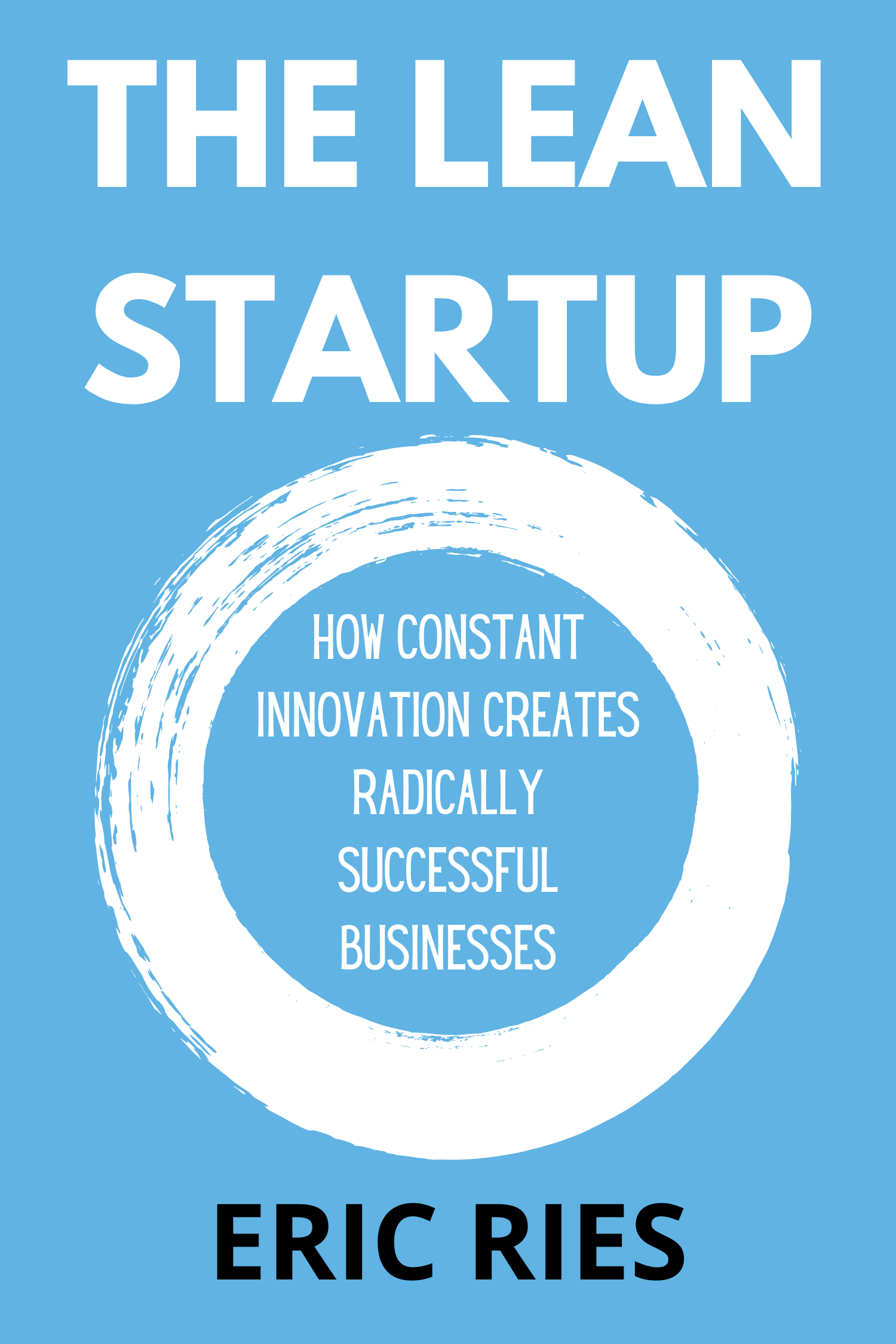
Book summary prepared by ReWio. Original book author: Eric Ries.
Introduction
Eric Ries' book "The Lean Startup" is an innovative guide for entrepreneurs and startups who want to develop successful products efficiently and quickly. Ries introduces a new approach to entrepreneurship that emphasizes continuous learning, rapid iteration, and scientific hypothesis testing. This approach focuses on creating minimum viable products (MVPs) that allow entrepreneurs to get feedback from customers as early as possible and tailor their products according to actual market needs.
The Lean Startup methodology relies on a Build-Measure-Learn cycle that allows entrepreneurs to build quickly, measure results and learn from them. The goal is to minimize wasted resources and maximize customer value. Ries also stresses the importance of innovation accounting, which helps startups objectively measure their progress and decide whether to continue with their current strategy or make a major pivot.
The book provides practical advice and examples of successful companies that have used Lean Startup principles to achieve sustained growth and success in the marketplace. It is intended for anyone who wants to create new products and services in a dynamic business environment and is considered a key work for modern entrepreneurship and innovation.
Create a Minimum Viable Product (MVP)
This method allows entrepreneurs to quickly and efficiently validate their ideas in the marketplace without the need for huge initial investment and resources. The goal is to get valuable feedback from real users and iteratively improve the product based on that feedback.
Imagine you have a great idea for a new product. The traditional approach might tempt you to spend months or even years developing the perfect product before bringing it to market. However, this approach is fraught with risks because the market and customer needs may change during development. Instead, it's better to create an MVP that includes only the most basic features needed to test your hypotheses.
Consider the success of Zappos, which started with a simple hypothesis: people would be willing to buy shoes online. Instead of investing in an expensive warehouse and a large inventory of shoes, the founders of Zappos took photos of shoes in local stores and posted the photos on their website. When customers started ordering, the founders bought the shoes in-store and shipped them to customers. This simple test gave them ample evidence that their hypothesis was correct and people were indeed willing to buy shoes online. Zappos was thus able to invest in expanding its business without fear.
In a similar way, the founders of Dropbox decided to test the interest in their data syncing service. Instead of creating fully functional software right from the start, they created a simple demo video that demonstrated how the service would work. This video got a huge amount of attention and thousands of people signed up for the waiting list. This confirmed market interest and allowed Dropbox to raise the necessary funding and begin development of the actual product.
These examples show how MVPs allow entrepreneurs to test their ideas in the marketplace with minimal risk and cost. MVP provides valuable data on whether there is demand for a product and allows entrepreneurs to adapt and iterate quickly based on customer feedback. In this way, startups can find a sustainable business model and successfully establish themselves in the market.
Build-Measure-Learn cycle
Build, measure and learn represents the fundamental cycle of any successful startup. It allows entrepreneurs to systematically and efficiently test their ideas, gather feedback and make necessary changes based on that feedback. It is an iterative approach that minimizes the risk of failure and increases the chances of finding a sustainable business model.
The first step in this cycle is building. In this phase, a minimum viable product (MVP) is created that contains only the basic functionality needed to test hypotheses. It is important that this product is ready as quickly as possible and at minimum cost so that it can be immediately brought to market and tested.
This is followed by the measurement phase. This is where data is collected on how customers react to the MVP. This includes tracking metrics such as adoption rates, user engagement, user satisfaction and feedback. The key is that these metrics must be actionable, accessible and auditable, which means they must be easy to understand and verify.
The final step is learning. Based on the data collected, it is analyzed to determine if the hypotheses were correct or if changes need to be made. If it turns out that the product is not meeting customer expectations, it is necessary to go back and iterate - to make changes and go through the cycle of building, measuring and learning again.
This cycle repeats until an optimal product is found that meets the needs of the market. It's not just about making the product work, it's about making it actually deliver value to customers. This process allows startups to be flexible and adapt quickly to changes in the market, which is key to their long-term success.
This approach contrasts with the traditional way of development, which often involves long planning and large initial investments without direct feedback from the market. The Build-Measure-Learn cycle emphasizes rapid testing and adaptation, significantly reducing risk and allowing startups to use their resources efficiently.
Innovation Accounting
is a tool that enables startups to objectively measure their progress and make better decisions based on data, not intuition or assumptions. This approach is designed specifically for startups that operate in an environment of high uncertainty, and helps them focus on what really drives growth and success.
The innovation accounting process starts with defining clear growth goals. These goals should be specific, measurable, and linked to the startup's long-term strategies. For example, a goal might be to increase conversion rates of new users
or improve retention of existing customers. It's important that these goals are realistic and achievable, as they will serve as the basis for measuring progress.
Once goals are established, the next step is to identify actionable metrics that provide specific and quantifiable data on how the startup is approaching its goals. Actionable metrics should be easy to understand and directly linked to business activities, such as customer acquisition cost (CAC), customer lifetime value (LTV), or user activation rate. These metrics help startups identify exactly which areas need improvement and which strategies are working.
Another key aspect of innovation accounting is constant experimentation. Startups should regularly test new hypotheses and strategies through small and controlled experiments. This approach allows to quickly gather relevant data and learn from it. Experiments can include A/B testing different versions of a product or marketing campaigns to see which yields the best results.
Innovation accounting also emphasizes the importance of transparency and data sharing within the team. All team members should have access to relevant metrics and understand how their work contributes to the startup's overall goals. This fosters collective accountability and collaboration, which is key for successful growth and adoption.
Finally, innovation accounting provides a framework for making objective decisions about when to continue on the current course and when to pivot. Based on data and analytical results, startups can make informed decisions that increase their chances of long-term success. This systematic approach helps minimize risks and maximize efficiency, which is essential for surviving and thriving in a competitive business environment.
The decision to proceed or make a fundamental change (Pivot or Persevere)
This decision is critical because the wrong decision can lead to wasted resources, while the right pivot can save a startup and set it on the path to success.
The decision-making process begins with a thorough assessment of the results
achieved and the data gathered from the build, measure and learn cycle. The key is to objectively assess whether the startup is getting closer to achieving its goals. This includes analyzing actionable metrics such as conversion rates, customer retention, or revenue growth. If these metrics aren't progressing as expected, it may be time to pivot.
A pivot means a fundamental change in the business model or product. There are several types of pivots, including changing the target market, redefining the value proposition, or adjusting distribution channels. For example, if the original product does not appeal to the intended market, it may be effective to target a different customer segment that might have a greater interest and need for the product.
Decisions to pivot should be supported by concrete data and proven learning. In practice, this means that the decision must be based on real data and not on subjective feelings or ideas. For example, if customers repeatedly indicate an interest in different product features or functions than what is currently offered, this is a signal that a pivot might be necessary.
On the other hand, if metrics show positive growth and steady improvements, it may be the right decision to continue on the current course and further refine the product. It's important to remember that not every slow start is a reason to pivot. Sometimes patience and consistent improvement is the key to success.
The decision to continue or pivot must be made with a clear understanding of the risks and benefits of both options. Discussions with the founders, the team, and possibly investors can provide valuable insights and help in the decision-making process. It is important to be prepared for change and to respond flexibly to new information and market cues.
This process is not a one-off; startups should regularly evaluate their strategy and be open to pivot opportunities if the situation calls for it. This agility and adaptability are essential for long-term success in a dynamic and competitive business environment.
Drivers of growth
Growth is a fundamental goal of any startup and achieving sustainable growth requires a strategic approach. Within this methodology, there are three main growth engines that startups can leverage to achieve their goals: sticky, viral, and paid growth engines. Each of these engines offers a different path to customer acquisition and retention.
The first growth engine, the sticky engine, focuses on customer retention. It aims to retain existing customers and increase their engagement with the product or service. Startups that use the sticky engine focus on making their product so valuable and essential that customers will be motivated to use it repeatedly. This reduces customer churn and increases overall revenue stability. For example, retention rates and frequency of product use are important metrics in this engine.
The viral growth engine is built on the idea that existing customers will recommend the product to their friends, thereby increasing the number of new customers without significant marketing costs. This growth engine is based on the power of word of mouth and the ability of the product to spread among people. The success of the viral engine is measured by the viral coefficient, which indicates how many new users one existing user will bring. If this coefficient is greater than one, the startup experiences exponential growth.
The third growth engine is the paid engine, which involves investing in marketing and advertising to acquire new customers. This engine is only sustainable if the customer Lifetime Value (LTV) is higher than the Customer Acquisition Cost (CAC). Startups using this engine focus on optimizing their marketing campaigns to ensure that every unit invested in advertising yields a higher return.
Each of these growth engines has its own challenges and opportunities. Choosing the right engine depends on the nature of the product, the target market and the resources available to the startup. It is possible that a startup will experiment with multiple growth engines or a combination of them during its development to find the most effective way to achieve sustained growth.
Focusing on the right growth engine allows startups to not only grow, but also to gain valuable insights into what their customers really want and how best to
provide it to them. This strategic approach to growth is key to a startup's long-term success and sustainability in a competitive business environment.
Vanity metrics
are metrics that, while they may be impressive on the surface, don't actually provide valuable information about a startup's true performance. These metrics often lead to a false sense of success because they do not tell the story of the long-term sustainability or profitability of the business. Identifying and avoiding vanity metrics is key to good decision making and effective growth management.
Vanity metrics often include data such as the number of app downloads, total number of registered users, or number of page views. While these numbers may look promising at first glance and can be used to attract investors or media coverage, they do not reflect true customer interest or engagement. For example, a high number of app downloads does not mean that people are actually using the app or that it is generating revenue.
Unlike vanity metrics, actionable metrics provide deeper and more useful information. These metrics are specific, measurable, and directly related to the startup's goals. Actionable metrics can include user retention rate, conversion rate, customer acquisition cost (CAC), and customer lifetime value (LTV). This data allows entrepreneurs to understand how well their product or service is meeting customer needs and where adjustments need to be made.
One of the problems with vanity metrics is that they can lead to poor decisions. If a startup focuses only on increasing the number of downloads or visits to a website, it may neglect important aspects such as customer satisfaction or their repeat use of the product. This can lead to a situation where the startup exhausts its resources on ineffective marketing campaigns or on developing features that customers do not really appreciate.
It is important for startups to focus on metrics that provide real value and information needed to improve products and services. This will ensure that decisions are based on real data and that the business is headed for long-term
success. Ignoring vanity metrics and focusing on actionable metrics allows startups to effectively manage their resources and achieve their strategic goals.
Cohort analysis
is an effective way for startups to gain deeper insights into their users' behavior and better understand their engagement and retention. This analytics approach involves dividing customers into groups, called cohorts, that share a common characteristic or timeframe, and then tracking their behavior over time.
Cohorts can be formed based on a variety of criteria such as date of registration, date of first purchase, geographic location, or source of acquisition. In this way, startups can track how different cohorts of customers behave and how their behavior changes over time. For example, if a startup tracks a cohort of customers who registered in January, it can compare their retention and engagement with a cohort of customers who registered in February.
One of the main benefits of cohort analysis is that it allows startups to identify patterns and trends that might otherwise remain hidden. For example, if a cohort of customers from a certain time period is found to have a significantly lower retention rate, it may indicate issues with a product or service that was introduced during that time period. This information can help startups quickly identify and address issues, improve the user experience, and increase overall customer satisfaction.
Cohort analysis also enables a better understanding of the effectiveness of marketing campaigns. By tracking how a cohort of customers who have been acquired through a specific marketing campaign behave, a startup can see if that campaign has delivered quality customers with high retention rates or just one-off purchases without long-term engagement. This type of analysis can help optimize marketing spend and focus on strategies that yield the best results.
Implementing cohort analysis requires collecting and tracking the right data. This includes the use of analytics tools and software that enable effective tracking and
visualization of cohort data. It is important that these tools allow flexibility in the creation of cohorts and provide clear and understandable reports.
Cohort analysis is an invaluable tool for startups that want to understand their audience more deeply and optimize their products and services based on real data. This approach helps startups make informed decisions and continuously improve their business models, leading to long-term success and sustainability in the market.
Experimentation and testing
are essential elements of the methodology that allow startups to test hypotheses and reduce the risks associated with developing new products and services. These processes are designed to allow entrepreneurs to quickly gather valuable data and adapt based on real-world market insights.
Experimentation begins with determining the specific hypotheses a startup wants to test. These hypotheses should be clear and measurable so that it can be clearly determined whether they have been confirmed or disconfirmed. For example, a hypothesis might be that a new website design will increase conversion rates by 10%.
Once the hypotheses are established, the design and implementation of experiments follow. These experiments should be small and controlled to minimize negative impacts on the business and allow for rapid learning. Examples of experiments might include A/B testing, where two versions of a product or marketing campaign are compared to see which is more effective.
An important part of experimentation is data collection and analysis. Relevant metrics are collected during the experiment to allow the startup to assess the results of the testing. This data should be accurate and reliable to provide a clear picture of whether the experiment met its objectives. In A/B testing, this may include tracking click-through rates, conversions, or time on page.
Once the results of the experiment have been evaluated, it is important to make
necessary changes and iterations based on the insights gained. If the experiment confirms the hypothesis, it can be implemented on a wider scale. However, if the results are not positive, the startup should be ready to adjust its approach and try new strategies. This iterative process allows for continuous improvement and adaptation of the product or service to the needs of the market.
Experimentation and testing is an ongoing process that should be embedded in the culture of every startup. This approach fosters innovation and agility, which are key factors for success in a rapidly changing business environment. Constant experimentation and testing helps startups better understand their customers, identify the most effective strategies, and optimize their offerings for long-term growth and sustainability.
Entrepreneurs are everywhere
Entrepreneurship is not limited to tech hubs or large metropolitan areas. Modern technology and global connectivity enable people to start and grow successful businesses anywhere in the world. This statement highlights that entrepreneurs can emerge in a variety of environments, from rural areas to large cities, and can be of different ages, educational or cultural backgrounds.
An example of this phenomenon is the proliferation of Internet platforms and e- commerce, which have enabled people in remote areas to set up and run global businesses from the comfort of their homes. For example, artisans can sell their products through platforms such as Etsy or Amazon, reaching customers around the world without the need for a physical store.
Another contributing factor to this phenomenon is the availability of educational resources. Online courses and digital learning platforms such as Coursera, Udemy or Khan Academy provide access to the knowledge and skills that are essential for starting and managing a business. In this way, people can acquire education no matter where they are.
At the same time, startup incubators and accelerators are springing up all over the world, not just in traditional entrepreneurial hubs. These organisations provide support, mentoring and funding to budding entrepreneurs in different regions,
thereby encouraging the development of entrepreneurial culture and innovation outside major metropolises.
Despite the various challenges that can be associated with geographical location, such as limited access to networks or resources, entrepreneurs everywhere are finding creative solutions and using the tools available to overcome these obstacles. This trend shows that the entrepreneurial spirit is not tied to a specific location, but can develop anywhere there is a willingness and commitment to innovate and solve problems.
This universality of entrepreneurship shows that opportunities for innovation and growth are open to all, regardless of where they live. As technology continues to evolve and access to education and resources improves, this trend will continue and expand, further promoting diversity and inclusivity in the global entrepreneurial ecosystem.
Final Summary
The book "The Lean Startup" offers an innovative approach to entrepreneurship that emphasizes the need for rapid iteration, adaptability, and continuous learning. This approach allows startups to effectively test their ideas and quickly adapt to market feedback, thereby reducing risks and increasing the chances of success. Entrepreneurs can use a variety of techniques such as creating minimum viable products, using actionable metrics, and conducting regular experiments to find a sustainable business model. Deciding when to continue with the current strategy and when to make a fundamental change is also important. With the growing emphasis on data-driven decision making and the global availability of business resources, this approach is enabling entrepreneurs everywhere to develop successful and innovative businesses.