

Free text
Summary and key ideas
Book summary prepared by ReWio. Original book author: David Epstein.
Introduction
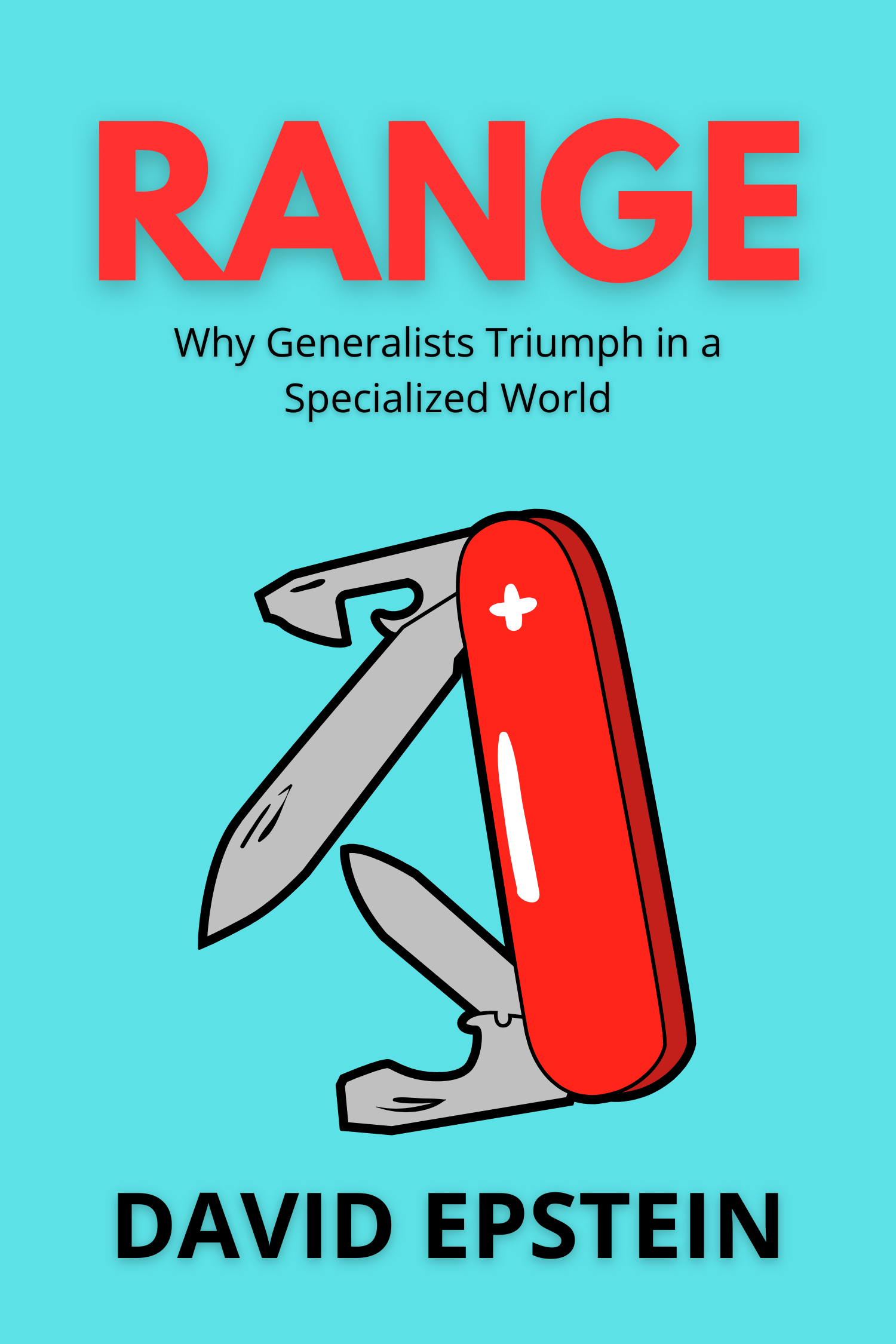
The book "Range" by David Epstein makes a strong case for generalists in a society that emphasizes specialization. Epstein explores how people with diverse backgrounds and a wide range of knowledge can achieve success precisely because of their ability to bridge disciplines, think adaptively, and solve complex problems with a creative approach. Using examples from medicine, sports, science, and the arts, Epstein shows that generalists are often able to come up with innovations that specialists overlook because they tend to focus on a specific, narrow aspect of a problem.
One of the main messages of the book is that in the modern world, which is constantly changing and becoming more complex, a broader approach to life-that is, exploring more areas, acquiring different skills, and gaining broad experience- may be preferable to early specialization. Epstein argues that a generalist approach to problem solving leads to more innovative and long-term successful solutions. The book points out that people who explore different areas gain a broader perspective and greater flexibility, allowing them to better adapt to new challenges.
Epstein's analysis also discusses how combining different experiences leads to improved critical thinking skills and creativity, supporting the contention that versatility is beneficial not only for the individual but also for society as a whole. The book Range invites us to rethink the notion of success and expand it to include different pathways and approaches that can be crucial in a dynamic and complex world.
Early specialisation
In today's world, where early specialization is often seen as the surest path to success, David Epstein's book Range offers a different perspective. He points out that while examples such as Tiger Woods or specialist doctors may suggest the benefits of a narrow focus, there are many areas where a broader range of experience brings greater benefits.
As Kahneman and Klein's study shows, in some professions where there are clear rules and repetitive patterns, specialization leads to quick and accurate decision making. An example is firefighters, who gain expertise through experience, which helps them anticipate and deal with risky situations. However, in areas where the rules are not clear and decision-making requires more creativity, it is the generalists who can be an advantage. With their broader experience and open- minded approach, they are able to approach problems more flexibly and come up with innovative solutions.
Epstein argues that generalists have an advantage especially in complex, changing environments. Diverse experiences allow them to link knowledge from different fields and look for unexpected connections, which fosters innovation and creativity. This approach is particularly useful in today's world, where people are expected to be able to adapt and respond to rapidly changing conditions.
Epstein stresses that versatility brings important prerequisites for success, which are just as important as specialisation. Experimentation and openness to new experiences help develop the ability to think outside the box and adapt to unpredictable challenges. This ability is particularly valuable in areas where conditions change and where clear patterns are not always available. It is therefore beneficial to promote versatility as a pathway to success in today's dynamic world.
Experimentation can equally lead to success
The example of Tiger Woods and Roger Federer perfectly illustrates two contrasting approaches to achieving expertise and success. While Woods represents the classic model of early specialization and intensive training in one area from an early age, Federer's story exemplifies versatility and a gradual focus on one sport only after he has worked his way through a wide range of experiences.
Woods was solely focused on golf from an early age, in which he was also supported by his family. Strict discipline and constant training from childhood made him a phenomenal golfer who achieved world-class success. Federer, on the
other hand, took up a number of different sports, developing his coordination, athletic ability and general movement skills. He had no specialized training for tennis as a child, and his path to professional tennis was gradual and natural. The fact that he decided to experiment allowed him to discover his passion for tennis later, when he was ready to fully dedicate himself to it.
Federer's journey confirms Epstein's theory that experimentation and a wide range of interests can be as effective a path to success as early specialization. This principle suggests that the ability to link different experiences leads to the development of creativity, adaptability, and a greater ability to solve complex problems. Experiences from different fields foster the emergence of innovative approaches and solutions, which are increasingly valuable in today's dynamic world.
Like Federer and other versatile athletes, the well-known cellist Yo-Yo Ma first experimented with different musical instruments before finding the one that suited him best. This approach to life isn't just about music or sports; it can also be applied to academia, medicine, or the workplace, where specialists with broad experience often come up with solutions that typical experts might not see.
Epstein's argument thus supports the idea that sampling experiences, that is, exploring a variety of interests and disciplines, can be an ideal pathway to success for children and young people. This approach not only helps develop unique skills, but also promotes mental flexibility and readiness to face unexpected challenges. The experiences of Tiger Woods and Roger Federer show that both approaches can be successful, but a broad range of experiences can often be beneficial in situations where there are unpredictable challenges and a need for creative thinking.
Between the two world wars there was a dramatic increase in IQ
James Flynn's discovery of dramatic increases in IQ in several countries, known as the Flynn Effect, suggests that modernisation and the complexity of life are having a profound effect on our cognitive abilities. An increase of about three IQ points
every decade suggests that abstract thinking and the ability to make conceptual connections strengthen with time.
Russian psychologist Alexander Luria provided one of the earliest explanations for this phenomenon. During the modernization of the Soviet Union, he noticed that residents of modernized villages had a higher ability to categorize and abstract than residents of traditional villages. Village people who had not been exposed to modernization considered each piece of wool to be unique or saw no reason to separate the child from the adult because they all had to work together. In contrast, people from modernized villages were able to categorize and abstract as they adapted to new social and work structures.
Today we are exposed to even more abstract concepts and information. Modern technology, globalisation and rapid change constantly confront us with the need for adaptation and complex thinking. Progress indicators on a computer screen or an app are commonplace for us because we have learned to think symbolically and abstractly. This phenomenon allows us to solve problems efficiently, understand complex concepts and create new, innovative solutions.
The Flynn effect reminds us that cognitive abilities are malleable and that the modern world, while bringing new challenges, also better prepares us to meet those challenges. The ability to adapt and think abstractly has become crucial for survival in today's complex environment, which may explain the rising IQs that Flynn observed in his research.
Deep understanding and long-term retention of knowledge require effort and time
A study conducted at the U.S. Air Force Academy tracked thousands of students and hundreds of professors to examine how different teaching methods affect students' long-term outcomes. It found that the professors whose students performed best on exams and who scored highest on short-term assessments were not actually contributing to students' long-term learning. Conversely, professors who used more challenging and frustrating teaching methods led their students to perform better in the long run.
These "desirable difficulties" - harder but more effective methods of learning - include techniques such as time allocation, where there is a time gap between learning and practicing. A 1987 study published in the Journal of Experimental Psychology divided Spanish language learners into two groups: one group was tested for vocabulary on the same day, the other group a few weeks later. After eight years, with no further study in between, the second group was able to remember more than 200% more words than the first group.
Even short-term distraction can be effective. In a 1972 study, researchers at Iowa State University read a series of words to participants. The first group was asked to recall the words right away, while the second group had a short break between memorizing the words and recalling them, during which they solved simple math problems. Although the first group performed better in the short term, later in the day the second group recalled more words. This process of moving information from short-term to long-term memory required more challenging learning but yielded better results.
Teachers who teach their students using more challenging and frustration- inducing methods often facilitate a deeper understanding of the underlying concepts, which translates into better results later on. Such learning requires patience and a willingness to overcome obstacles.
Therefore, it is important to adopt slow and challenging methods when learning. Although they can be frustrating and time-consuming, in the long run they lead to deeper understanding and more lasting retention of information. The results of such learning are much more sustainable and beneficial for personal and professional growth.
Narrow focus can lead to poor decisions
In some situations, such as surgery, it is desirable to have an expert who specializes in a particular area. However, in many cases, too narrow a focus can be disadvantageous and lead to poor decisions.
One example is the use of stents to treat chest pain. Cardiologists often deploy stents reflexively, even in situations that may be dangerous or inappropriate. A 2015 study by Dr. Anupam Jena of Harvard Medical School showed that patients with cardiac arrest or heart failure were less likely to die when they were admitted to the hospital during the absence of top cardiologists. This suggests that specialists may be inclined to use their favorite tool even when it's not the best solution.
Another example is a study by Professor Dan Lovell of the University of Sydney, which examined how private investors evaluate businesses in which they plan to invest. Investors provided estimates of the return on investment for the businesses they were interested in and for alternative projects. It was found that the return estimates for own investments were 50% higher than for alternative projects. When investors saw these differences, they reduced their expected profits on the original investments. This case illustrates how a narrow focus can lead to overly optimistic expectations and wrong decisions.
The more detailed we consider something, the more extreme our judgements become. This is borne out by psychological research that showed that students rated a university higher when they were told that only some science majors were in the top ten best universities in the country than when they were told that all science majors were in the top ten.
A study of prestigious scientists led by Robert Root-Bernstein, a psychology professor at Michigan State University, showed that Nobel laureates are much more likely to be amateur actors, magicians, dancers or artists. This suggests that broad experience can contribute to success and innovation.
It is therefore important not to see things only from our narrow perspective, but to try to broaden our horizons and connect diverse experiences. Thinking outside the box in this way can lead to better decisions, innovation and success in different areas of life.
Diverse experiences and interests of individuals
One example of this phenomenon is the research of Dartmouth business professor Alva Taylor and Henrik Greve of the Norwegian School of Management, who set out to explore the impact of individual breadth of experience on creative influence in comics. They followed the careers of comic creators and the commercial success of thousands of comics since 1971. They hypothesized that the more comics a creator produced and the more resources a publisher had, the higher quality and more successful the comics would be.
However, the results showed that neither experience nor financial resources brought success. What led to success was the breadth of experience of the comic creator in different genres. The more of the 22 genres a creator handled, the more successful he or she was. This correlation between breadth of scope and success doesn't just apply in the creative or art world.
Andy Ouderkirk, an inventor at multinational company 3M, was named Innovator of the Year in 2013 and was listed on 170 patents. Ouderkirk found that the successful inventors at 3M were not specialists, but polymaths - people who had deep knowledge in one area but also broad expertise in other areas. These polymaths tended to have many patents in their area of expertise, but they also repeatedly took the expertise they gained in one area and applied it in another, leading to significant innovations.
This idea suggests that the diverse experiences and interests of individuals often lead to the linking of unrelated ideas and the creation of new, innovative solutions. Therefore, it is important to encourage and value polymathic thinking and diverse interests that can lead to significant innovations and achievements in different fields. Managers and leaders should look for talent that has a wide range of experiences and interests, as their wealth of experience can be invaluable in solving complex problems and creating new solutions.
Experts are often wrong in their predictions
This conclusion is based on extensive research by world-renowned forecaster Philip Tetlock, who collected and evaluated the forecasts of 284 experts over 20 years. Tetlock concluded that experts are often very inaccurate in their forecasts.
Tetlock found that years of experience, academic degrees, and even access to classified information do not significantly improve the accuracy of experts' forecasts. For example, when experts claimed that a potential event was impossible, it happened 15% of the time. Conversely, events declared to be absolutely certain did not occur in 25% of cases. These findings suggest that expert knowledge may not always lead to reliable predictions of the future.
Even more disturbingly, Tetlock found a perverse and inversely proportional relationship between fame and the accuracy of predictions. The more an expert appeared in the media, the more likely his predictions were wrong. Tetlock aptly summed it up by saying that experts are "about as accurate as a chimpanzee throwing darts."
One of the main problems is that many experts focus on too narrow an area. Having spent their entire careers studying one problem, such as U.S.-Soviet relations, they tend to have fixed theories about how the problem works. However, these theories often fail to take into account new information or changing conditions, leading to erroneous predictions.
Psychologist Jonathan Baron points out that better predictions are made possible by an active openness of mind - a willingness to question one's own beliefs. Most people fail at this and have a strong instinct to cherry-pick evidence that confirms their existing beliefs.
A study led by Yale University professor Dan Kahan illustrates this problem. Study participants were asked to interpret statistical data on the effectiveness of a skin cream, which they did well. But when presented with the same numbers, framed as a link between crime and immigration, many participants misinterpreted the statistics according to their political beliefs. Similar results were observed in the US on the topic of gun control.
If we want to improve the accuracy of our predictions, we must learn to overcome our own prejudices and be willing to accept new evidence. Dan Kahan argues that scientific curiosity - the desire to learn more and the ability to think with an open
mind - is key. Instead of focusing on how much we know, we should emphasize the ability to learn and adapt to new information.
Therefore, we should be critical of experts' predictions and strive for a broader and more open approach to knowledge. This will enable us to better understand complex problems and prepare for an unpredictable future.
We need to accept failures as part of the learning process
One of the first steps is to change the way we approach learning. Instead of focusing on quick results and easy methods, we should aim for deep understanding and long-term retention of knowledge. Research suggests that slower but more challenging learning leads to more lasting knowledge and better understanding.
An example is Arthur Casadevall, a distinguished microbiologist and immunologist at the Johns Hopkins Bloomberg School of Public Health, who has introduced interdisciplinary programs covering topics such as philosophy, ethics, statistics, and logic. His courses, such as "How We Know What's True" and "The Anatomy of Scientific Error," encourage students to examine flawed procedures or faulty methodology in research. Casadevall believes that students who understand science in a broader context will be better prepared to impact the economy and society.
To become more effective generalists, it is important to embrace failure as part of the learning process. Dean Keith Simonton, a creativity researcher, has found that the more work creators produce, the more failures they experience - but at the same time, they are more likely to achieve breakthrough success. Thomas Edison, holder of more than 1,000 patents, had many failed inventions, but it was his successes, such as the light bulb, that were revolutionary.
The path of broad, disorderly experimentation brings many failures, but leads to great discoveries and innovations. This approach encourages a diversity of ideas, which is extremely valuable in today's complex world.
Active curiosity and a willingness to challenge one's own beliefs is also a key element. Psychologist Jonathan Baron has found that better predictions and understanding of the world is made possible by an active open mind. Most people tend to cherry-pick evidence that confirms their existing beliefs, but true scientific curiosity involves a desire for new knowledge and the ability to accept even evidence that contradicts our beliefs.
To be successful as generalists, we need to change our approach to learning and success. This approach includes being open to new experiences, embracing setbacks as opportunities for growth, and continually learning from a variety of disciplines. In this way, we gain the ability to adapt to change and create innovative solutions that can have a long-term positive impact on society.
Final summary
David Epstein's book "Range" makes a compelling case for generalists - people with broad interests and experience who often outperform specialists in a complex and rapidly changing world. Epstein shows that while early specialization may be advantageous in stable fields, in many other cases it is experimentation and a broad range of experience that prove to be the better path to success.
The stories of successful figures such as Roger Federer and inventor Andy Ouderkirk of 3M support the benefits of a polymathic approach, where diverse experience and the ability to link knowledge leads to innovation. Studies on the evolution of IQ or the accuracy of experts' predictions underline the importance of adaptability and critical thinking, which are key skills of generalists.
Epstein thus calls for a rethinking of traditional ideas about learning and success. He promotes a broader education and diverse experiences that foster creativity, flexibility, and strategic thinking, which are essential for solving real-world problems.