

Free text
Summary and key ideas
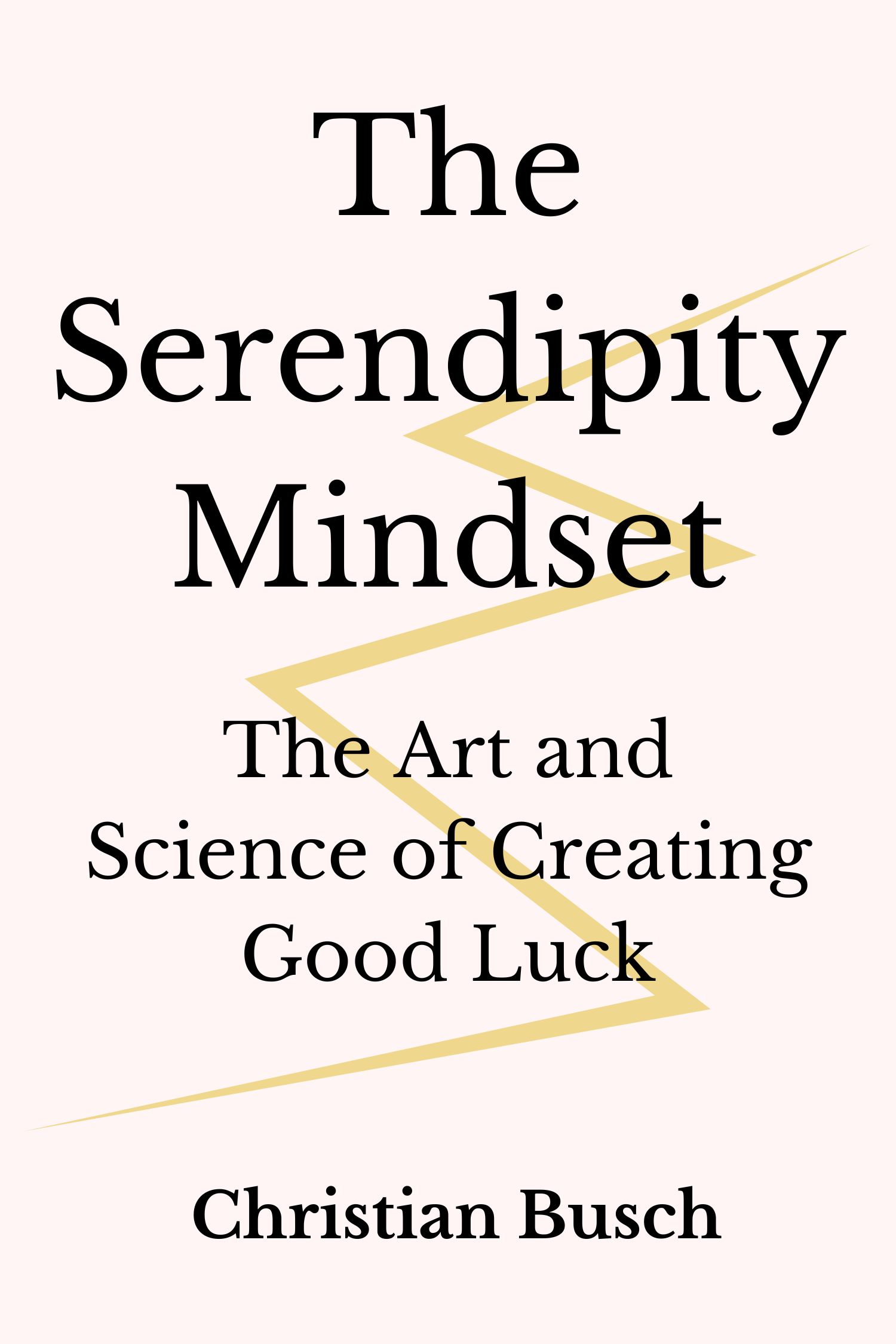
Book summary prepared by ReWio. Original book author: Christian Busch.
Introduction
Serendipity, or lucky chance, is presented in the book "The Serendipity Mindset" by Christian Busch as not just a simple coincidence, but as the ability to create one's own luck by being open to new possibilities and ready to take advantage of unexpected opportunities. The book explains that serendipity is not just a passive acceptance of fortunate circumstances, but an active approach where we perceive the world with a certain kind of openness, curiosity, and receptivity.
According to Busch, it's about learning to recognize unexpected opportunities in everyday life and being flexible in how we respond to new situations. We can create happiness by being prepared, having the courage to take advantage of these coincidences, and not being afraid to change our plan when something better comes along. So it is a combination of being prepared, being proactive and being able to adapt to new circumstances.
The book offers practical tips on how to develop this way of thinking, for example by being more curious, open to new contacts, consciously noticing unusual connections between things and exploring their potential. An important part of serendipity is the ability to accept mistakes and setbacks as part of a journey that can lead us to unexpected, positive outcomes.
Serendipity is not just about luck, but about consciously building situations that allow us to create new opportunities. This approach can help us discover new paths, improve life and work relationships, and achieve successes that would otherwise remain out of our reach.
Actively seeking opportunities
within serendipity means that we do not wait for serendipitous luck, but actively create the conditions for it to arise. This requires being ready, open, and willing to see unexpected situations as potential opportunities. Serendipity lies in the ability to not only see but also take advantage of opportunities that often come unexpectedly, whether at work or in everyday life.
An example is the story of Archimedes, who solved the problem of the king's crown by observing the water level during a bath. This moment was crucial because Archimedes was not only prepared to look for a solution, but also perceptive enough to recognize the importance of this unexpected moment.
Similarly, in the story of Dr. Spencer Silver, who, while attempting to develop a strong glue, accidentally discovered a weak glue that became the basis for Post-It notes. This discovery shows that even seeming failures can be a source of serendipity if we are prepared to explore possibilities and unexpected outcomes.
Creating such opportunities involves expanding our social and professional networks, attending various events or conferences, and being ready to embrace new ideas. Actively seeking opportunities increases the likelihood of encountering unexpected moments that can lead to major improvements or innovations.
In this way, we can learn to create our own happiness - not as a result of pure chance, but as a result of our active readiness and receptivity to the world around us.
Curiosity and intelligent happiness
Curiosity and intelligent luck are indeed essential elements in creating serendipity, because they are what allow us to be open to unexpected opportunities and to consciously take advantage of them. Curiosity drives us to explore new ideas, ask questions, and constantly look for new connections between things that are seemingly unrelated. Combined with smart luck, the ability to be prepared and perceptive, we have the ability to turn random situations into important opportunities.
An example of smart luck is the story of Dr. Alexander Fleming, who discovered penicillin by noticing how mold killed bacteria on petri dishes. This discovery might have gone unnoticed had Fleming not been curious and pursued the coincidence further. What initially looked like a simple contamination eventually became the basis of a revolution in medicine. This example shows that intelligent luck is the result of active curiosity and the ability to investigate unusual phenomena.
Another important aspect is the removal of preconceptions that can hold us back from noticing and recognizing the potential hidden in random events. If we focus too much on what we would expect, we may miss what is really happening in front of our eyes. It is this openness to the unknown and unexpected that is the key to recognizing opportunities where others would not see them.
Curiosity also motivates us to actively seek out new knowledge. This can be through books, seminars, meeting new people or simply by asking questions and seeking answers. The more we learn, the more we increase the likelihood of finding unexpected connections that can bring us success and propel us further in our lives or careers.
In this way, serendipity ceases to be mere chance - it becomes an active process that we can shape and support with our curiosity and readiness to seize every unexpected moment.
Random events
do play a key role in the concept of serendipity, but the fundamental difference between ordinary chance and serendipity lies in our ability to actively turn these events into positive outcomes. Serendipity is not just about passive luck, but about preparedness, flexibility, and the ability to perceive hidden opportunities in situations that may seem insignificant or even unfavorable at first glance.
The example of TEDxVolcano perfectly illustrates how a coincidence that at first seemed like a disaster can be transformed into a great opportunity. Instead of seeing the volcanic eruption as an obstacle, Nathanial Whittemore turned the situation into a platform for a creative gathering of experts. This approach highlights an important factor in serendipity: reacting quickly to unexpected situations and finding a positive solution even where others would see a problem.
The key to leveraging serendipitous events is often our ability to connect seemingly unrelated dots. This requires openness and curiosity. For example, feedback from customers who were using dishwashers to wash potatoes led to the
creation of a new product - an automatic vegetable cleaner. Examples like these show us that innovation often comes from the unexpected and unusual, if we are willing to listen and analyse what is happening in front of us.
Serendipity, however, does not mean passively waiting for an opportunity - it involves actively creating opportunities through interactions and experiences. Attending events, talking to different people, and engaging in new projects are all ways we can increase the likelihood of encountering moments of serendipity. Every encounter, whether at a conference or by chance in an elevator, can bring new perspectives and inspirations if we are open and receptive enough.
Maintaining a wide and diverse network of contacts is another way to increase the likelihood of serendipity. Strong relationships give us access to diverse information, experiences and opportunities that would otherwise remain hidden. It is important to keep these relationships active and open so that they are ready to be tapped when an unexpected opportunity arises.
Random events are therefore not just about chance per se, but about our ability to recognise these events, see them as opportunities and act on them. When we are open, flexible and ready to act, we can turn serendipitous moments into opportunities that can profoundly impact our personal and professional lives.
Overcoming prejudice
Indeed, our ingrained prejudices and biases can greatly affect our perception of opportunities and possibilities that present themselves. To make the most of serendipity, we need to shed these biases and adopt a more open approach to new ways of thinking.
One of the most common biases that influence our decision-making is underestimating the unexpected. Many people believe that life is predictable and routine, which is often symptomatic of the business world, where the tendency is to stick to best practice. However, if we underestimate the unexpected, we miss out on the many innovation and improvement opportunities that can occur.
Another bias is the tendency to conform to the majority. While it is natural to feel comfortable with majority opinions, mass thinking can stifle creativity and innovation. In a work environment where employees are afraid to come forward with new ideas, serendipity is stifled because individuals do not feel free to try new approaches and take risks.
Post-rationalism, or hindsight bias, is another bias that hinders the perception of serendipity. This attitude forces people to see past events as predictable and meaningful, ignoring their random and chaotic nature. Thus, the opportunity to see the value in unexpected situations and their potential for innovation is lost.
Functional fixation is a bias that limits our ability to seek alternative solutions. For example, in country development, some humanitarian organizations focus on familiar approaches instead of looking for innovative ways to solve problems using available resources. Examples like RLabs show that overcoming this fixation can bring new value and solutions where others see only obstacles.
In order to overcome preconceptions, one needs to be open to new ideas, willing to take risks and experiment. A willingness to see opportunities where others see obstacles is key to creating an environment where serendipity can thrive. In this way, we can harness its full potential to improve our lives and work, not only in the personal but also in the professional sphere.
Flexibility and adaptability
Indeed, the world is constantly changing, and flexibility and adaptability are key qualities that enable us to respond to new challenges and opportunities. These skills help us to make the most of unexpected situations, whether in our personal or professional lives.
Flexibility lies in the willingness to adapt and change plans and approaches according to current circumstances. In a rapidly changing environment, it is important not to have strict plans but to be ready to react to new information and situations. Pixar is a great example of how creating an environment that encourages interaction and idea sharing between different teams leads to
flexibility and innovative solutions. Such a culture encourages the development of creative ideas and rapid adaptation to change.
Adaptability refers to our ability to learn and embrace new conditions. The ability to learn new skills and technologies is essential in today's dynamic world. Businesses that are adaptable tend to thrive because they can respond quickly to market changes. MPesa is an excellent example of how adaptability leads to revolutionary solutions. The service has become a popular alternative to traditional banking services in sub-Saharan Africa, demonstrating how existing technology can be used to deliver new services.
Flexibility and adaptability are also essential for individuals. Those who are open to new challenges and opportunities are often more successful and satisfied. In the work environment, it is important to be prepared for different possibilities and not to give up at the first obstacle. Patience and perseverance can lead to discovering the right opportunities that can change the direction of our careers. Adaptability also means seeing potential where others see only obstacles.
Overall, flexibility and adaptability help us to be prepared for unexpected events and to use them effectively. These qualities create an environment in which serendipity can thrive and allow us to use its full potential to improve our lives and careers.
Connecting art and science
Indeed, the fusion of art and science offers fascinating opportunities for creating innovation and serendipity. Combining different disciplines and perspectives leads to new ideas and approaches that are often key to breakthrough discoveries. This interdisciplinary approach shows how art and science can be mutually enriching.
Historical figures such as Leonardo da Vinci show how the fusion of art and science can lead to revolutionary ideas. Da Vinci not only mastered painting techniques, but also studied anatomical processes in detail, allowing him to create work that was not only aesthetically beautiful but also scientifically accurate. His work proves that a deep understanding of art can also enrich scientific inquiry.
In a modern context, Steve Jobs is an ideal example of how the combination of aesthetics and technology can lead to innovation. Jobs sought to create products that were not only functional but also visually appealing. In doing so, he changed the way consumers approached technology and created a product that has become a cultural icon.
The fusion of art and science also opens the door to new approaches in different sectors. In medicine, for example, aesthetics is important to the design of medical devices, improving the patient experience. These aesthetic and functional elements become key in enhancing the comfort and effectiveness of treatment.
Flexibility and openness to the combination of different fields of knowledge are essential for the emergence of serendipity. Interdisciplinary collaborations foster creative processes and lead to innovation. Companies that foster such collaboration are able to respond more quickly to market demands and come up with innovative products and services.
Mutual learning and inspiration between experts from different fields is key to the development of new ideas. Meetings and discussions between scientists and artists can lead to new insights and innovations that would not otherwise be possible.
Connecting art and science broadens our horizons and helps us understand the world better. When we integrate knowledge from different disciplines into our work, we open the door to serendipity and new opportunities that can profoundly affect our lives and society. In this way, we create an environment where innovation can truly thrive.
Diverse communities
Indeed, diverse communities play a key role in fostering serendipity and innovation. Their dynamism creates an environment where different perspectives and expertise come together, leading to the emergence of new ideas and solutions. When individuals from different cultures, professions and backgrounds come together, doors to unexpected discoveries are opened.
RLabs, a social enterprise, is an example of successfully harnessing diverse communities. Their approach to solving problems in areas of high crime and poverty demonstrates how a team of diverse people can lead to creative solutions. With a diversity of experiences and perspectives, RLabs is able to approach problems innovatively, finding value where others overlook it.
Diverse communities also contribute to overcoming cultural and social barriers. The exchange of ideas between people from different backgrounds can lead to more universal approaches and innovations that benefit society as a whole. In the business environment, companies with diverse teams have been shown to perform better because team members bring different perspectives, which encourages creative thinking and reduces the risk of herd mentality.
Fostering diverse communities also requires actively seeking talent from diverse backgrounds. Creating an inclusive environment where everyone feels welcome and valued is the foundation for open communication and collaboration that fosters the emergence of serendipity. Organising events, workshops and meetings where experts from different fields come together creates opportunities for interaction and exchange of ideas.
Random encounters in diverse communities can lead to serendipity. Both formal and informal settings such as conferences, meetups or social events increase the chances for new collaborative opportunities. These interactions often lead to surprising discoveries and innovations.
Diverse communities are essential for fostering serendipity because they create a rich environment where different perspectives come together. This mix of diversity is the basis for the emergence of creative solutions and innovations that can positively impact individuals and society as a whole. In this way, the potential of serendipity is strengthened and contributes to overall progress.
A culture of openness
plays a key role in fostering serendipity and innovation in organisations. By creating an environment where ideas are freely shared and
employees are encouraged to experiment, the potential for discovering new and innovative solutions is increased.
The Pixar example shows how a well-designed work environment encourages interaction and collaboration between different departments. A central atrium that allows for serendipitous meetings between employees creates opportunities for the exchange of ideas, which is the basis for innovation. This approach is not only physical, but also psychological - employees feel comfortable and feel that their opinions are important, which encourages creativity.
An open culture also means accepting risk and acknowledging that failures are part of the learning process. When employees know they can come up with new ideas without fear of negative consequences, they are motivated to try new approaches. This approach contributes to serendipity, as many significant discoveries come precisely from unexpected experiments.
Transparency and information sharing are other important aspects of an open culture. Freely available information increases the chances of identifying new connections and opportunities. Trust between team members is also key, as it encourages open communication and collaboration.
Creating a culture of openness requires an active effort on the part of leadership. Leaders need to be approachable, open to employee ideas, and ready to change their approaches based on new information. By showing that they value openness and flexibility, they can motivate others to do the same.
Practical steps to encourage openness include holding regular meetings and workshops where employees can share ideas freely. Such interactions increase the chances of serendipitous discoveries and encourage the creation of innovative solutions.
An inclusive environment where ideas are judged on their merits is another important aspect. This means that every employee, regardless of their position, has the opportunity to contribute and be heard. In this way, a diversity of ideas is encouraged, leading to even greater innovation.
A culture of openness is essential to foster serendipity. It creates an environment where people are free to share ideas, experiment and collaborate, enabling organisations and individuals to realise the full potential of unexpected opportunities and discoveries.
Patience and perseverance
also play a key role in the process of discovering and exploiting serendipity. Often, serendipitous luck and innovation do not come immediately, and it is these qualities that allow us to overcome obstacles and setbacks.
Daniel Spencer's story is an exceptional example of how patience and determination lead to success. His ability to continue experimenting and finding new techniques, even when he seemed to face countless challenges, shows how important it is not to give up at the first difficulty. This approach is typical of many innovative entrepreneurs and scientists who have to overcome initial setbacks in order to achieve significant breakthroughs.
The importance of patience and perseverance is also seen in relationship building. Long-term relationships with diverse people create an environment where unexpected opportunities can arise. Maintaining relationships takes time and effort, but these investments often pay off in the form of new ideas and opportunities that can have a profound impact on our careers or businesses.
A practical way to develop these qualities is to set long-term goals. These goals provide us with direction and motivation, especially in difficult times. Celebrating small victories strengthens our resolve and reminds us that even small progress is important.
Ultimately, patience and perseverance allow us to turn random events into positive outcomes. These qualities are essential for harnessing serendipity and for creating innovative and positive change in our lives and careers. Being patient and persistent in seeking new opportunities, even when faced with difficulties, is the key to long-term success and personal growth.
Meaningful and long-term goals
act as a compass to guide us in a dynamic and often chaotic world. When we have a clear idea of what we want to achieve, our ability to recognise and take advantage of unexpected opportunities that arise increases. These goals not only motivate us, but also form the basis for our decision-making and actions.
The story of Daney Ringelmann and her work on Indiegogo is an excellent example of how connecting purpose to our actions leads to long-term success. When we feel authentic and true to our values, we gain energy that helps us overcome obstacles and survive difficult times. This focus on values and long-term goals not only motivates us, but also makes us more flexible and open to random events and change.
The same dynamic can be seen in personal development. When we focus on goals that fulfill us, we face challenges with determination and strength. We are able to see opportunities in situations that might otherwise look like obstacles. This attitude motivates us not only to seek innovative solutions, but also to push the boundaries of our possibilities.
Practical steps to achieve meaningful and long-term goals, such as reflection and self-knowledge, are essential to building a deep connection to our goals. In this way, we can create a realistic plan that takes into account our values and passions, and clearly identifies the steps that will lead us to them.
Meaningful and long-term goals are an essential tool for fostering serendipity. They help us focus on what is truly important to us and increase our ability to recognize and use serendipitous events to our advantage. When we have a clear goal, we are better equipped to embrace unexpected opportunities that can profoundly impact our lives and careers.
Final summary
Serendipity, or lucky chance, is more than just coincidence; it's an active process that we can cultivate through the right mindset and approach. The book "The Serendipity Mindset" by Christian Busch shows us how to reframe our worldview to be able to recognize and take advantage of unexpected opportunities.
The key is to be open, curious, flexible and patient. By combining diverse perspectives and building a culture of openness, we can create an environment in which innovative solutions and ideas can emerge. Long-term and meaningful goals provide us with the motivation and direction necessary to overcome obstacles and take advantage of chance encounters and events. In this way, we can actively create our own happiness and achieve success in an ever-changing world.