

Free text
Summary and key ideas
Book summary prepared by ReWio. Original book author: Benjamin Hardy.
Introduction
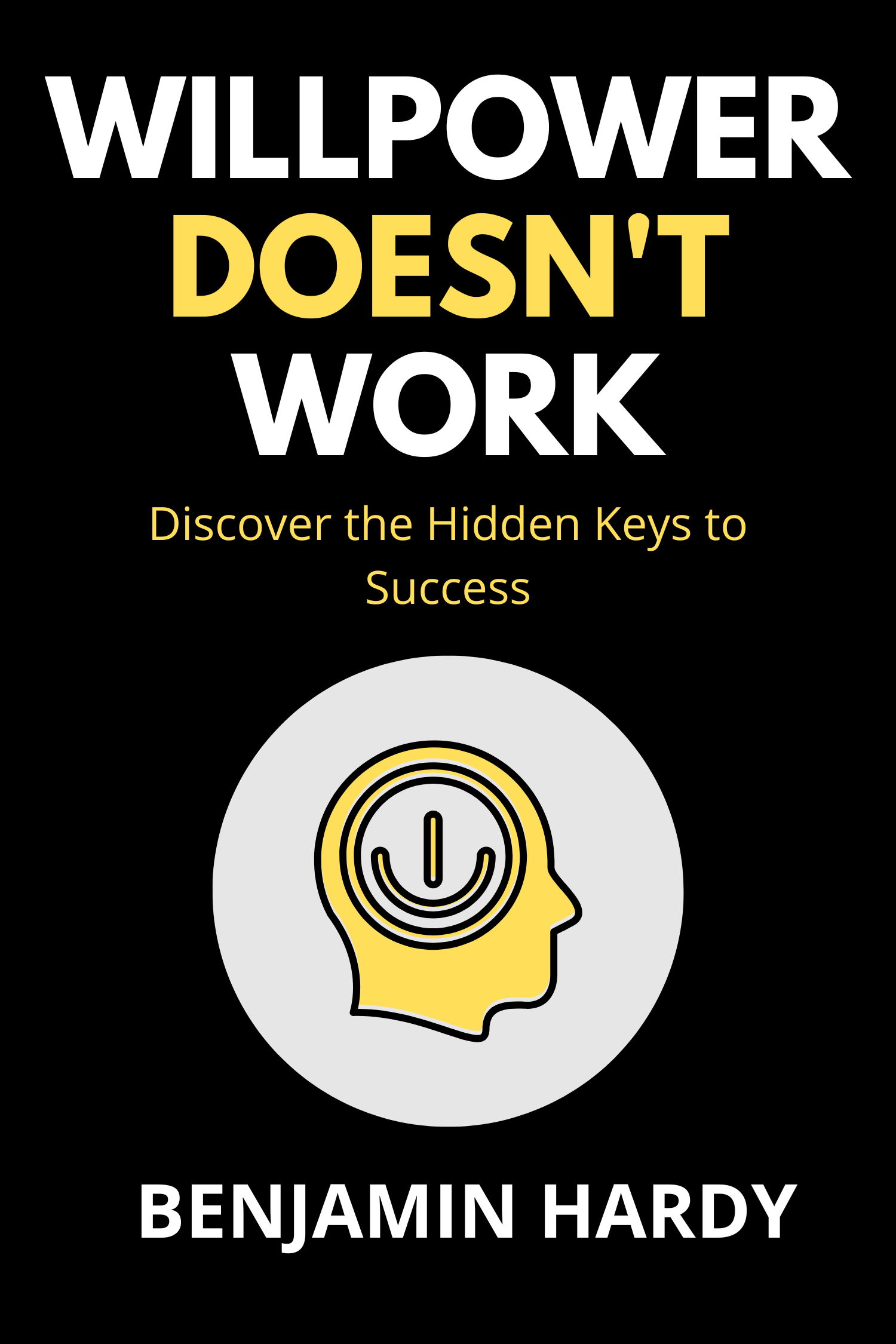
"Willpower Doesn't Work" by Benjamin Hardy is a groundbreaking book that challenges the traditional view of willpower as the main tool for achieving goals and success. Hardy argues that willpower is overrated and often ineffective. Instead, he emphasizes the importance of the environment that surrounds us and its influence on our behavior, decisions, and overall success.
Hardy argues that the environment we find ourselves in is far more important than individual willpower. He suggests creating an environment that automatically leads us to our goals, which means surrounding ourselves with the right people, developing positive habits, and eliminating negative influences. The book also describes the concept of "forcing functions" - the tools and mechanisms that compel us to act correctly and effectively.
The book offers practical advice on changing the environment and optimizing work and personal conditions for maximum productivity and satisfaction. Hardy's ideas are backed by research and real-life stories, providing readers with concrete steps to achieve change and success.
Environment is key
Imagine you want to achieve a major goal, but you keep falling short because your environment is throwing logs under your feet. Sound familiar? In the book, Hardy comes up with a groundbreaking idea: the environment is critical to our successes and failures, and it may just be the key to achieving our goals.
We often rely on willpower for routine activities, such as exercising in the morning or meeting work deadlines, but this can be exhausting. Hardy points out that in today's world, where we are constantly exposed to stress and temptations, willpower is often in short supply. Therefore, we need to focus on creating an environment that allows us to achieve our goals automatically, without constantly fighting ourselves.
One key example is the obesity epidemic. In the past, people did not have to make
a conscious effort to stay slim because their environment - physical work and natural foods - provided it for them. Today, however, we live in an environment full of sedentary jobs and junk food at every turn. This environment promotes overweight and obesity, not because of a failure of will, but because of a change in external conditions.
Hardy likens humans to organisms undergoing evolution. Natural evolution means adapting to the environment that surrounds us. Domesticated evolution, on the other hand, which we see in animals and plants, means a controlled environment that leads to desirable traits. Similarly, we should design our environment so that it automatically leads us to our goals.
Our ability to generate new ideas and innovative solutions is also influenced by the environment. Neuroscientists have found that most creative breakthroughs happen outside the work environment when we are relaxed. That's why it's important that we have separate environments for work and relaxation. Such separation not only increases our productivity, but also our ability to come up with new ideas.
Gary B. Sabin illustrates in his story with the Boy Scouts how we often avoid discomfort at the expense of long-term satisfaction. The boy who avoided packing a sleeping bag and preferred to freeze shows that sometimes a little discomfort can lead to more comfort later. Hardy stresses the importance of being decisive and removing "dead weight" from our lives-things that hold us back from achieving our goals.
So, if you want to reach your full potential, don't just emphasize willpower. Design an environment that will automatically lead you to success. Remove distractions, create separate spaces for work and relaxation, and use practices like eustress to help you focus and achieve your goals efficiently and without exhaustion.
Two separate environments for productivity
Hardy introduces an innovative solution to increase productivity: separate work and relaxation environments. This concept is based on the principle that our environment strongly influences our behaviour and ability to concentrate.
Imagine working from home. If you use the same space for both work and relaxation, it can be difficult to achieve high levels of productivity. When you're in an environment where you usually relax, your brain may tend to switch into relaxation mode, reducing your ability to focus on work tasks.
One key aspect of this approach is to create two distinct environments: one optimized for work and one optimized for relaxation. Hardy cites the example of entrepreneur Courtney Reynolds, who splits her time between Denver and Las Vegas. In Denver, her work environment is free of distractions, allowing her to focus on tasks. Conversely, in Las Vegas, she has an environment focused on relaxation, which helps her renew her energy and get new creative ideas.
Research shows that alternating between intense work environments and relaxing environments increases productivity and creativity. According to neuroscientists, only 16 percent of creative breakthroughs happen at work; most innovation comes when the mind is relaxed and free to wander. That's why it's important to have a space where you can completely switch off from work.
Separate environments also help minimize stress. Although it's popular to talk about living a stress-free life, a certain level of eustress - positive stress - is essential for maximum productivity. A high-stress work environment promotes concentration and performance, while a relaxing environment provides needed rest and recovery.
To successfully separate these environments, it is essential to be consistent and create clear boundaries between work and rest. This means, for example, working in one room or part of the apartment and relaxing in another. This approach minimizes the risk that your brain's associations with a given space become mixed up, leading to more efficient work and better quality rest.
So, if you want to increase your productivity and creativity, start by creating two separate environments for working and relaxing. This simple but effective step will help you achieve better results without draining your willpower and energy.
Two separate environments for productivity~
Two separate environments for productivity
Hardy introduces an innovative solution to increase productivity: separate work and relaxation environments. This concept is based on the principle that our environment strongly influences our behaviour and ability to concentrate.
Imagine working from home. If you use the same space for both work and relaxation, it can be difficult to achieve high levels of productivity. When you're in an environment where you usually relax, your brain may tend to switch into relaxation mode, reducing your ability to focus on work tasks.
One key aspect of this approach is to create two distinct environments: one optimized for work and one optimized for relaxation. Hardy cites the example of entrepreneur Courtney Reynolds, who splits her time between Denver and Las Vegas. In Denver, her work environment is free of distractions, allowing her to focus on tasks. Conversely, in Las Vegas, she has an environment focused on relaxation, which helps her renew her energy and get new creative ideas.
Research shows that alternating between intense work environments and relaxing environments increases productivity and creativity. According to neuroscientists, only 16 percent of creative breakthroughs happen at work; most innovation comes when the mind is relaxed and free to wander. That's why it's important to have a space where you can completely switch off from work.
Separate environments also help minimize stress. Although it's popular to talk about living a stress-free life, a certain level of eustress - positive stress - is essential for maximum productivity. A high-stress work environment promotes concentration and performance, while a relaxing environment provides needed rest and recovery.
To successfully separate these environments, it is essential to be consistent and create clear boundaries between work and rest. This means, for example, working in one room or part of the apartment and relaxing in another. This approach minimizes the risk that your brain's associations with a given space become mixed up, leading to more efficient work and better quality rest.
So, if you want to increase your productivity and creativity, start by creating two separate environments for working and relaxing. This simple but effective step will help you achieve better results without draining your willpower and energy.
Forcing functions - powerful tools
Every day you try to use willpower to move closer to your goal, yet you often fail. Here's a concept that can change your approach to achieving goals - using the so- called forcing functions.
Forcing functions are tools that get you to act in a certain way by eliminating or minimizing the need for decision-making. Instead of having to decide every day whether to work toward your goals, forcing functions create conditions that automatically lead you in the right direction.
One example is the story of Dan Martell, an entrepreneur who uses forcing functions to increase his productivity. Martell often works in a coffee shop where he intentionally leaves his charger at home. This way, he knows he has limited time to work, so he has to be extra efficient. This simple change of scenery forces him to focus on important tasks and eliminates procrastination.
Social pressure is another powerful forcing function. When you publicize your goals among friends or colleagues, you create a commitment that you don't want to break. The fear of having to admit failure motivates you to stick to your plan. For example, if you tell your friends that you will run a half marathon in a month, you will feel committed to achieving that goal.
Forcing functions can take many forms, from simple technical measures to complex social mechanisms. Importantly, they simplify the path to your goals by removing the need for constant decision-making and reliance on willpower. Research shows that people who implement these mechanisms achieve their goals more effectively and with less stress.
Another way may be to remove distracting apps from your phone. If you choose to delete all social networks from your device, you eliminate the temptation to waste time and automatically focus on more productive activities. This strategy uses the principle of forcing functions by creating an environment where unwanted behavior is impossible.
Stories like the one about Gary B. Sabin, who took the Boy Scouts on a trip and watched the boy freeze rather than pack a sleeping bag, illustrate how we often
choose comfort at the expense of long-term satisfaction. Forcing functions force us to overcome this tendency and create conditions that support our long-term goals.
Implementing forcing functions can be one of the most effective ways to transform your life and achieve success without a constant battle with willpower. Create an environment that automatically leads you to success and you will find that achieving your goals will be less stressful and much more effective.
Change the environment for peak experiences
Imagine being stuck in a rut where your ideas and creativity gradually fade away. In his book, Hardy introduces a groundbreaking concept that can change your approach to creativity and personal development-changing your environment for peak experiences. Peak experiences, as Hardy describes them, are moments of intense perception and awareness that move us to a higher level of knowing and inspiration.
Imagine the story of Tsh Oxenreider, a woman who felt stuck in her everyday life. She had many goals and ambitions, but could not find the strength to pursue them fully. She and her husband decided to travel the world with their children, which meant a profound transformation for Tsh. Traveling and constantly changing her surroundings allowed her to see her life from a different angle, which led to a burst of new ideas and renewed energy for her work.
A change of scenery allows us to have peak experiences by taking us out of our normal routine and offering new perspectives. It is in these moments when we are out of our normal environment that we experience sudden insights and inspiring ideas.
According to Hardy, if we want to have these experiences on a regular basis, we need to be proactive and change our environment. It doesn't have to be extreme measures like traveling the world. Sometimes a simple change, like going on a weekend getaway out of town or spending time in nature, is enough. These small changes can trigger big shifts in our thinking and creative processes.
Research also shows that the environment has a huge impact on our psyche and performance. When we are in an environment that stimulates and inspires us, our productivity and creativity increase. That's why it's important that we actively seek out new experiences and environments that allow us to achieve these peak moments.
Hardy's approach to changing the environment for peak experiences is revolutionary in that it challenges us to leave our comfort zone and seek new challenges. By daring to change our environment, we open the door to new possibilities and perspectives that can lead us to personal and professional growth.
This concept can also be applied in everyday life. If you feel stuck in a rut, try a change of scenery - for example, work from a different location, take a short trip, or engage in a new activity. These small steps can lead to big changes and help you reach new levels of creativity and productivity.
Change the environment for peak experiences~
Change the environment for peak experiences
Imagine being stuck in a rut where your ideas and creativity gradually fade away. In his book, Hardy introduces a groundbreaking concept that can change your approach to creativity and personal development-changing your environment for peak experiences. Peak experiences, as Hardy describes them, are moments of intense perception and awareness that move us to a higher level of knowing and inspiration.
Imagine the story of Tsh Oxenreider, a woman who felt stuck in her everyday life. She had many goals and ambitions, but could not find the strength to pursue them fully. She and her husband decided to travel the world with their children, which meant a profound transformation for Tsh. Traveling and constantly changing her surroundings allowed her to see her life from a different angle, which led to a burst of new ideas and renewed energy for her work.
A change of scenery allows us to have peak experiences by taking us out of our normal routine and offering new perspectives. It is in these moments when we are out of our normal environment that we experience sudden insights and inspiring ideas.
According to Hardy, if we want to have these experiences on a regular basis, we need to be proactive and change our environment. It doesn't have to be extreme measures like traveling the world. Sometimes a simple change, like going on a weekend getaway out of town or spending time in nature, is enough. These small changes can trigger big shifts in our thinking and creative processes.
Research also shows that the environment has a huge impact on our psyche and performance. When we are in an environment that stimulates and inspires us, our productivity and creativity increase. That's why it's important that we actively seek out new experiences and environments that allow us to achieve these peak moments.
Hardy's approach to changing the environment for peak experiences is revolutionary in that it challenges us to leave our comfort zone and seek new challenges. By daring to change our environment, we open the door to new possibilities and perspectives that can lead us to personal and professional growth.
This concept can also be applied in everyday life. If you feel stuck in a rut, try a change of scenery - for example, work from a different location, take a short trip, or engage in a new activity. These small steps can lead to big changes and help you reach new levels of creativity and productivity.
Eustress - healthy stress levels
In today's world, stress is often seen as something negative that we should eliminate at all costs. However, Benjamin Hardy offers a different perspective: there is a healthy level of stress, known as eustress, that can be the key to reaching our full potential.
Eustress is the type of stress that motivates us and helps us focus on tasks. Unlike negative stress, which can be crippling and debilitating, eustress supports our performance and creativity. When we are exposed to eustress, our body responds by increasing energy levels, improving concentration and problem-solving skills.
Let's take the example of a young entrepreneur who has an important deadline coming up. If his stress level is appropriate, it will motivate him to work hard and focus on the task at hand. With eustress, he will be able to perform at his best because his body and mind are set up to handle the challenge.
Research shows that people who are exposed to appropriate levels of stress are more productive and creative. For example, a study at Stanford University found that students who had moderate stress while preparing for exams performed better compared to those who were completely calm or, conversely, under extreme stress. This kind of stress forces the brain to work more efficiently and promotes the generation of new ideas.
The aforementioned story of Courtney Reynolds, who spends her working hours between Denver and Las Vegas. In Denver, her environment is set up to promote eustress - a minimalist layout that eliminates distractions and allows her to focus on her work. This level of stress helps her achieve high productivity without feeling exhausted.
In order to use eustress effectively, it's important to set up your environment to support this type of stress. This means creating clear boundaries between work and relaxation, setting realistic goals, and surrounding yourself with stimulating stimuli. If we learn to work with eustress and avoid harmful stress, we can improve our productivity, creativity, and overall satisfaction.
This concept also reminds us that not all stress is bad. Properly managed, eustress can be our best ally in achieving success and fulfilling our goals. By becoming aware of the difference between negative stress and eustress, we can better manage our reactions to stressful situations and use them to our advantage.
Pygmalion effect
Named after the ancient myth of the sculptor Pygmalion, who fell in love with his statue, this effect suggests that the expectations people around us have can shape our own performance and behavior.
Imagine a class of pupils. Research shows that when teachers believe their students are capable of high achievement, those expectations are often met. Psychologists Robert Rosenthal and Lenore Jacobson conducted an experiment where they randomly selected a group of students and told teachers that these students had high potential. As a result, the performance of these students
actually improved because the teachers treated them differently-giving them more attention, encouragement, and better opportunities to learn.
This phenomenon is not limited to the school environment. In the work environment, managers and leaders who believe in their teams can create an atmosphere where employees feel supported and motivated to achieve exceptional results. Leaders' expectations can influence how employees approach their tasks, how they solve problems, and the initiative they show. If an employee is expected to be successful, he or she often struggles to meet those expectations.
A personal example can be simple - if your friends believe you are capable of running a marathon, their expectations may motivate you to train and prepare for the race. This effect is particularly powerful because we are social beings who crave recognition and support from those around us.
Benjamin Hardy also mentions in his book the importance of being surrounded by people who have high expectations. Jim Rohn, a well-known motivator, said: "You are the average of the five people you spend the most time with." This means that the quality and expectations of the people around you can directly affect your success and personal development.
The importance of the Pygmalion Effect is that our environment and the people around us can shape our self-esteem, motivation and results. When we realize the power of this effect, we can consciously seek out supportive and positive relationships that will push us to achieve our goals. Likewise, we can be the ones who positively impact the lives of others by seeing the potential in them and supporting them in their pursuit of success.
Detachment from technology
In an age where we are constantly connected to the internet and technology dominates our daily lives, the value of detaching from these devices is often forgotten. Hardy offers a surprising and important idea: disengaging from technology can significantly increase our productivity, creativity, and overall well- being.
Technology, while useful, tends to constantly interrupt our train of thought and focus. Every notification, email or social media post can be a small but significant distraction. Hardy suggests, therefore, that we consciously create "technology oases" - periods and spaces where technology is forbidden.
Imagine starting your day by immediately checking your phone. Notifications from work email, messages from friends, and news from social media instantly pull you into a world full of obligations and distractions. Instead of focusing on your goals and priorities, you waste precious time and energy on dealing with immediate, but often less important things.
Hardy recommends starting the day without technology. For example, you can create a morning routine that includes meditation, exercise, or reading an inspirational book. Starting the day this way allows you to focus on what's important to you and prepare yourself mentally for the tasks ahead.
One example in the book is the story of a businessman who made it a rule to leave his phone in his car when he got home. This simple measure ensured that his time with his family would not be interrupted by work calls or messages. This rule not only helped him improve family relationships but also restored his mental energy and focus on work during work hours.
Research supports Hardy's claims. Studies show that the constant interruption of our activities by technology can lead to a decreased ability to focus and increased stress. Even short technology-free breaks can have a positive impact on our mental health and productivity.
Hardy also recommends using a 'digital detox' - regular periods when we switch off all digital devices completely. These periods allow us to reset our cognitive abilities and gain a new perspective on our goals and priorities. For example, such a detox can be a weekend without technology or even a week of vacation without internet access.
Detaching from technology also allows us to better experience the present moment and build deeper relationships with those around us. When we aren't
constantly distracted by screens, we can fully engage in activities and conversations, leading to greater fulfillment and satisfaction in life.
In his book, Benjamin Hardy shows that detaching from technology is not just about limiting our use of devices, but about creating an environment that supports our long-term goals and values. This approach allows us to take control of our time and energy, leading to greater productivity, creativity, and overall satisfaction.
Final summary
The book "Willpower Doesn't Work" by Benjamin Hardy provides a revolutionary perspective on goal achievement and personal development. The author emphasizes that environment plays a key role in our successes and therefore we should actively create conditions that support our goals. Technology, while useful, can be distracting and disengaging from it can increase our productivity and mental well-being. A healthy level of stress, known as eustress, helps us focus and perform better. The Pygmalion Effect shows how the expectations of our loved ones can shape our behavior and performance. Overall, the book offers practical advice and examples for improving quality of life through changes in environment and habits.